Tuesday, April 10, 2018

Quick!

Quick! How fast can I cover this stuff before the testing calendar negates the whole month?  

Omigoshican’tbelieveimthisbehindinmypacing wherewillifindthetimetodoanything imnevergonnagetthroughallthis?

Sooooo, April, huh?

I don’t know about you, but I think this is a tough time of year. There are weird schedules for testing with half my class gone on any given day. The kids are in a fourth quarter slump. Spring break is now just a memory as they try (and we try) to hang on until summer.

Oh, yeah. And I’m behind on my pacing. Again. As usual.


Right now, I really understand the temptation to just bulldozer your way through the content, teaching and teaching and teaching and teaching nonstop.
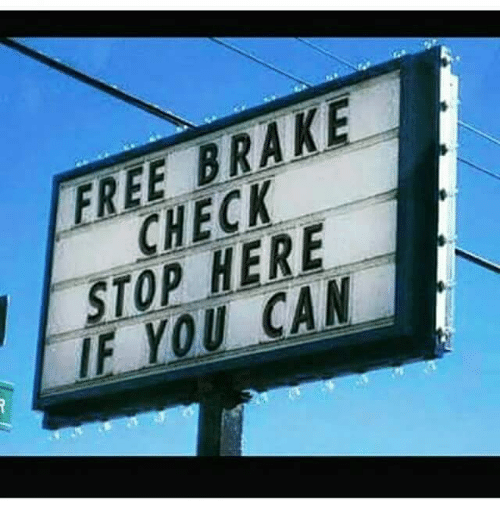
But hold up and take a breath.

Stop. (Hammer Time)

If you’re moving that quickly, how do you know your kids are with you? How do you know if they’re getting it? How do you know if they’re keeping up?

You have to stop and check sometimes.

I know that there are a million ways to check for understanding. But some of them, like quizzes, one-pagers, posters, skits, etc.

So how about my favorite, FASTEST ways to check for understanding?

Here are the Fastest Types of Formative Assessment that I can find...
  1. One Minute Essay (or One Minute Question) -- A one-minute essay question (or  one-minute question) is a focused question with a specific goal that can, in fact, be answered within a minute or two.
  2. Two Minute Pause -- The Two-Minute Pause provides a chance for students to stop, reflect on the concepts and ideas that have just been introduced, make connections to prior knowledge or experience, and seek clarification.
    1. I changed my attitude about...
    2. I became more aware of ...
    3. I felt ...
    4. I was surprised by ...
    5. I related to ...
  3. Observation -- Don’t stop class. Just walk around and really look carefully at student notes, answers, or progress.
  4. One-Sentence Summary-- Students are asked to write a summary sentence that answers the “who, what where, when, why, how” questions about the topic.
  5. One-Word Summary -- Select (or invent) one word which best summarizes a topic.
  6. Muddiest Point -- This is a variation on the one-minute paper, though you may wish to give students a two minutes to answer the question. Here you ask (at the end of a class period, or at a natural break in the presentation), "What was the "muddiest point" in today's lecture?" or, perhaps, you might be more specific.
  7. Headlines -- Create a newspaper headline that may have been written for the topic we are studying. Capture the main idea of the event.
  8. Five Words --  What 5 words would you use to describe ? Explain and justify your choices.
  9. Question Stems -- “I believe that because...”; “I am confused by...”
  10. Twitter Post  -- Define_____ in under 140 characters  

How many of these have you tried? And can you try more? It’s important to do at least one (hopefully more than one) formative assessment check per period. Can you try a
new one or two of these? Pro Tip: Set a timer so you don’t go overtime.

Let me know how they go! As always, email me at newmantr@pcsb.org


Tuesday, April 3, 2018

Somebody Wanted ...

Summarizing is an important skill. It’s kind of a big deal, which is why it always surprises me when soooo many kids struggle with it!

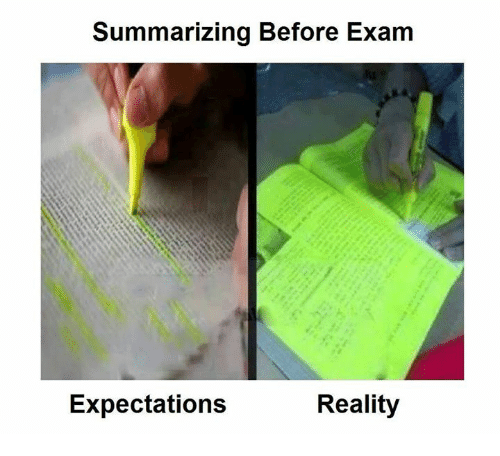
But it is really hard for many kids! Maybe it’s because the internet summarizes things for them, whether it’s a movie trailer, a product review, or the 700,00 versions of “Cliff Notes”, kids don’t really have to summarize much any more. So when we ask them to summarize and they highlight the whole page, it’s not because they’re stupid. It’s because they need help with the skill of summarizing.

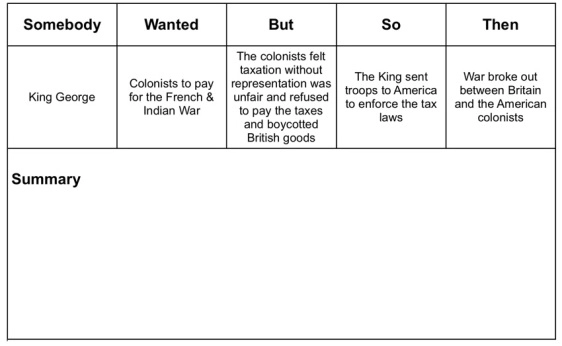
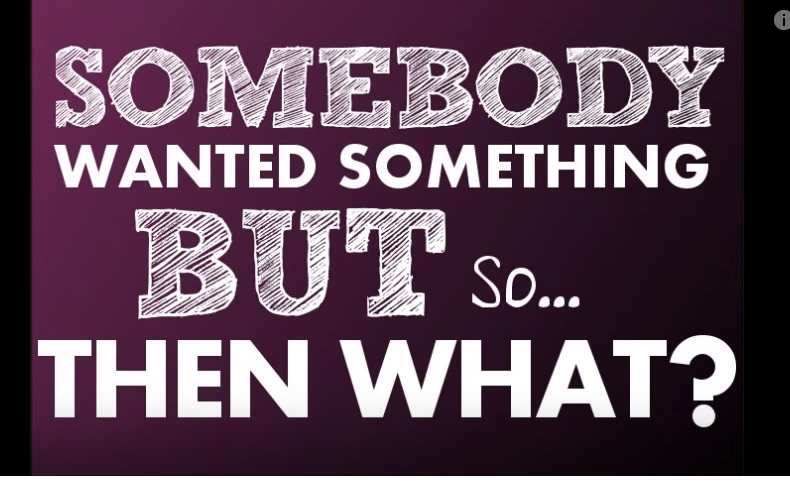
One of the quickest and easiest ways to summarize is a simple strategy called “Somebody Wanted ... But/So... Then”.

This strategy is useful for any student who struggles with summarizing, whether it’s an ESE or ESOL student or a regular student who has trouble summarizing and prioritizing info. It’s actually helpful for keeping our gifted students on track and out of left field, too.


It goes like this ...


  • Somebody (who?) Wanted something (what?)
  • But (what was the problem?)
  • So (How did they try to resolve the problem?)
  • Then (What was the result?)

History and Social Sciences are FULL of moments when a person or group wanted something, which becomes a catalyst for other events.

Like this ...  (real 6th grade student answers below)

  • The Abolitionists wanted freedoms but the South was worried about economics so they made reforms. Then, the reforms made people pay attention.
  • Women wanted equal rights but they were faced with challenges like their ideas and words being denied by men, so the women had a convention at Seneca Falls where they decided to argue and protest for their rights. Then, it took a long time before they had the right to vote.  

Wow! If I could get my kids to boil down the info of a chapter or topic into one of those awesome sentences, I would have WON the teaching game!

Because once they know the summarized basics, once they can sort out the important info from the less-important info, THEN we can really think and analyze and dig further into the content.

I even found a teacher somewhere who made a song (with accompanying video) that is electronic dance music style (https://www.youtube.com/ watch?v=N6EMIaoE9_Q ). It may or may not be your style but it’s repetitive and your kids may like it.  


Try it this week. It’s quick, easy, and a wonderful way to help kids practice summarizing critical information.  Then, give them the initials (SWBST) and have them summarize on their own. Use gradual release. Start with the scaffold of this strategy, have them practice it whole class, and then in small groups,and then independent practice. Finally, remove the scaffolding so they can use it independently.

How can this strategy improve your students’ summarizing skill? How can you practice it this month? How is it going? As always, email me at newmantr@pcsb.org
-Tracy

Wednesday, March 14, 2018

That's So Meta

Image result for metacognition memeMetacognition is often defined as “thinking about thinking”. . Kids need metacognition for learning so that they can improve their reading, thinking and learning.

Why?
  • Metacognition increases students abilities to transfer or adapt their learning to new contexts and tasks.
  • They can think about the task and the context of different learning situations.
  • It can help them think of themselves in different contexts.
  • It can help kids become aware of their strengths and weaknesses as learners, writers, readers, test-takers, group members, etc.
  • It gives kids the awareness of problems that need to be solved -- whether knowledge gaps, behavior issues, or social concerns.


The short argument is that metacognition helps kids learn. It helps them remember what they learned last year (or yesterday) and combine it with what they’re learning today. It helps them apply strategies from one lesson to another. It helps them know their own strengths and weaknesses  -- and then strengthen the weaknesses and build on the strengths.

The end-goal is for kids to become self guided. We can’t always do all the guiding. Someday, our little birdies will fly out of our nests and they need to be able to assess the situations that may arise and make to make in-flight decisions on their own

It makes kids become a part of their learning process. It helps us make learning something we do WITH them not, TO them.

It’s putting the “why” behind everything, everything you do.

It is an executive skill that helps kids MAKE THINGS HAPPEN.  

But it’s not a natural thought process for all kids. So how can we teach them to think about their thinking?

We can intentionally build it in to our classes, particularly with Formative Assessment (i.e. checks for understanding).

Here are my favorite ways of addressing Metacognition through Formative Assessment:

  1. Misconception Check: Give kids a common Misconception statement about a topic. Have students quickwrite to explain why they agree or disagree with it.
  2. Anticipation Guide: Choose several statements from the lesson you are about to teach that can be answered as True or False (make sure to have a few of each). Before the lesson, ask kids to give their best guesses and answer each statement. AFTER the lesson, ask kids to answer the same statements -- but this time, their answer should be based on learning. THis helps kids see where they learned and grew within a lesson.
  3. Muddiest (or Clearest Point): At the end of a lesson, ask kids “What is the ‘muddiest’ point from today?”, meaning, what are you still confused about. You can drill down further and ask “what do you find unclear about the concept of Manifest Destiny?”. Alternately, you can ask about the “clearest point” and discuss the portion of the lesson that your students DO understand the most clearly.
  4. I Used To Think But Now I Know At the end of a lesson, have kids complete the  sentence to see what they have learned about the lesson. “I used to think ______ but now I know ____________.
  5. Four Corners: Have students choose a corner based on their level of learning for a particular topic. Once students have chosen their corners, allow them to discuss their progress with people who are in a similar point in their learning. Then, pair Corner 1 & 3 and 2& 4 for peer tutoring. For example, choose a corner based on your knowledge of the impact of Constitutional Rights:
    1. Corner 1: The Dirt Road (There’s so much dust, I can’t see where I’m going!)
    2. Corner 2: The Paved Road (It’s fairly smooth but there are a lot of potholes)
    3. Corner 3: The Highway (I feel fairly confident bbut have occasional slowdowns)
    4. Corner 4: The Interstate (I’m travelling along and could easily give directions to someone else)

How can you teach your kids to use metacognition? It will increase everything from their reading to their content knowledge to their test-taking to their real-life problem solving! I love to hear how you teach metacognitive skills in your class! Email me newmantr@pcsb.org
-Tracy

Tuesday, March 6, 2018

Start Me Up

So, when Mick Jagger sang “start me up”, I am pretty sure he wasn’t talking about sentence starters.

But I am.

I have learned a lot of things over the years about kids and learning. One of those things is that kids often struggle to know where to start when a teacher gives them an assignment. They also struggle to use academic language. (I can’t tell you how many times I got a writing assignment with a “lol” somewhere in there!). They also struggle to figure out what the teacher wants from them. Sometimes they struggle to understand the question.


Well, I have one idea that will cover those issues.

It’s a sentence starter.

Seriously.  It sounds so silly, I know. Some of us think of early elementary school, and think it’s not useful for our secondary students, but I would respectfully disagree.


I think a good sentence starter can help our kids first know where to start with a task, whether it’s a writing assignment or a graphic organizer or whatever. If you start a sentence for the kid, it will lead their thinking where you want them to go. Your kids will be more successful at thinking and at writing about the topic.


I also think a good sentence starter can help students use academic language. It doesn’t come naturally for many kids, especially kids who don’t hear more formal language at home. Heck, I don’t use formal academic language at home. (or here, either, when I say “heck”). Kids are not naturally academic speakers and writers and so we need to teach them how and when to use academic language.


Sentence starters help the kid figure out what the teacher is looking for. If you ask a kid for the causes of the Civil War and you give her “Three important causes of the Civil War are _____”, she can better understand the question and better frame her answer.

I also love sentence starters because they are a fabulous way to differentiate. Do you have English Language Learners? Sentence starters are a quick and effective way to help students who are acquiring the English Language to understand and express your content.  

I also think it helps with some of your “out of the box” thinkers. The kids who are smart but can’t keep their assignments on track without going off on a tangent -- it can help them too.  You can also differentiate “up” to challenge your more academically successful kiddos by asking them to do more than one thing with a sentence starter.

Wait! I want to clarify! Please know that when I talk about sentence starters, I don’t mean cloze notes. Cloze notes have one answer that goes in the blank. They’re basically copying made easy and unless your student has been learning English for two years or less, they’re not appropriate for middle or high school students. By sentence starters, I mean the teacher has begun the sentence for the students, to guide them, but then releases the students to finish their own thoughts with their own words.  Cloze notes are low level. Sentence Starter is higher order.

Cloze Notes: The _________ of the Civil War were __________ and __________/  
Sentence Starter: The most important cause of the Civil War was __________________________ because __________________________________________.

So, let’s wrap this up. Sentence starters help your kids get started, so they can be more successful. They help you differentiate for both English Language LEarners and kids who just need direction. They increase the practice your kids have with academic language. They are not the same as Cloze Notes.

How can you use sentence starters in your class and not make a grown man (or woman, or kid) cry? How can you start them up so they will be more successful with their thinking and writing?

As always -- I love to hear! Email me at newmantr@pcsb.org
-Tracy

Tuesday, February 27, 2018

I Love Sticky Notes

What is the one supply you could not live without in your classroom?

Mine is sticky notes.

I love sticky notes! I lovelovelovelove them. They are cheap, plentiful, colorful, and moveable. They are the best tool for organization, feedback, lists, ... and teaching.

Of course, I write lists and notes on them. But that’s basic stuff. I used to write specific feedback to my students in their notebooks on sticky notes (and now I sometimes use them with teachers).  I use them when I am in classrooms to give  teachers feedback. Anyone who knows me knows that I keep them in a little box in my work bag and bust them out everywhere I go

Sticky notes are appealing to kids. They’re small, so they don’t look like “too much work”. They are colorful and appealing and they require student thinking (not just a one-word answer). And they aren’t permanent. So a sticky note put in the wrong place can be moved and it’s no big deal. They can be saved more easily than a full page of paper. And there’s something a little fun about them. At least more fun than “regular” paper.

But how else can we use sticky notes to support higher order thinking in our classrooms? Here are a few quick and awesome ideas!
  1. Sticky Notes as Feedback -- When grading an assignment, particularly a tough  higher-order-thinking one, give some feedback to a student on a sticky note. That way, the student can keep your feedback, transfer it to another place, show it to his/her family, or use it next time he does a similar assignment.
  2. Sticky Notes for Peer Editing -- When you do a DBQ or a another short or long writing assignment, it’s extremely valuable for the kids to trade papers and give each other feedback. That way, they don’t write all over the other person’s paper, which can feel and look a little disheartening.
  3. Sticky Notes for Annotation -- So, the kids can’t write in the textbook (or on the class set of whatever) but you want them to interact with text. What do you do? Have them take notes on sticky notes. Students can make notes, write questions, note important terms and ideas all on sticky notes. If you have them write the page number and paragraph number on the sticky note, and stick the note on paper in theri notebook, they can go back and use it another time. Bingo. Problem solved.
  4. Sticky Note Gallery Walk -- Have you had your students create something in groups (like a poster or on chart paper) and then had other groups come around to learn from those posters? Let the observers leave thoughts, questions, feedback on the posters with a sticky note. This does two things. First, of course, it gives feedback to the group who created the poster (or whatever). Second, it keeps the other groups accountable by making them record their thoughts and feedback -- without tampering with the original poster that the group was so proud of!
  5. Sticky Notes for Formative Assessment -- How do I know what my kids learned this period? Again, use sticky notes. I have two favorites with this. First, I love to have my kids write one sentence summaries. They can use the sticky notes to explain the lesson, the point, the learning goal, or what they learned in one  sentence. OR they can write the five most important words of the lesson/reading/topic on their sticky note and you-the-teacher can compare. This is a great way to get some overall feedback to see how well your kids learned what you wanted them to learn and what they got out of the lesson/reading/activity.
  6. Sticky Notes for Hands-On Sorting -- Want your kids to do a card sort? Try it on Sticky notes, on a wall (or a table/desk/board/floor). Have your kids split the work of jotting down the terms and then sorting them into the three branches. Because they’re sticky, they’re easy to move if a group puts a term in the wrong place. Try this with words associated with the North and the South, the Axis and the Allies, the Three Branches, the Four Causes of World War I, or any other time you want your kids to sort words in a more hands-on, up-and-moving type of activity.
  7. Sticky Notes As Survey -- Want to hook your kids in to the lesson? Ask them an opinion question and have them display their thoughts on a chart. Who do you think had the best plan for 1960s America -- Dr. King or Malcolm X? Would you have dropped the Atom Bomb if you had been Truman? Which author do you agree with? Have the kids write their comment and stick their note under the posted heading. Now you have a visual answer as to what each class period thinks...
How else do you use one of the cheapest, most versatile office supplies in your classroom? How can you make the most of something as simple as sticky notes to increase Higher Order THinking? As always, I love to hear about it! Email me newmantr@pcsb.org