Showing posts with label cloze notes. Show all posts

Tuesday, March 6, 2018

Start Me Up

So, when Mick Jagger sang “start me up”, I am pretty sure he wasn’t talking about sentence starters.

But I am.

I have learned a lot of things over the years about kids and learning. One of those things is that kids often struggle to know where to start when a teacher gives them an assignment. They also struggle to use academic language. (I can’t tell you how many times I got a writing assignment with a “lol” somewhere in there!). They also struggle to figure out what the teacher wants from them. Sometimes they struggle to understand the question.


Well, I have one idea that will cover those issues.

It’s a sentence starter.

Seriously.  It sounds so silly, I know. Some of us think of early elementary school, and think it’s not useful for our secondary students, but I would respectfully disagree.

I think a good sentence starter can help our kids first know where to start with a task, whether it’s a writing assignment or a graphic organizer or whatever. If you start a sentence for the kid, it will lead their thinking where you want them to go. Your kids will be more successful at thinking and at writing about the topic.

I also think a good sentence starter can help students use academic language. It doesn’t come naturally for many kids, especially kids who don’t hear more formal language at home. Heck, I don’t use formal academic language at home. (or here, either, when I say “heck”). Kids are not naturally academic speakers and writers and so we need to teach them how and when to use academic language.


Sentence starters help the kid figure out what the teacher is looking for. If you ask a kid for the causes of the Civil War and you give her “Three important causes of the Civil War are _____”, she can better understand the question and better frame her answer.

I also love sentence starters because they are a fabulous way to differentiate. Do you have English Language Learners? Sentence starters are a quick and effective way to help students who are acquiring the English Language to understand and express your content.  
I also think it helps with some of your “out of the box” thinkers. The kids who are smart but can’t keep their assignments on track without going off on a tangent -- it can help them too.  You can also differentiate “up” to challenge your more academically successful kiddos by asking them to do more than one thing with a sentence starter.

Wait! I want to clarify! Please know that when I talk about sentence starters, I don’t mean cloze notes. Cloze notes have one answer that goes in the blank. They’re basically copying made easy and unless your student has been learning English for two years or less, they’re not appropriate for middle or high school students. By sentence starters, I mean the teacher has begun the sentence for the students, to guide them, but then releases the students to finish their own thoughts with their own words.  Cloze notes are low level. Sentence Starter is higher order.
Cloze Notes: The _________ of the Civil War were __________ and __________/  
Sentence Starter: The most important cause of the Civil War was __________________________ because __________________________________________.

So, let’s wrap this up. Sentence starters help your kids get started, so they can be more successful. They help you differentiate for both English Language LEarners and kids who just need direction. They increase the practice your kids have with academic language. They are not the same as Cloze Notes.

How can you use sentence starters in your class and not make a grown man (or woman, or kid) cry? How can you start them up so they will be more successful with their thinking and writing?

As always -- I love to hear! Email me at newmantr@pcsb.org
-Tracy

Wednesday, October 4, 2017

The Good, The Bad, and The Ugly

I have a love-hate relationship with Cloze Notes, otherwise known as fill-in-the-blank notes.

Do you use Cloze notes?

HOW do you use them?

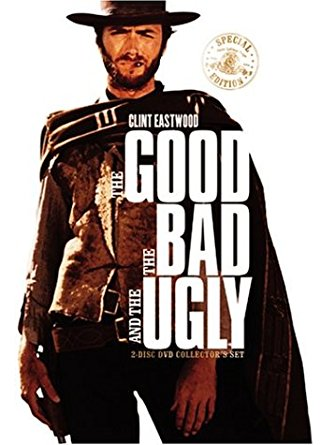
Like any teaching tool, Cloze Notes can be used to varying degrees of success. I tend to think of them “Clint Eastwood -style” as “The Good, The Bad, and the Ugly”.

Cloze Notes can be GOOD because they can help kids who are reading way behind grade level to keep up with the rest of the class. They can help make sure all students are on the same page. They make sure all students have complete notes, since it is easy for any student to keep up with his or her peers.

Cloze Notes can be BAD because they don’t require a student to actually comprehend anything they are reading or hearing. I could complete Cloze notes in Swedish or Swahili or Samoan because I don’t have to have any clue what they’re about.  Put the original piece of text in front of me, and I can complete an entire page of Cloze Notes in Arabic (which I don’t speak or read at all) and not know anything about what I just wrote.

Cloze Notes can be UGLY when we give them to entire classes just because a tiny number of students are five or more grade levels behind in their reading level. When we teach to the lowest common denominator, we lessen the comprehension of our at-grade level and our above-grade level students. When we give Cloze Notes to a whole class, we don’t give our students an opportunity to try the reading and the comprehending on their own. We assume that they can’t and we take that learning opportunity away from them.

So, are Cloze Notes really that awful?

Well, I think nine times out of ten, they dumb a task down, lower than most of our kids need. And even if they DO need it, it doesn’t allow the kids a chance to stretch upward -- if we do them past the first quarter of the year.

Cloze notes keep a child reading exactly where they are. It does not help them learn to read any better because the KIDS don’t have to do the actual thinking.

Think about it. How could it? The kids don’t have to figure things out for themselves. They don’t have to read. They only have to identify what the next word looks like and copy it down.

Cloze notes don’t teach meaning. Copying doesn’t equal learning.

So, what can we do with Cloze Notes so they DO help our students?

  • First, we can think like the best parts  of Cloze Notes. When we do read-alouds, we can teach our students to choral-read the next word aloud when we give them a pause or a cue.
  • We can make lesson differentiation decisions where Cloze notes are only used for students who are five or more grade levels behind.
  • We can have students create cloze-notes where THEY make strategic blanks and explain WHY they chose those blanks -- and what term goes in them.
  • We can use Cloze Notes for their original purpose -- to gauge fluency in reading. The Original Cloze Notes were where the teacher omitted every 7th or 10th word to see if readers were following along.
  • We can teach note-taking strategies that help students create their own meaning -- even struggling readers and writers. Try Cornell Notes or Outlining.

What’s your take on Cloze Notes? When is the appropriate time to use them? Have you experimented to see if there are strategies that better increase comprehension for your struggling readers? As always, I love to hear from you! Email me at newmantr@pcsb.org