Showing posts with label hate KWLs. Show all posts

Tuesday, April 10, 2018

Quick!

Quick! How fast can I cover this stuff before the testing calendar negates the whole month?  

Omigoshican’tbelieveimthisbehindinmypacing wherewillifindthetimetodoanything imnevergonnagetthroughallthis?

Sooooo, April, huh?

I don’t know about you, but I think this is a tough time of year. There are weird schedules for testing with half my class gone on any given day. The kids are in a fourth quarter slump. Spring break is now just a memory as they try (and we try) to hang on until summer.

Oh, yeah. And I’m behind on my pacing. Again. As usual.


Right now, I really understand the temptation to just bulldozer your way through the content, teaching and teaching and teaching and teaching nonstop.
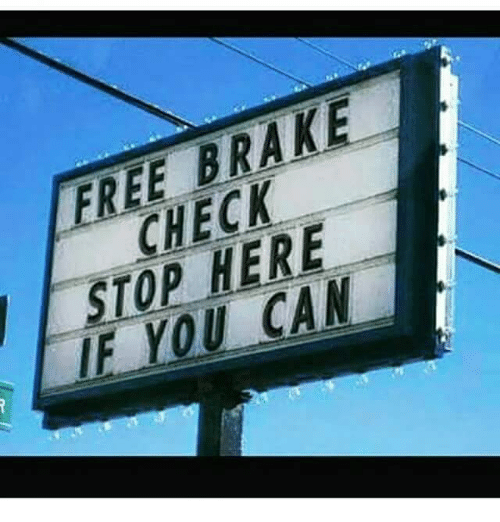
But hold up and take a breath.

Stop. (Hammer Time)

If you’re moving that quickly, how do you know your kids are with you? How do you know if they’re getting it? How do you know if they’re keeping up?

You have to stop and check sometimes.

I know that there are a million ways to check for understanding. But some of them, like quizzes, one-pagers, posters, skits, etc.

So how about my favorite, FASTEST ways to check for understanding?

Here are the Fastest Types of Formative Assessment that I can find...
  1. One Minute Essay (or One Minute Question) -- A one-minute essay question (or  one-minute question) is a focused question with a specific goal that can, in fact, be answered within a minute or two.
  2. Two Minute Pause -- The Two-Minute Pause provides a chance for students to stop, reflect on the concepts and ideas that have just been introduced, make connections to prior knowledge or experience, and seek clarification.
    1. I changed my attitude about...
    2. I became more aware of ...
    3. I felt ...
    4. I was surprised by ...
    5. I related to ...
  3. Observation -- Don’t stop class. Just walk around and really look carefully at student notes, answers, or progress.
  4. One-Sentence Summary-- Students are asked to write a summary sentence that answers the “who, what where, when, why, how” questions about the topic.
  5. One-Word Summary -- Select (or invent) one word which best summarizes a topic.
  6. Muddiest Point -- This is a variation on the one-minute paper, though you may wish to give students a two minutes to answer the question. Here you ask (at the end of a class period, or at a natural break in the presentation), "What was the "muddiest point" in today's lecture?" or, perhaps, you might be more specific.
  7. Headlines -- Create a newspaper headline that may have been written for the topic we are studying. Capture the main idea of the event.
  8. Five Words --  What 5 words would you use to describe ? Explain and justify your choices.
  9. Question Stems -- “I believe that because...”; “I am confused by...”
  10. Twitter Post  -- Define_____ in under 140 characters  

How many of these have you tried? And can you try more? It’s important to do at least one (hopefully more than one) formative assessment check per period. Can you try a
new one or two of these? Pro Tip: Set a timer so you don’t go overtime.

Let me know how they go! As always, email me at newmantr@pcsb.org


Wednesday, September 21, 2016

How Will I Know?

Happy (I-made-it-up) Formative Assessment Month!


Image result for bee girl blind melonI was the kind of kid who was forever putting on shows for whoever I could con into watching.  Dance routines, plays, synchronized swimming with my best buddy.


I realize this explains a lot about my personality to some of you who just went “Yup. I can see that”.


I went through a huge Whitney Houston phase one spring in late elementary school. I had a dance routine to every song on the Whitney cassette tape. I think I literally wore it out.


One of my favorites was “How Will I Know?”. If you aren't  familiar, the lyrics to this piece of pop perfection ask “how will I know” if he (a boy) really loves me?”


As a fourth grader, I had no idea how a person would know if a boy liked her. This was a definite mystery to me, so I could really wonder along with Whitney Houston.


As a teacher, my “How Will I Know?” question is less about dance routines and boys -- and MORE about what my students are learning.


Seriously -- how DO we know? We could wait until we give  (and GRADE) a quiz....


But I would argue that that would be too late. I need to know now -- THIS CLASS PERIOD -- how well my students are mastering the material. Otherwise, how can I adapt my lesson?


One more strategy for you to try with formative assessment is this -- Text Graffiti.


It works like this.
  1. Find something you’re going to teach. Maybe it’s a quote or excerpt. Maybe it’s an image. Maybe it’s a map. Maybe it’s just a phrase to get them thinking.
  2. Actually, find a couple of those. Maybe 4 or  5 for your class?
    1. For example, for the “key figures of the colonial era” you can have a stimulus for each of four different colonial figures.
3. Now, write or gluestick those stimuli to a piece of chart paper, in the middle.
4. Put a big question or some directions on the top
5. Have your kids go around at the BEGINNING of class in one color of pen or marker and write what they know about the topic.
6. Then, teach your stuff. You know, the way you do.
7. At the end of that chunk of content, have the kids go around in a DIFFERENT color and write on the chart paper what they LEARNED. They can draw arrows or connect to other pieces from before.


There are a couple of benefits (other than getting the kids up and moving)
  • First, you can see where the kids are at the beginning of the lesson, like a pretest, but more creative and flexible.  You can adjust your instruction from there.
  • Second, you can see the progress they made during class from ‘first-color” “before-learning” to “second color” “just-learned-it”
  • Third, you just have  to LOOK and adjust your instruction there, in the moment. You don’t have to GRADE ANYTHING (hooray!)
  • Finally, you can see whether, overall, your class mastered the content. Did they get it or not? You can learn a lot about how the lesson (or lesson chunk) went if they all wrote the same thing, or if they all threw out “important” vocab terms without explaining them, or if they were just as lost at the end as they were in the beginning.


Try this as ANOTHER formative assessment strategy. See what they know when they walk into your class -- and what they know after your instruction.


Bonus -- it may actually make you feel good to see what they learned. Or it may tell you exactly how to tweak your next bit of instruction so you can get your kids just that little bit further.


The more you know (about how your lesson went) ... the more THEY know (about your content).


All this needs is chart paper and markers or something. You can even do it on your board if you don't have chart paper (just take a picture of it at the end to refer to later).


What do you think? Are you up for ANOTHER formative Assessment strategy? Try this one and let me know how it goes. As always, I love to hear about your formative assessment -- and your love of Whitney. Email me at newmantr@pcsb.org
-Tracy

Wednesday, April 16, 2014

Why I Hate the KWL


A few years I wouldn’t have been able to admit this aloud, but as I get older, I get bolder, so here goes...


Hi.
My name is Tracy and I hate the KWL.


There. I’ve said it. (Is that edu-blasphemy?)


All the reading trainings in the world, from college courses to CRISS to CAR_PD seem to love the KWL. And I honestly can’t stand it.


If you don’t remember the KWL (how can you forget it?) it is a three-column chart (or organizer) that asks kids what they Know, what they Want to know and what they Learned about a particular topic. See? K-W-L.


And no matter how I tried it, in my class, I always had a handful of kids who answered those three questions with “nothing, nothing, nothing.”


What do you know about the Civil War? Nothing.
What do you want to know about the Civil War? Nothing.
What did you learn about the Civil War? Nothing.


No matter how I tried to persuade my students, with grade threats or learning promises, no matter how many zeros I gave for those non-answers, no matter how engaging the lessons, I always had kids who seemed to delight in frustrating me by giving those answers. And if I’m honest, the kids who answered “nothing” were the ones I was often especially targeting with my lesson anyway. The advanced kids did fine with or without that KWL. The struggling kids tuned me out as soon as they saw a KWL.


To be fair, some of my kids (especially my ESOL immigrant kids) really didn’t know anything about the American Civil War. They had never heard of it! They didn’t know enough about it to even come up with a question or a “Want to know”.


It’s like asking me what I know about balancing chemical equations. Nothing. What do I want to know about balancing chemical equations? Nothing. What did I learn in chemistry about balancing chemical equations? Nothing. (Apologies to my high school chemistry teacher, who was really good. My ignorance of chemical equations is my own fault.)


I don’t know. Maybe in the way dogs smell fear, my students smelled teacher-apathy. I may very well have been teaching the KWL wrong. It wouldn’t be the first time I messed up repeatedly. I know plenty of really skilled teachers who swear by it.


But it never worked for me.


What I discovered instead is a different reading strategy that takes that KWL idea and turns it around to make it similar to what historians, social scientists, journalists, the common core (or Florida Standards, now) and DBQs do.


Teach kids to use multiple sources to come up with a conclusion. Try an I-Chart.


It’s not really an equal, substitute-an-I-Chart-where-you-would-use-a-KWL kind of thing. You will have to use it a slightly different way


An I-Chart has students use multiple sources to come to conclusions. Again, like Common Core/Florida Standards ask, students make conclusions based on those multiple sources.


How do we do that? I’m glad you asked!


·         If you’re asking about the Civil War, first use something more specific than the whole Civil War. Ask about Andersonville or Sherman’s March to the Sea or the Emancipation Proclamation.
·         Next, give the kids several resources with which to examine that topic. For the sake of movement and limited resources, feel free to make “stations” where students consult a textbook at their desks, a primary source in another area, a particular website on a student station, or an image on the board or screen.
·         What did we learn from each site about Andersonville?  Students can fill in the I-Chart for the topic of Andersonville and then   ...  
and here’s the important Common Core/Florida Standards/authentic historian part --
·         Kids summarize or conclude based on what they learned from the two or three or four sources they just examined.


Why not have them just get it out of the book? Or from their notes?


1.    First, as you know, our book is not always perfect.
2.    It’s also not healthy for us as citizens to get ALL of our information from one place.
3.    It’s also teaching our students to synthesize.
4.    It’s also a lot like their AIR standardized test will look like next year (AIR replacing FCAT or PARCC, in case your acronyms aren’t up to date)
5.    Ahem...(*cough, cough*) That really IS what historians and social scientists DO!


And here’s a pretty simple page that explains what it’s about and how to use it. http://www.readwritethink.org/classroom-resources/printouts/chart-b-30775.html

Here's a teacher-adapted one


If you don’t hate KWLs, you might still think about using the I-Chart as a variation, to take reading from single-source to multi-source. To use two or three (or four?) sources to examine a topic from multiple perspectives.


Try to project an image of Andersonville, have kids examine a brief letter excerpt from an Andersonville prisoner, and read a paragraph or two from their textbook. Have them complete an I-Chart and see how more thorough their understanding of this topic is.


I bet they “get it” better with an I-Chart than they do with a KWL chart. Just sayin’ :)


Do you know how to rock the KWL in a more meaningful way? Can you tell me what I was doing wrong? Or do you (secretly) hate it too? (It’s okay. I won’t tattle on you). Have you tried an I-chart? How did it go?


As always, I love to hear from you! Email me