Showing posts with label documents in social studies. Show all posts

Wednesday, May 1, 2019

Five Review Games to Play with Cheap Dry Erase Cubes

Y’all know I love me some deals, right?  

Well here is the deal for you!

I have seen these dry-erase cubes at Dollar Tree (no, I’m not afraid to give a shout out to the popular destination of broke teachers everywhere!). I have seen them off and on all year and now that we are in the season of Review Games, I thought it might be a great chance to bust them out.
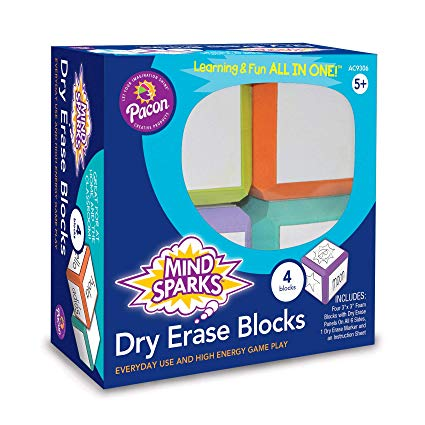
Note: Amazon has ones that are nicer but pricier. Your choice!

Anyway, let’s talk about what to DO with these cheap little toys!

*Pro Tip: for these to work with minimal hassle, you probably want a thin-line dry erase marker AND you want to ask the dice rollers to touch the colorful parts of the dice (not smudging the dry-erase parts)

Here are Five games I came up with that can use the Dry Erase Cubes.  Can you think of any more?

  1. 3 Branches Cubes: Write the three branches on the first cube (twice for each branch) and write categories of things kids will need to know about each branch (like “who?”, “one responsibility of the branch”, “term lengths”, “requirements”, “check another branch” and” how do they get the job?” on the six sides of the dice.
Put your kids in teams and give each team a dry erase board, a dry erase marker, and a paper towel. Have a different kid each time roll the dice and have the teams race to answer what the dice combination says, like “legislative term lengths” or “judicial - how do they get the job?”

  1. Document Cube: Write the following questions on the cube: “Who wrote it (1pt)” “when was it written (1pt)”, “Why was it written” (2pts), “what’s the main idea” (3pts), “Causes” (2pts) “effects” (2pts).
Now, put an excerpt of a document on the screen or smart board. Have a kid roll the dice and everyone tries to answer as quickly as possible on their paper. Or, have each team have a dice and each team does something different with the document.

*Pro tip: if you’re going to play this game regularly, you might print up a sticker label and put it on the cube so it doesn’t get smudged and you don’t have to keep rewriting these!

3. Full Year Review: Put the name of each of six units on one cube (like Rome, Greece, India, Egypt, Israel, and Mesopotamia). Put a common topic from each unit on the other cube (like, important person, cultural achievements, geographic boundaries, traded with..., inventions, and underrepresented groups). Then, have the kids roll the dice in a small group and say (or find in their notes?) something that addresses both dice -- like “underrepresented groups in Rome were...  the plebians and slaves”.

4. One Cube:  Use one cube to distinguish between several parts of a single topic, like “political parties (with a different political party on each side), or influencing government (with two sides each that say “media”, “individual”, “interest group”.  Or, you could label the one cube with the parts of the florida and US constitutions (preamble, articles, amendments) and have the kids tell what’s the same or different with the US and Florida constitutions about that particular part.

5. Matching: I’m not a huge fan of matching, but it could get fun with four dice. Put the amendment topic/text on one cube and the number on another. Have them roll one dice to start and then keep rolling the other until they get the match.

I freely admit to having a tough week. I’m not sure that these are my best ideas. Can anyone come up with any more great dry-erase cube games? Please share! We all need new ideas at this point in the year!

BTW -- happy May! This is it -- the last month of school! You (and we) can make it! The end is in sight!
Have a great week!

-Tracy

Wednesday, April 10, 2019

9 Ways to Use Music in the Social Studies Classroom


If you’ve been to any Equity training in the past few years, you have probably heard of the “6 Ms”. One  of my favorite “M”s stands for “music”.

It might be because I was a wedding DJ (and middle school dance DJ!). But I really love using music!

But if you’re like me, using music can sometimes be daunting. I mean, do I choose cool, current music that I’m not familiar with because I’m not 14 anymore? Or do I choose my old, familiar, grown-up music that the kids might hate? What about bad words? What if the music gets the kids rowdier than I want? What’s the point of using music anyway?

Why should I try?

Music connects with kids (heck, with ALL people), but it’s particularly good for engaging kids who might not be otherwise engaged. It helps kids to perk up and pay attention. It might reach someone who’s hard to reach. It might teach content better than some other ways.

Here are NINE ideas for using music in your classroom -- and I have STOLEN all NINE of these from real classrooms around our district.

  1. Play music without words: If you don’t want to worry about bad words -- or worse, slang that you don’t even KNOW is bad -- try listening to instrumental versions of popular music! You can literally search “instrumental versions of popular songs 2019”  on youtube and play it on -- winning both the battle against bad words and the battle for music “acceptable” to your kids!
  2. Play music during independent or collaborative work time: Some kids learn better with background noise. So play music quietly when they are doing only independent or collaborative work so that they can concentrate.
  3. Use music to actually teach: Youtube is a great (and terrible) invention. One of the ways we can incorporate music FOR learning is to use the brilliance of other teachers online. Try “Too Late to Apologize”  or (my favorite) Mr. Betts or the (world) Historyteachers or (ancient history) Mr. Nicky  or Schoolhouse Rock or School Yard Rap or Flocabulary or one of a million parodies.
  4. Have kids make their own songs/rhymes/raps: Assign kids the option of making a  song/rhyme/rap about the topic you’re learning about in class. There’s nothing better than a student project where they crack themselves up because of their fabulous wordsmithing and their use of their FAVORITE songs!
  5. Hear actual historical music: Listen to “We Shall Overcome” or “Strange Fruit” when you talk about the Civil Rights Movement. My high school World History teacher made our whole class of 15 year-olds stand up and sing “Over There”, the WWI fight song.Teach protest songs
  6. Use Music as a Primary Source: Have kids analyze the lyrics or respond in writing to a song. Have them look at music as another type of primary source.
  7. Use Pop Culture:  Of course, Hamilton has a million teaching points. But so do the Animaniacs. And the Rock and Roll Hall of Fame.
  8. Play Music During Transitions:  Try playing music for the one or two minutes you’re giving your students to move from one activity to another. When they put away their bellwork notebooks and put their desks in groups -- play some music. When they are moving from station to station -- play some music. When they’re walking into the room -- play some music.
  9. Use music to learn about historical events: Ask kids what song would be the theme song to a historical figure, or what song best represents an events. Can they think of a song that would describe an era or an invention? Kids know a lot more songs than we do -- let’s use that to connect with content!

Do you have any MORE ideas on ways to teach using music? Email me! I love to HEAR (get it? hear?!?!) about what you do with music in your class!

Rock on!
-Tracy

Monday, November 26, 2018

A Tale of Two News Shows


I know YOU know that people are often judged based on their choice of news outlets. “I don’t believe the liberal media” or “he heard that on Fox News”.

Did you know that this isn't new? Before the US Civil War, there were separate mailed newspapers that went to people with different political views. This whole Fox News vs. MSNBC thing isn’t new. There were entire newspapers devoted to journalistic obliteration of Andrew Jackson and entire newspapers devoted to supporting him. Often the separate newspapers were actually funded entirely and openly by political parties!

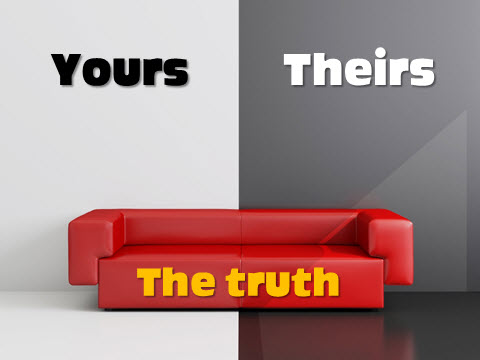
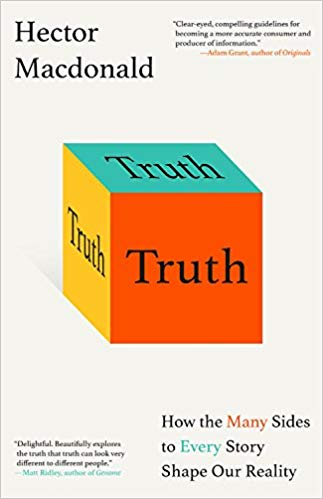
There are always multiple views on any issue, particularly on political and social “hot topics”.. There are always different ways to look at an issue or an event.

Just ask four different kids about the most recent campus fight and you will get four different stories. Add in the AP or nearby teacher or hall monitor and you have another set of stories.


Then, wait a week and ask about that fight again. Chances are, with time and perspective, that you will have some slight variations on that fight.

Then, ask someone’s mom. Or a student from another school. And you will get yet another side to the story.

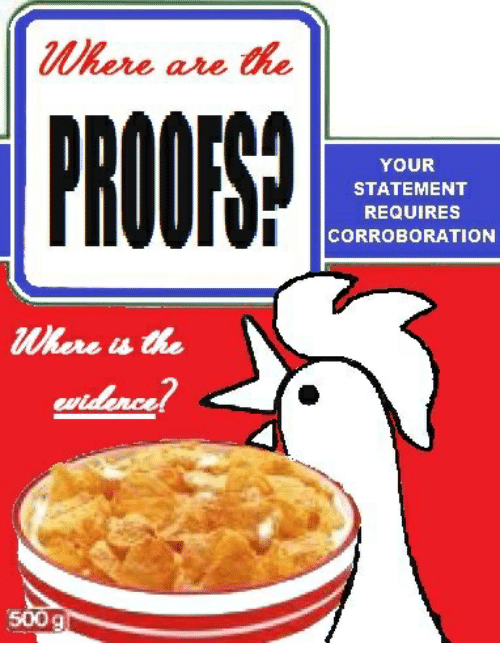
Finding the middle ground between multiple sides of the story is what CORROBORATION is all about.

Corroboration is about establishing what is most probable by comparing the documents together. It recognizes disparities between accounts.

How can I teach my kids to look at corroboration between documents and accounts?

Here are some good prompts/questions to use to help kids dig into the corroboration...
  • What do other documents say?
  • Do the documents agree? If not, why?
  • What are other possible documents?
  • What documents are most reliable?
  • The author agrees/disagrees with . . .
  • These documents all agree/ disagree about . . .  
  • Another document to consider might be . . .

This is, again, a Civic Literacy skill. It’s a reading skill. It’s what Common Core asks for. It’s what the LAFS ask for. It’s what the FSA asks kids to demonstrate. It’s what we want our voters to do. IT’s what we want ALL citizens to do -- not just the “advanced” kids or the “magnet kids” or the college-bound.

We want ALL kids to understand and master the skill of corroboration!

How can we continue to give kids intentional practice corroborating? As always, I love to hear from you! Email me at newmantr@pcsb.org

-Tracy

Wednesday, October 31, 2018

Context

My kid went nuts when we couldn’t find his blue shorts. It had to be THOSE blue shorts. Both of my kids stayed up waaaaay too late. They looked ridiculous. So did I. I let them roam all over someone else’s neighborhood and talk to strangers who looked weird. They ate more sugar than their small bodies could handle and wound up literally running in circles to work some of the sugar out of their systems. Some neighbor had a scary movie playing on a projector on the outside wall and both my kids had nightmares. We went home at the obscene hour of nine o’clock, it was too late for baths,  and the whole family was in tears by ten.

It was so much fun!!!!

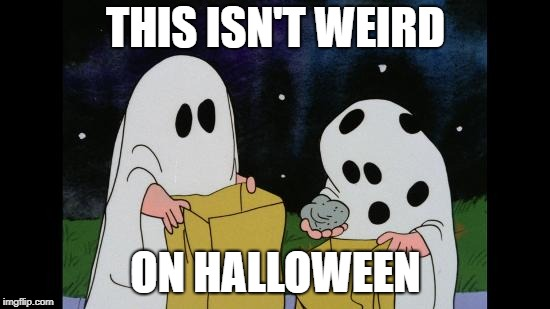
“It” was, of course, Halloween.

Context. It makes all the difference.

The difference between “#parentingfails” and “pretty average” is in the context. The question of  Halloween or Regular Wednesday Night has a pretty big impact on your understanding.

Context is an area where a lot of our kids struggle. We as teachers struggle with teaching context sometimes, too. It’s hard to tell the difference between context and content.  What “stuff” about history or government or economics is the important “stuff” and which is just contextual “stuff”.

If you’ve ever showed your students a throwback Thursday picture, only to have them giggle and wonder at your hair or clothes, you know how important context is.

Context is JUST as important in social studies, too.

  • The Constitution did not originally give every adult citizen the right to vote, of course.  Originally, the states determined who could vote, often choosing only land-owning, white men over age 21, often about 6% of the population.

The context behind that is a powerful piece of that understanding. The context of gender, race, power, money, and language in the original electorate was essential to understanding that limited enfranchisement
  • The beginnings of Buddhism as a reaction to Hinduism is a huge reason that Buddhism caught on in the first place. That context of a stratified Hindu society is what makes Buddhism stand out. It’s different. It’s a reaction to its historical context.
  • The Scientific Revolution is only a “revolution” in the context of the previously religious understanding of the universe.


Without context, it’s impossible to understand an “impact” or an “effect” -- because there has to be some context, some THING to be impacted or effected.

So, every single time we bust out a document in class, kids should use some context. There are plenty of ways to do this (APPARTS, Doc Analysis Sheets, etc.) but here are the questions that SHEG (Stanford History Education Group) asks us to use ...
  • When and where was the document created?
  • What was different then?
  • What was the same?
  • How might the circumstances in which the document was created affect its content?

If you’re looking for some quick prompts to practice contextualizing documents, SHEG gives us a few to start with:
  • Based on the background information, I understand this document differently because ...
  • The author might have been influenced by ___ (historical context).
  • This document might not give me the whole picture because...

If you read last week’s WW email, you know we talked about Sourcing. Contextualization is interwoven with sourcing as we look at the people and circumstances around the CREATION of the document to inform our understanding.

Again, this is not just a HISTORICAL Literacy Skill. It’s a Civic Literacy Skill. It’s a Citizenship Skill. It’s a Media Literacy Skill. It’s a Social Media Skill. It’s a Personal Relationship Skills.

It’s a life skill.

Looking at the context of a document is crucial to understanding it. We need to help our students use context when they read the news or a listen to a candidate or watch something online.

Let’s get them in the habit of asking those context questions every time they come across a document. I think it can be powerful in understanding history and current events.

How do you ask your kids to contextualize? Do you do it frequently? How can you tuck in these questions every time you bust out a document?

AS always, I love to hear from you. And Happy Halloween. Don’t let the Candy-Hangovers get you down tomorrow!

-Tracy

Tuesday, October 23, 2018

The Source

Imagine that you got a letter in the mail (with students, I pretend that they found a note in the  hall or in their lockers). Imagine that this letter or note said horrible things about you. Imagine that it accused you of doing terrible things and it called you awful names.

Now, think about who wrote it. You would deal with that letter or note differently if it was from a friend you had a disagreement with ... differently if it was from your ex ... differently if it was from your current significant other (and you thought everything was ok) ... differently if it was from your sibling ... differently if it was from a coworker  ... differently if it was from ANOTHER coworker... differently if it was from a complete stranger!


Sourcing matters.

It matters when you look to see what news outlet a Facebook link comes from. It matters which parent sent which email. It matters what author said which quote. It matters which individual made which comment on your social media. It matters what think tank funded which study. It matters which PAC paid for which ad. It matters which organization sponsors what website.


It also matters whether the document is from the Egyptian pharaoh or the Egyptian slave or the Kushite trader or the Israelite slave in Egypt or the British historian or the Greek enemy.

Sourcing matters.

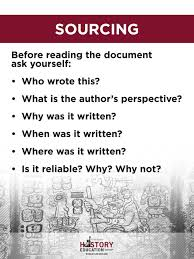
For every document, we always ask:
  • Who wrote this?
  • What is the author’s perspective?
  • Why was it written?
  • When was it written?
  • Where was it written?
  • Is it reliable? Why or why not?

The way we read and understand a document (or even a secondary source, really) depends on sourcing. Just as in the letter/note example, you would deal with that mean and nasty letter differently if it was your ex than you would if it was a coworker.

How would you react if it was your ex that wrote that letter (for some of us it might have been a long time ago and we might be surprised that they even remembered that we exist!)

How would you react if it was your sibling that wrote that letter? (it probably depends on how that relationship with your sibling is these days)

How would you react if it was your significant other wrote that letter? (assuming that things were generally good between you)

It depends on what you know about the author -- or about his time period or about her culture about his location or about her group/organization.

Sourcing matters.

It is the first step in our historical thinking skills AND it is a crucial piece in the civic literacy -- AND it is the a big part of the ELA/LAFS standards.

If I can challenge you this week to do one thing it’s this:

Have your kids dig into the sourcing information of EVERYTHING THEY READ.

They need to be in the habit of looking at the source for Social Studies, for ELA, and for Civic Life.

Teach them how to look at the source of current events, historical documents -- even textbooks!

Did  you read the article a few years ago about the Texas textbook that said that enslaved persons fought FOR the South in the Civil War?


Uhhhhh ....  No.

That textbook writer (OMG that was a textbook writer!!!) pulled info off a Sons of the Confederacy website that has no evidence to support its claim.

It can happen anywhere that people are not careful. If we don’t look at the sourcing information, we don’t understand the author’s point of view.

That doesn’t mean we’re sourcing documents to see if they’re RIGHT or not, TRUTHFUL or not. It means we’re sourcing them to see where the author is coming from.

If you have never seen the SHEG Lunchroom fight lesson on sourcing, it will make this sourcing stuff make MUCH more sense. https://sheg.stanford.edu/history-lessons/lunchroom-fight . You need a login, but it’s free and some of the highest quality Historical Thinking stuff out there!

Goal for the week: Be more intentional about sourcing everything with kids -- including secondary sources! If you make it a good habit, kids will get in that habit too!

Questions? Thoughts? Awesome ways you source documents? As always, email me. I want to hear all about it!! newmantr@pscb.org