Showing posts with label lesson planning in social studies. Show all posts

Wednesday, August 26, 2020

Pop Tart Habits


What were your bad habits during our long quarantine time? 


I had a late-night impulse buy of Pop Tarts once in April or May that I could not take back. Once Pop-Tarts entered our house, they became part of the family and we loved them and adopted them. 


I know they’re crap for nutrition. But tasty, tasty crap. Mmmmmm... 


So, two days into Weird Pandemic Teaching already? It’s definitely getting better, but still messy, I think, huh? 

Before you go any further into this school year, do yourself and your kids and families a favor. 


Ask them how it’s going. NOW. Before you get into any bad habits. Or before the kids get into bad habits. Or before things just... happen... in an unintentional way...


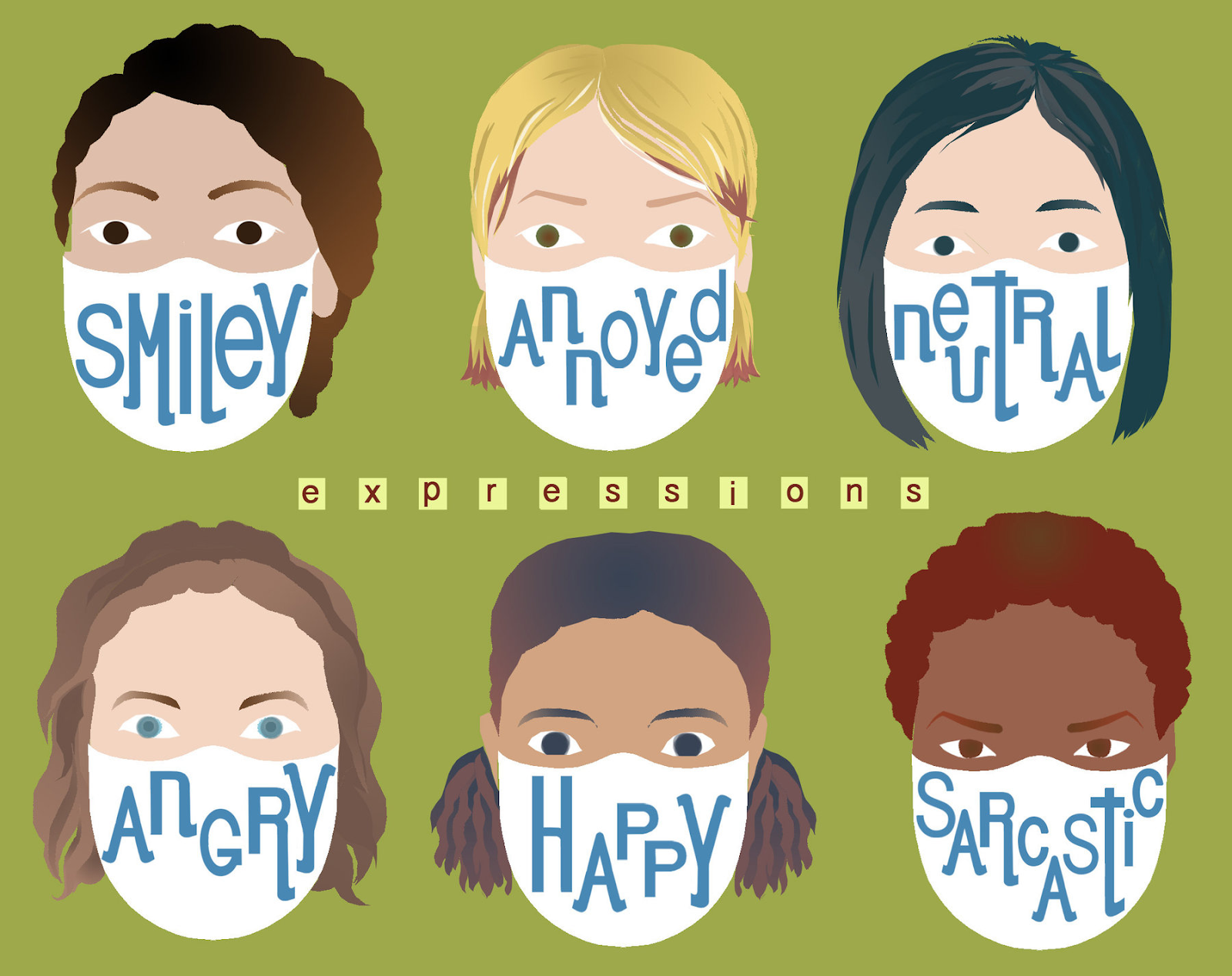
I know it’s harder than ever before to gauge how things are going. Some kids are at home. Some of THOSE kids have cameras on and some don’t. Some of your kids are in your classroom. Those kids have masks on, making it harder to read their faces than usual. 

Plus it doesn’t help that we are spending half our days troubleshooting our tech and not spending as much time really bonding with our students as usual. 


So, do yourself and your kids and families a favor. 


Ask them how it’s going. 


And then, read their answers and adapt your class if and in ways that you can. 


Now, quick -- before you pick up a ridiculous Pop-Tart habit (or worse, a weird new teaching/learning/management habit) that you don’t want to have to unlearn.  (Poptarts, I dread quitting you!)


I made you some survey questions you can ask. You can put them in Canvas or in Teams or on the board or in a Word Doc. Have kids answer in Forms or in Canvas or on a notecard. I know there’s so much variation with how you’re doing all this. 


But here’s one template you can use in Canvas. (you can also search in Canvas for “Newman” and “survey”). You can copy it into your course (it’s an assignment) and then you can see how this is going for your kids. 


I get it. It’s hard to see how kids are through a computer, with some cameras on and some off while you’re teaching live with masks on to make face-reading harder, too. It’s a lot. So, instead of guessing or waiting for eight million questions -- ask the kids right up front. It might help! 


Don’t wait for bad habits to form. Nip those bad habits in the bud and find out what’s happening now.  Before your whole family (I mean class) is addicted to pop tarts) Full survey link  https://lor.instructure.com/resources/59d61d3e45944bef8fa12296313f3cd1?shared  


And as always, let me know how it’s going. I want to hear. The good, the bad, and the crazy. Let me know! 

-Tracy


Wednesday, April 22, 2020

I Walk The Line

So, Johnny Cash sang about walking the line 60+ years ago, singing about how he tried to stay on the straight and narrow path of “being good” in the face of temptations. 

As I sit in my living room, I think about the many, many lines I am walking the line these days despite the fact that I don’t go very far (or anywhere). And how the line is ever shifting and confusing. Remember a month or two ago when we just had to stay in groups of less than 250 people? Or just use hand sanitizer more often? That WAS walking the line! 


So, here are a few lines I’m currently walking
  • The line between getting exercise and being around other people.
  • The line between being a good parent and a good employee.
  • The line between braving Publix again or ordering takeout (and supporting a local small business).
  • The line between needing Pop Tarts for mental health and not needing Pop Tarts for physical health.
  • The line between needing to make an amazing, engaging lesson so the students actually do it and learn something and the line between needing to not spend 20 hours on a screen.

It’s a definite line.

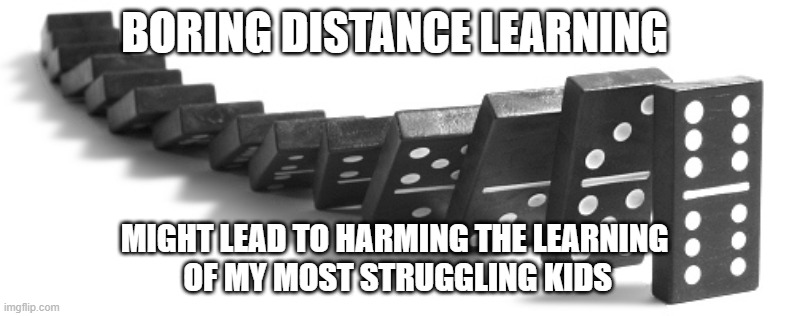
Because A leads to B leads to C leads to D... like this ...

If I assign boring work, the kids won’t be engaged.  
If the kids aren’t engaged, they will stop logging in. 
If they stop logging in, they stop learning in my class. 
If they stop logging into my class, they might stop learning altogether. 
If they stop learning altogether, the fourth quarter is a waste.
If fourth quarter is a waste, my most struggling students will be even more behind than ever.
If my most struggling students are even more behind, then how will they ever catch up?

However ... 
I have to walk the line. 

Have you gone down the rabbit hole looking for some cool activity lately? The internet is a big place. Go looking for something more interesting than the usual stuff and you can spend hours and hours digging and sifting through the resources. You can get lost and sucked into a time warp where you search and explore for hours, emerging well after dark wondering where your day went. 

You have to balance your students’ needs with your own needs. This is always true, but work blends into home life a little more easily now that we can’t get into our cars at the end of the day and leave the school building. 

Number one, as Dr. Grego said in his recent email, please give yourself grace

This is not your regular classroom. You are not teaching five 45-minute lessons anyway. The kids are not in front of you. So, please give yourself and the kids grace to still work through figuring these things out. Let it be messy. Let lessons bomb. Be forgiving when the kids mess up or you mess up or when a lesson falls flat that you thought would rock. Or when the technology doesn’t work. Or when the kids don’t work. For real. 


Number two is that many hands make light work. How do you make a great lesson? How do you find great resources? Where do these colleagues find awesome virtual field trips and learning games? Divide and conquer! 

You can use the resources that come out of our office or share the work with your friends and colleagues. 

But please walk the line between finding engaging lessons and working too hard. Please don’t work too hard. Life is too stressful right now for you to spend 18 hours a day on your computer. 

But please don’t totally skip the engaging piece and just assign textbook readings with questions at the end. If we do that, we lose kids. And if we lose kids right now, it’s awfully hard to find them again.


What lines are you currently walking? How are you succeeding (or not) at walking the line between engagement and overdoing it? How are your kids responding? 

I really do want to hear from you. I really do miss you all! Email me at newmantr@pcsb.org 

-Tracy
Thursday, March 5, 2020

Ten Ways to get Kids to Talk About Content

Ten Ways to Get Your Kids to Talk About Content (and not about other stuff)


Teachers talk too much, myself included (I apologize to everyone in every PD I have ever facilitated). We know that LISTENING is not the best way to learn. It doesn't help us process information. Listening alone is what makes content go in one ear and out the other. 

In order to make content stick, you have to DO something with it. No, not YOU-the-teacher. The KID has to do something with it. 

Talking about it helps. Talking about the CONTENT helps us all learn the CONTENT. Teachers can talk less and kids can talk more (about content)

(Shhh. Sitting quietly while we do a worksheet or read or while the teacher talks does NOT help us learn the CONTENT!)

10. Turn and Talk -- It’s a classic for a reason. Because it works, because it’s easy, because it requires little to no planning. Pose a decent, open-ended question to the class. Show them how to physically turn so that they face each other. Have them talk about the question. Teacher should physically walk around the room, listening to the conversations. (It’s not eavesdropping if it’s in your classroom!). Teacher should share what they heard from students. And if the kids struggle? Model it in the front of the room with a willing volunteer or another adult. Show them what it looks like. Sometimes, they’re not sure you’re serious about it. Be for real about all of it -- the turning part, the talking part, the “on-topic” part, the sharing what you heard part! 

9. Make them write it first (white board?). Sometimes, kids don’t know what to say. They don’t know what to think about content right off the bat. Sometimes, they need a little processing time. Just like they get scratch paper in math, it’s ok to let them jot down a thought or two in your class before they say it out loud. Whiteboards are brilliant for this, because they allow kids to erase every scrap of evidence that they ever had an answer or an idea that they suddenly feel is “dumb” or “wrong” or that they wouldn’t want their peers or teachers seeing. So give them a minute to get their thoughts together before sharing their words. 

8. THINK -- then pair, share -- How many of you have done a “Think/Pair/Share” -- but really cheated the “think” part? I have! Ten seconds is not enough think time, Tracy!  Make sure to give kids the THINK time before they Pair and Share. It honestly makes a difference in their conversations and in their understanding of content. 
7. Debate it -- Teenagers love to argue. It’s developmentally appropriate (not to mention bolstered by social media and election season). So give them a great question and as much or as little structure as a particular class needs and let them verbally duke it out. Nothing is more fun than arguing! Kids will suddenly care about stuff they didn’t care about before. Do you have a particularly boring unit or piece of text? Ask about the “best” or “most important” or “most significant” part and voila! Suddenly that boring topic is fun! And kids are talking! And engaged! And thinking and learning! 

6.Make it a court case --  Have kids argue famous court cases so they have to think about both sides of an issue. Whether it’s Marbury vs. Madison or the Trial of Socrates, it’s helpful for kids to see the arguments for and against a side and have to talk those out. 


5. Give them an interesting conversation topic --  I’ll be honest. Half the time a student conversation activity fell flat was because I had a not-so-hot conversation topic. Make kids pick the “best” or “should they?” or “most important” or “if you were” (but never about slavery or the holocaust!). Make them relate it to their lives or to something else they know or learned about. Make it interesting enough that it piques their interest.

4. Social Media -- Have them type/write it like a social media thread. There’s nothing like a Fakebook Post or a back-and-forth text-looking conversation to get kids involved in a way they prefer to communicate anyway Don’t judge them because they communicate differently than we old-grown-ups. Run with their strengths. Or, have them START with their strengths on fake social media/texts (try https://ifaketextmessage.com/ and then continue the conversation out loud

3. Sentence Starters/Historical Talking Tools -- Sometimes, kids don’t know what to say. Or, they don’t know where to begin. Or, they know what to say in a kid-way, but not in an academic way. Enter, sentence-starters or Historical Talking Tools! Start them off so that instead of saying “you’re stupid!” or “no! You're wrong!” they say “I disagree with you because...” or “Although you say __, I believe __”


2. Silent Conversation -- Put a quote or a short piece of text or a political cartoon on a piece of paper. And put that same piece of paper in front of every kid, but the kids are in groups of 3-4. And give each kid 1-2 minutes to write to respond to that quote/text/cartoon. Then, within the groups, have them pass the papers around to another group member and each kid will respond to what the previous group member wrote. Then, the pass it again to another member of their group, read what the previous two wrote, and add to that conversation. And another time (if you have 4 kids in a group). It’s brilliant for getting kids to dig deep into a great quote/text/cartoon and to have conversation with each other in a way you can structure and monitor. 


1.Model it -- Kids don’t always know how to collaborate effectively. So SHOW THEM! Literally, act it out in front of them and model it. The more explicitly you show them what you want, the more they “get it”. Modelling is a great way to help them get better at what you want them to do, the way you want them to do it. 

Non-negotiables -- These things are non-negotiable when it comes to student collaboration. 
  • Walk around and monitor their conversations by joining in. As kids talk, teachers can’t sit back. Teachers need to be monitoring and listening to every student conversation. And it's ok to join in conversation with the kids so you can ask them probing questions. 
  • Raised hands is NOT student talk. Having kids raise their hands is STUDENT talk. Studnet, singular. As in one student can talk while the other 28 cannot. So, one kid is thinking about content while the other 28 are thinking about pizza or sports or their crush or whatever. It is the least efficient way to have students talk. It’s like painting your whole house with a q-tip. Least efficient tool for the job. Why wouldn’t you have ALL the kids talk so ALL the kids are thinking and learning?

How do you have kids talk about content? How can you mix it up and do more student-talk about content, more often? As always, I love to hear from you! Email me newmantr@pcsb.org

Tuesday, February 11, 2020

Teaching To Who?

Imagine you had a class of 26 kids. Not to get into a discussion about class sizes (nope! Not going there!)  but so we can “name” them Kid A through Kid Z for the purposes of this conversation. 

Now, let’s assume we can rank them according to whatever criteria you think is most important to your class — FSA Reading scores, midterm scores, grade in your class, GPA, etc. 

(I know we don’t actually rank children. That’s a lousy thing to do and a terrible way to treat kids. But since these are fictitious children, will you humor me?)

So let’s assume Kid A is your highest achieving student and Kid Z is your most struggling student. 

Who do you teach to? I mean, when you’re planning your lesson, which achievement level is in your mind?

Let’s assume that you had already planned a lesson that was ON GRADE LEVEL, not below grade level because we think the kids aren’t ready or they need this other thing first. 

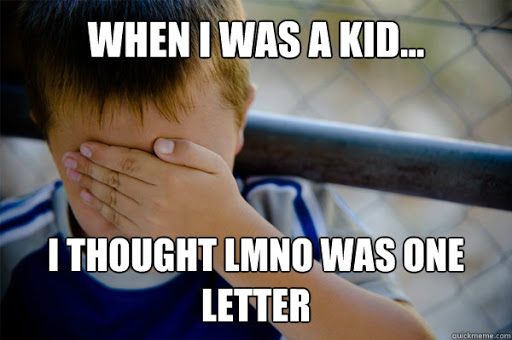
Most teachers would say they’re teaching to the “LMNO” region of the class. The middle. Kid M. They plan their lessons to the middle abilities, the middle achievement group. 

I think they definitely start there. And then they groan at the idea of Kid T, Kid U, and Kid V (and let’s not talk about W, X, Y, and Z!) and the struggles those three are going to have. And then they adapt that lesson downward so that Kids  T, U, and V can do it. 

Which is honorable and kind! 

Meanwhile, Kid A is done with the assignment and doing her math homework before you’re done giving directions. Kids B-E are working diligently while you give instructions. 

But Kids F-S ... that’s 15 kids that are acting up. That’s 15 kids (plus the the earlier five, Kids A-E) for whom this assignment is now was too easy. The lesson that WAS on grade level is now below grade level. 

And just like that, we have lowered our expectations of the whole class. We don’t allow the whole class to do on-grade level, meeting-standards level work. 

Because we were kind. Because we were worried about certain kids. 

I remember Kids T, U, and V. I loved them. I worried about them. I got tired of seeing them constantly frustrated. I hated for them to fail, so I set up assignments where they were more likely to be successful.

But in doing so, I cheated the rest of my class. I underestimated the rest of them. When I said “they can’t do this assignment”, I meant “Kid T through Kid Z” couldn’t do this assignment. 

Kids T-Z are struggling for sure. They’re more likely to act up because they’re frustrated. They might be more needy in the attention department. But they’re 7 kids. I have nineteen kids that CAN do this assignment. 

And this is where we talk about scaffolding and opportunity. 

It wasn’t fair of me to deny those 19 kids the opportunity to try to do those assignments. I had low expectations and that was wrong. I cheated them of the chance to excel. Of the chance to learn. 

Those seven who weren’t ready? There are a million ways to scaffold the task so they COULD be successful. I could have 
  • Sat with them in a small group to help
  • Had them do fewer parts of the assignment (5 questions instead of 10)
  • Highlighted some key passages to help
  • Frontloaded some vocabulary 
  • Let them work with a partner
  • Given them extra time
  • Modeled the first part of the task
  • Given them sentence starters 

Ok, you’re thinking. Maybe I won’t direct my lesson to the “TUV” range. I can just keep it at the “LMNO” level where I started.

That’s definitely a start. But I’d like to challenge you further. 

Every kid deserves a chance to STRIVE. To stretch. To be challenged. Can you take that lesson written at the level where your Kid L, Kid M, Kid N, is now and help them stretch to the next level? Can you challenge those kids to get to where a Level G is? What about a Level D (in this scenario, not a grade of a D)? 

The goal is to continually raise our kids higher, to challenge them further, to push them harder. (Not in a pushy way) 

Every kid deserves to move up, from Kid Z to Kid A, from our “Level Ones” and our “Level Fives”. Every single kid. 

When we teach to the lower level or to the middle achievement level in our class, we don’t help our kids stretch to the next level.

And stretching kids up to the next level is our whole job. 

How do you already do this? How do you remember to stretch your kids and “up” your lessons? As always, I love to hear from you! 

Tuesday, May 14, 2019

Thank U, Next

I realize that I am too old to listen to Ariana Grande but I do anyway. I refuse to be the kind of person who stopped listening to new music when grunge died.

If you are too old to listen to Ariana Grande, too, you might have missed the song, “Thank U, Next” where she sings to all of her exes and tells them what she learned from them and how ready she was/is to move on from them.

At this point in the school year, you may be ready to say “Thank U, Next” to this year’s group of kids. Some years, I remember feeling that way in February.

“Thanks, kids. Is it time for next year yet? Or at least, is it time for summer yet? When will these children be GONE?!?!?!”

What I really want to focus on, is the ability to learn from anyone who crosses your path -- including the students.

I know THEY are supposed to learn from YOU. But I think you can learn a lot from them, too.

The best way to do that is through an end-of-the-year survey.

Sure, your students have been annoying and ... REALLY annoying ... and some of them have been dishonest or unpleasant or bewildering or even outright nasty.

But you will be surprised at how many of them will be honest and helpful on a survey like this. Sometimes even the toughest kids might open up on this sort of thing.

You can survey them on paper. You can survey them digitally. You can survey them pre-printed (does anyone have any copies left?!) You can survey them on index cards, or with QR codes or on their phones or on plain old notebook paper or in OneDrive or Google Docs or on scantron.

It’s a great thing to do on one of those weird days when you see one group for three hours and the other for 15 minutes.

But just do it.

What  should I ask on a survey?

It depends on what you want to know and where you want to grow....

Here is a huge pile of questions. DON’T ask them ALL! Choose the 5-10 you most want to know about and ask those. You can gear them more toward your management, your lesson planning, your learning activities or your emotional support.

  • Which unit was the most interesting to you this year?  
  • Why was this unit the most interesting to you?
  • Which way did you learn the most? (then, give options like “reading”, “group work”, “projects”, “graphic organizers”, etc.)
  • Why do you think these ways were the best?
  • If you could go back and start the year/semester over again, would you do anything differently? Why or why not?
  • What was the best part of this class?
  • What was the worst part of this class?
  • What could I have done to teach you better?
  • What did I do that was the most helpful to you?
  • What was the most important thing you learned this year?
  • What could I have done to improve this class?
  • What will you remember most about this class?
  • What else do you want to tell me about this class?
  • Name something that made it hard for you to learn this year.
  • What should your teacher do differently next year?
  • Did you feel challenged this year? Why or why not?
  • How has your confidence in _________ (subject) improved this year?
  • What is one piece of advice that you would share with a student who is entering this class next year?
  • Did you feel as though I had high expectations of you?
  • Explain a time in class in which you were able to overcome a struggle.
  • Finish this sentence: “If Mr./Ms. ______ only knew __________________”

I’ve said it before and I’ll say it again.

Kids are surprisingly insightful and honest on these things.

I know you are end-of-the-year exhausted, but this is totally worth the 5 minutes it will take to pick your favorite questions from above and put them in the format of your choice.  

Your kids will surprise you.

In a good way.

Have any great survey questions I missed? Email me at newmantr@pcsb.org