BTW -- today’s email is NOT for reading teachers. Reading people, you already do al lthis stuff. So feel free to avoid me today.
The Social Studies teachers, though? Today is for US!!
There’s an old joke that a man sees a musician get out of a taxi in New York and asks “How do you get to Carnegie Hall?” The musician answers “Practice, practice, practice”
It’s old and it’s dumb, but it has truth. If you want to get better at anything, you have to practice.
So, what do we do when so many teachers tell me that their kids “can’t read”?
We have those kids practice, practice, practice.

Seriously, if a kid wants to be an NBA star or a concert violinist or the next Jay-Z or a comic book illustrator or a videogame designer or the inventor of the next Tesla, there’s only one real strategy.
Practice, practice, practice
So, if our kids want to become better readers (or, maybe more accurately, if WE want OUR KIDS to become better readers), they need to practice. Every day that they are in our class, they need to practice.
 “But Tracy”, you protest, “They can’t read!”
I’d like to call “BS” on the majority of those that you think “can’t read”.
Maybe they aren’t strong readers. Maybe they aren’t fluent readers. Maybe they aren’t confident readers. Maybe they aren’t on-grade-level readers. Maybe they aren’t voluntary readers. Maybe they aren’t engaged readers.
But very, very few of them can’t sound out words and get some meaning from many of those words. That’s literally all they do all day for 2/3 of the elementary school and a good chunk of the middle and high school day. ESPECIALLY if they’re in an additional reading class during their day.
They CAN read, some.
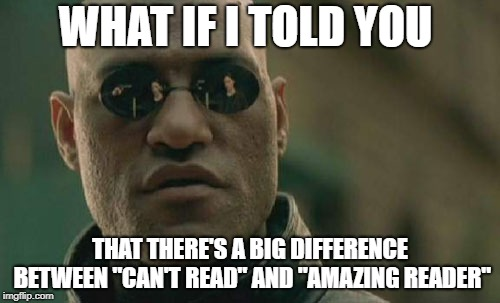
So, let’s stop saying they “can’t read”. There’s a pretty huge continuum between can’t-sound-out-letters and voluntarily-reading-college-level-material. There’s a million shades of grey between the two polar opposites. Let’s look at which shade of grey we’re talking about.
Now, let’s go back to Carnegie Hall. If kids aren’t strong readers, how to they become strong readers? There are a million scaffolds and strategies, but it all comes down to this:
 Practice, practice, practice.
If you have low readers in your classroom, they need to practice reading Every. Dang. Day. IN YOUR CONTENT AREA (not just in reading class)
Here is what they don’t need:
- They don’t need the reading broken down for them in bullet points on the screen.
- They don’t need to be “spared” from reading (even of they don’t love it)
- They don’t need you to lecture instead of making them read.
They don’t need to read ONLY in reading class.
Here is what they DO need:
- Reading. Every. Single. Day.
- in Every. Single. Class.
- Time in front of text.
- Gradual release
- Your patience.
- Think alouds
If your kids “can’t” comprehend your social studies text (or science text or health text or art text), then they need practice in that type of text.
 Here’s the easiest way to help with literacy IN YOUR CONTENT AREA.
Gradual release it.
And chunk it.
If kids are struggling readers, start with something small. Start with a paragraph. Heck, if it’s a tough primary source, start with a sentence or two.
Then, model how you read and think aloud and gain meaning from the text.
Then, give them the next sentence or paragraph. Have them work on gaining meaning from the text.
It’s okay if they aren’t AS good at it as you are. Remember, you have a college degree and they don’t, so they won’t do as well as you do. That’s ok.
Chunk the text.

Start small and gradually give them more text until you build their skill and confidence and stamina.
After a week or two, move up to a larger paragraph. Then two paragraphs next month.
Especially with strugglers, it’s appropriate to start in manageable bites and then gradually challenge them more and more.
Don’t expect them to become better readers by NOT reading. Help them become better readers by having them read something (even small) every day.
What do you have them read daily? How do you move your struggling readers up a level or two? As always, I love to hear from you! Email me at newmantr@pcsb.org