Thursday, June 2, 2016

Top Ten Resources for Brushing Up on US History


I know that many of you who are changing content areas to US History are feeling a little anxious and would like to prepare for your upcoming year during this painfully-short summer. In order to help you prepare for your upcoming content change, we have put together a Top Ten Resources for Brushing Up On US History for those of you who may not have taught US  in a long time, have never taught it, or who would just like some more content resources.

I am intentionally not putting overly-academic sources on this list. This is your summer, and I assume that many of you would like to study in a more enjoyable way. Please, research what you can in a manageable, pleasant way. Don’t over-do it. J

Here are some (10!) of our favorite resources for learning, reviewing, or teaching US History:

1.      Your Colleagues: The first and best resource are the current US History teachers in your school. Please find your current US History teacher colleague and ask him or her what her or his favorite resource is, for either teaching or just for content knowledge. Buy him or her a fruity, cool beverage and hang out, talking US History.
2.      Your TCI Textbook: Borrow a student US History textbook and flip through it at your leisure. In July, you should be able to start with a new subscription to TCI US History (Through Industrialism).
3.      Crash Course US History: The brilliant author and internet super-star (and my secret boyfriend) John Green Has a Youtube Channel called “Crash Course US History”.  This consists of well-researched, historically current, 10-minute videos, each on a topic in US History, narrated by John Green. These aren’t really for kids. He talks too fast, too academically, and occasionally uses an NSFW word or description. It’s great for you-the-teacher to brush up on topics on which you may be rusty. Or watch the whole thing, through episode 25. They’re short and you could watch them on your phone while hanging out this summer.
4.      America, the Story of US: This History Channel  “America: The Story of US” mini-series from 2010 has it all – great visuals, celebrity commentators, the comprehensive story of our nation. Watch the ones related to our course (which is from 1500-1877). Many schools have copes of the DVDs, or you can buy an episode at a time from Apple or Amazon.
5.      Student Novels: It’s easier to Learn US History from a teen novel than from an academic work. Try these favorites. They're more for you-the-teacher than for your students. 
  • Copper Sun Was often read with 8th graders. Not appropriate for 6th graders. Still, really powerful novel of slavery
  • Lyddie Novel of early industrialization at Lowel textile mills
  •  Nightjohn Novel of slavery. Easy read for 6th graders, but may be too violent.
  •  Behind Rebel Lines: A girl dresses as a boy to enlist in the Civil War
  • Come Juneteenth: About when slaves are freed with the Emancipation Proclamation. 
  • New Found Land:  Lewis and Clark’s voyage, told from multiple perspectives in free verse poetry.


Image result for glory movie
6.      Movies: Again, NOT for your students. But Glory is one of the BEST historical movies ever, and probably THE best for our time period (other than Matthew Broderick’s bad accent). Please don’t show this to your students. But stream it online this summer and feel inspired to remember the 54th Massachusetts!  
a.      Honorable Mention: Last of the Mohicans, Amistad, 12 Years a Slave.
7.      Lies My Teacher Told Me: The great author James Lowen has helped us get past the fairytale versions of US History that many of us learned in school so we can teach kids about the messy, complicated world in which we live. Lies My Teacher Told Me is a wonderful book to examine US History. When I searched the Pinellas Public Library Cooperative I found one digital version, six paper versions, and two audio CD versions of this book.
a.      Honorable Mention: “Study Up” Quick Study
8.      Favorite US History Websites:

9.      Mission US Video Games: Sponsored by the National Endowment for the Humanities, these games are AWESOME. Admittedly, I like them ALMOST as much as the kids do. Mission: US is super-fun. And great for learning.
10.   Hamilton: Seriously. Hamilton the Musical is a great way to brush up on early American History. How can you NOT get excited about US History when you’re listening to Alexander Hamilton do an epic rap battle with Thomas Jefferson about the national debt? Playwright Lin-Manuel Miranda based his musical on the respected biography by Ron Chernow.  Listen on Youtube or check out the annotations on Lyrics Genius about each song.

There are a million wonderful resources for teaching middle school US History. Brush up on your knowledge of US in whatever way you can make enjoyable – musicals, YouTube videos, movies, video games, books, or whatever.

Don’t forget that we, your district SS department are helping you tackle this change in a few other ways:
◦        Several days of PD this summer for anyone interested and available  (6/13, 7/18, 7/26)
◦        We also have a team of current 6th and 8th grade teachers working hard this summer to help make adaptations for you.
◦        DWT will full of US History content, resources, and planning!
◦        We have a team revising our MFA field trip for the two-year US History focus.

We know that change is hard! Don’t forget to share with us cool resources we have missed or problems that arise!

Happy History-ing!


Wednesday, May 25, 2016

Cruel Summer (It's so SHORT!)


I can’t believe how short this summer is going to be! Between family vacations, DIY projects, professional development, child-oriented activities and my summer reading list – I’m not going to get much downtime!

But, yes, it's that time again!! Time to gather my summer reading list that I may (or may not) complete this short summer!  I got a sweet new hammock for Mother’s Day (thanks, honey!) so I plan to carve out a little time here and there to actually (gasp!) read books!


Here you go! Tracy’s Awesome Summer Reading List

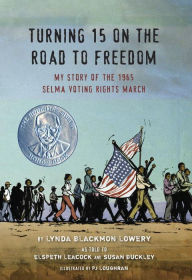
  1. Turning 15 on the Road to Freedom: My Story of the Selma Voting Rights March   by Lynda Blackmon Lowery and PJ Loughran. Our Clearwater High students went on an amazing Civil Rights tour and happened to meet the author of this book -- on the Edmund Pettus Bridge, in Selma, Alabama! It’s the autobiographical story of the youngest marcher on the 1965 historic voting rights march from Selma to Montgomery, Alabama. Looks awesome!

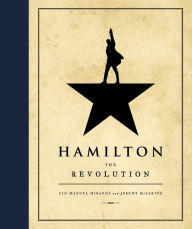
  1. Hamilton: The Revolution by Lin-Manuel Miranda. So, I’m OBSESSED with the Hamilton musical soundtrack. OB-sessed!! So this book about the show with lyrics, essays, historical documents (squeeee!!!) and other info and visuals may be my book “dessert” of the summer. Meaning, I am going to have to read something good for me before I allow myself to sink into this one. Historical documents, y’all!!
*Favorite lyric of the week: “I’ll write under a pseudonym, you’ll see what I can do to him”. Say it out loud. It is a tight rhyme!

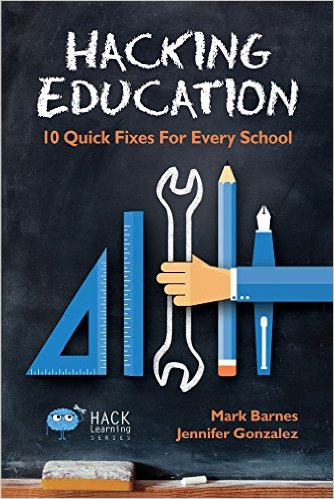
3. Hacking Education: 10 Quick Fixes for Every School by Mark Barnes and Jennifer Gonzalez. I have been reading Jennifer Gonzalez’s blog posts on the Cult of Pedagogy (it’s way more accessible and useful for a regular teacher than it sounds) and I so far like a lot of what she has to say. So I’m curious what constitutes an “education hack” and if anything is as easy as that sounds. Stay tuned. After I read it I should have some thoughts on that.

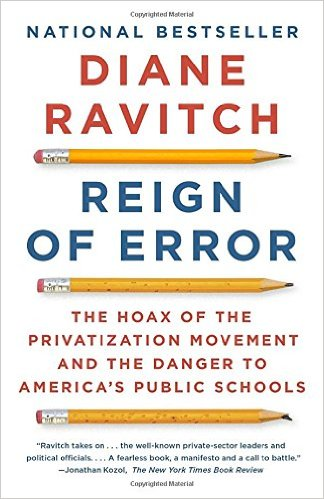
4. Reign of Error by Diane Ravitch. I know, I know. This one is a little political (but thankfully, with a 2014 publication date, we can leave the current presidential campaign out of it). I have had this book come up in several lists and blogs that I read (both praising and critiquing) and, again, I’m curious. It’s about the privatization of education, something Ravitch says is a “hoax” and is “dangerous”. I haven’t read the book, so I can’t speak to whether or not I agree with her. But the woman is known for doing serious research, so I’ll give it a try.

5. The Silk Roads: A New History of the World by Peter Frankopa. This one might be a little ambitious for this short summer, but I’m going to give it a try. This is supposed to be World History on a bigger-picture scale (but not necessarily “Big History”) and not from a western-Civ perspective. I know middle school folks are having some pangs of sadness for the World  History course. This may ease the pain so you don’t have to go “cold turkey”. :)

6. iPads in the Classroom by Tom Daccord and Justin Reich I just got this book and what intrigued me was the rest of the title “...From Consumption and Curation to Creation”. I really love the idea of moving from the idea of “putting content into the kids’ brains” to having the curated and make things with tablets. Plus, it’s short. And I think I have gotten overly-ambitious with my list this year.

7. Founding Mothers by Cokie Roberts I heard her speak about this book at a conference last year and LOVED both her style and her research. As we dig into the Founding Fathers, I find the Founding Mothers a fascinating look at the women who were a part but not a part of the creation of our nation. Plus, she is a heck of a writer!

What’s on your summer reading list? Are you actually going to get through much of it? Are you reading plenty of beach-reads, too? The countdown is in single digits, y’all! Are you ready for the year to be over? I always love to hear what you’re reading, too. Please share!

Have a great rest of the week!
-Tracy


Wednesday, May 18, 2016

Thirteen Days of Crisis

Thirteen days. Tense. Crazy. A million things going on at once. Miscommunication. Emotion.

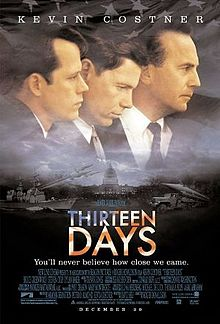
There were thirteen days in 1962 when it seemed that the Cold War would explode into a “hot” war with nuclear missiles looming over us (particularly here in Florida). Those thirteen days were dramatized into the 2000 film appropriately titled Thirteen Days.

There are thirteen days left in this school year. They will also be tense, crazy, emotional, and have a million things going on at once.

Does it feel like ... something ... is going to burst at your school at this time of year? The testing? The packing up of the classrooms? The yearbook-signing. The OMG-I-can’t-possibly-cover-this-all-content-before-the-test anxiety? The am-I-going-to-pass-this-class-can-I-do-more-extra-credit? speeches. The if-you-studied-you-would-do-better-on-your-exam lectures. The where-or-what-am-I-going-to-teach-next-year drama.  

There’s a lot going on during these next thirteen days. Maybe not brink-of-nuclear-war levels of action, but sometimes personal-emotional-explosion levels of action.

It makes teaching more difficult than usual.

I’d like to offer some thoughts for these last thirteen days about making sure that your kids don’t stop learning because the EOC is over or because they’re all cramming for the final and not actually “learning” anymore.  I borrowed some of these ideas from a Smartblog entry by Carol Hunter.

First, I’d like to look at SURVIVING (and thriving) during the crazy 13 Days

  1. The Test Is Not Everything: Despite all the pressure and attention, remember to focus on the kids as kids, not as test scores. Remind them of all that they have learned this year (even if they have forgotten some of it by test time). Remind them of the things that they have learned that are NOT on the test (like how to write a persuasive argument, how to analyze documents, how to contextualize -- and that’s just in the DBQ).
  2. But the test IS something: Have some conversation about what the test actually is, who makes it and why they will take it and what those scores mean or determine. We pushpushpush so hard sometimes to have kids do well on the test, we don’t always contextualize that test for them. It helps to decrease the anxiety a little if the kids can define the test (and its limits)
  3. Wrap It Up: It’s time, at the end of the year, to have kids pull together their learning from all different points in the year and make some meaningful big-picture summaries, connections, and evaluations. Let students take the lead in projects (big or little), discussions, debates, or any highly-engaging big-picture activity that summarizes and wraps up the year (or semester).
  4. Give ‘Em Summer Ideas: Give your kids a couple of ideas of books or websites or games to review your course or prepare for the next course over the summer. Will they all do it? Of course not. But boredom and availability of the internet are powerful motivators sometimes. Help them make connections between your course and the next one.

Once you have assured your kids that you’re not going to watch movies for the last two weeks (please!)  but BEFORE the kids have actually, FULLY checked out, it’s time to get them to reflect.

The second learning from the THIRTEEN DAYS is about data and reflection.

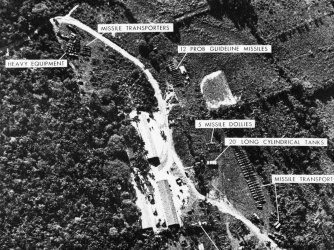
Part of what made the Cuban Missile Crisis a, um, .... CRISIS, was data collection.

To be blunt, in October of 1962, a U-2 spy took photographs that clearly showed ballistic missiles in Cuba, 90 miles south of Florida (or only 321 miles south of St. Pete).  We had clear data, clear evidence that allowed us to react and plan and negotiate and re-plan.

We need to use data and evidence to help us plan in our classrooms, too, so we can react and plan ... for next year. After the Cuban Missile Crisis was over, both our leaders and our people reflected on what that “Close call” had meant and how to handle (or avoid) a similar crisis if it came up again.

I know, I know you’ve heard this from me EVERY year. But hopefully, this reminder will give you some new tools for reflection and data collection. I bring it up every year because it is THAT important!

Your job, as a teacher, only improves if you reflect. Of course, you reflect daily on individual lessons but the best time to reflect on a big-picture scale is now, at the end of the year.

  1. Your own feedback:  Write down a lot of your feedback. All that travelling and beach time and home DIY projects can seriously distance you from school -- which is the whole point of summer vacation!! However, that distance can make it some of those reflections that seem really, really important, um, a little lower priority. Write ‘em down now, before all the fruity beach beverages go to your head.
  2. Your students’ feedback: Sometimes, teachers are afraid of this. But, really, kids are super honest and waaayyy more perceptive than you think they are. You’ll get a couple of joker answers, but far and away most kids will give you thoughtful, useful responses. Here are a couple to check out, adapt, and make your own.
    1. Here’s a whole pile of student feedback forms form Vanderbilt https://cft.vanderbilt.edu/guides-sub-pages/student-feedback/#inclass
    2. One more! A wonderful blog about why and how-to get student feedback http://www.cultofpedagogy.com/student-feedback/

As always, avert the crises! Manage the thirteen days and use them for good, not evil.

As always, let me know how it goes! Email me at newmantr@pcsb.org