Showing posts with label history of place. Show all posts

Wednesday, May 25, 2016

Cruel Summer (It's so SHORT!)


I can’t believe how short this summer is going to be! Between family vacations, DIY projects, professional development, child-oriented activities and my summer reading list – I’m not going to get much downtime!

But, yes, it's that time again!! Time to gather my summer reading list that I may (or may not) complete this short summer!  I got a sweet new hammock for Mother’s Day (thanks, honey!) so I plan to carve out a little time here and there to actually (gasp!) read books!


Here you go! Tracy’s Awesome Summer Reading List

  1. Turning 15 on the Road to Freedom: My Story of the Selma Voting Rights March   by Lynda Blackmon Lowery and PJ Loughran. Our Clearwater High students went on an amazing Civil Rights tour and happened to meet the author of this book -- on the Edmund Pettus Bridge, in Selma, Alabama! It’s the autobiographical story of the youngest marcher on the 1965 historic voting rights march from Selma to Montgomery, Alabama. Looks awesome!

  1. Hamilton: The Revolution by Lin-Manuel Miranda. So, I’m OBSESSED with the Hamilton musical soundtrack. OB-sessed!! So this book about the show with lyrics, essays, historical documents (squeeee!!!) and other info and visuals may be my book “dessert” of the summer. Meaning, I am going to have to read something good for me before I allow myself to sink into this one. Historical documents, y’all!!
*Favorite lyric of the week: “I’ll write under a pseudonym, you’ll see what I can do to him”. Say it out loud. It is a tight rhyme!

3. Hacking Education: 10 Quick Fixes for Every School by Mark Barnes and Jennifer Gonzalez. I have been reading Jennifer Gonzalez’s blog posts on the Cult of Pedagogy (it’s way more accessible and useful for a regular teacher than it sounds) and I so far like a lot of what she has to say. So I’m curious what constitutes an “education hack” and if anything is as easy as that sounds. Stay tuned. After I read it I should have some thoughts on that.

4. Reign of Error by Diane Ravitch. I know, I know. This one is a little political (but thankfully, with a 2014 publication date, we can leave the current presidential campaign out of it). I have had this book come up in several lists and blogs that I read (both praising and critiquing) and, again, I’m curious. It’s about the privatization of education, something Ravitch says is a “hoax” and is “dangerous”. I haven’t read the book, so I can’t speak to whether or not I agree with her. But the woman is known for doing serious research, so I’ll give it a try.

5. The Silk Roads: A New History of the World by Peter Frankopa. This one might be a little ambitious for this short summer, but I’m going to give it a try. This is supposed to be World History on a bigger-picture scale (but not necessarily “Big History”) and not from a western-Civ perspective. I know middle school folks are having some pangs of sadness for the World  History course. This may ease the pain so you don’t have to go “cold turkey”. :)

6. iPads in the Classroom by Tom Daccord and Justin Reich I just got this book and what intrigued me was the rest of the title “...From Consumption and Curation to Creation”. I really love the idea of moving from the idea of “putting content into the kids’ brains” to having the curated and make things with tablets. Plus, it’s short. And I think I have gotten overly-ambitious with my list this year.

7. Founding Mothers by Cokie Roberts I heard her speak about this book at a conference last year and LOVED both her style and her research. As we dig into the Founding Fathers, I find the Founding Mothers a fascinating look at the women who were a part but not a part of the creation of our nation. Plus, she is a heck of a writer!

What’s on your summer reading list? Are you actually going to get through much of it? Are you reading plenty of beach-reads, too? The countdown is in single digits, y’all! Are you ready for the year to be over? I always love to hear what you’re reading, too. Please share!

Have a great rest of the week!
-Tracy


Wednesday, March 25, 2015

Spring Break!! Road Trip!!


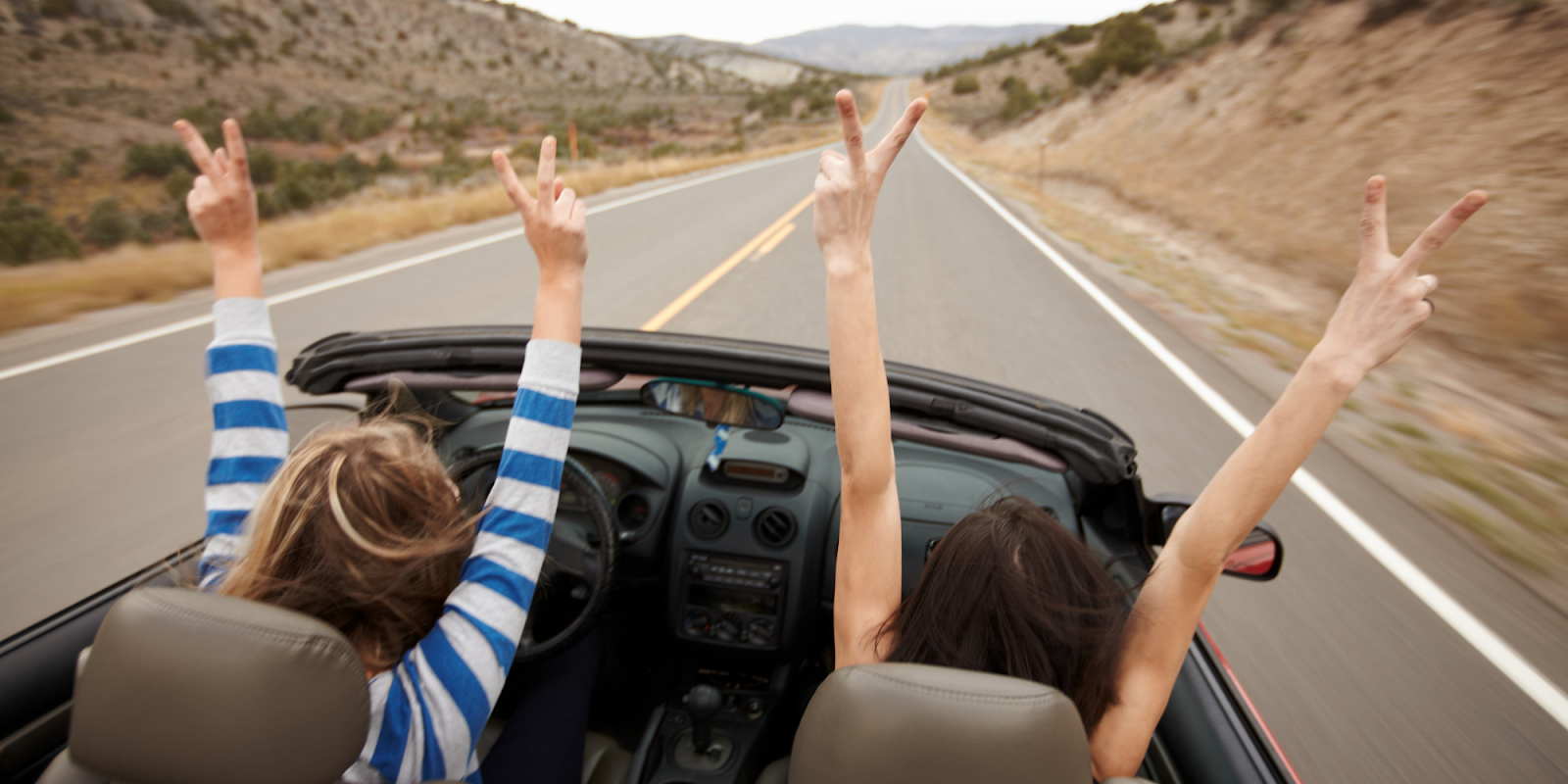
During my senior year of college, three friends and I took an epic road trip. While everyone else went “down south” to Florida for spring break, we Florida college kids decided to head north to Tennessee.

It was legen-waitforit-dary!

We saw snow. We toured Graceland. We broke down in Alabama. We visited a Civil War Museum. We partied in Nashville. We saw mountains. We sang in bars. We visited grad schools.  We drove across the Mississippi River to Arkansas-- to see 89-cent gasoline (I took a picture!)

It was so much fun!

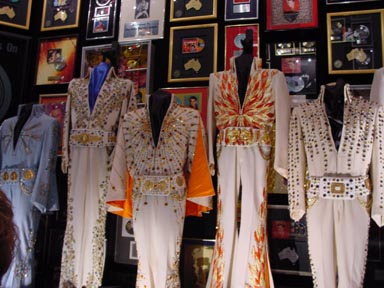
I’m such a history dork. I loved being in Elvis Presley's house and seeing all his awesomely-sequined outfits and the famed “jungle room”. I loved peeking into the Ryman Auditorium in Nashville and seeing where so many country music artists performed. I loved stopping at random historical markers on the side of the road and learning about Civil War marches or early English settlers or inventions created.

There is a lot of history that has happened in Tennessee. Or Alabama. Or Pinellas County.

This -- the idea of where things happened -- this is where geography and history meet. The history of place. The geography of the past.

These inspire the kinds of big-idea questions we social studies teachers love to ask. So many of those big-idea history questions are really about geography.  
  • Why did Ancient Greek city-states develop so differently?
  • How are the Boxer Rebellion and US-led Panama Canal project linked?
  • Why does it matter that the Pilgrims landed in Massachusetts and not Virginia, where they had a charter?
  • How did Islam spread so quickly in the 7th century?
  • What does geography have to do with Dr. John Gorries’ inventions?

Geography and History are inextricably linked. You can’t often fully extract the one from the other.

So, this year, my spring break will not be quite as epic. We’re headed to Orlando with the kiddos to do the theme parks for a couple of days and then home to chill out.

I don’t know what your spring break looks like. You may be headed on an epic adventure. You may be staying home and relaxing.

But either way, I challenge you to think about how history and geography meet. And I have a couple of cool tech tools to help you do that.

  1. Story of Where  -- http://storyofwhere.com/ The Story of Where is an app for your iPhone or Android device. Take it with you and you can find natural, cultural, and historical sites -- with map markers for the National Register of Historic Places, National Historic Landmarks, National Natural Landmarks, World Heritage Sites, Florida sites (and a handful of other specific states), NFL sites, MLB sites and more as they are added. Have your kids take it with them as they travel -- or as they are out-and-about town and see what they can learn Stories Of Where they are. The Safety Harbor Shell Mounds are on there. So is Tropicana Field.
  2. What Was There -- http://www.whatwasthere.com/default.aspx What Was There is a website  -- not an app -- where folks upload pictures and dates to show what a place was like at a certain time in the past. It’s amazing to see what your street looked like 30 or 60 or 130 years ago. This allows anyone to upload a picture (with appropriate limits) with a date to upload and add information about the place and photo. I checked out the old entrance to the Treasure Island Municipal Beach http://tinyurl.com/nwqrdsy and Downtown Dunedin http://tinyurl.com/pt6lq83 You can look up info about the photo and even fit the photo into a current Google Streetview (mappy geek fun!!)
  3. The Historical Marker Database -- http://www.hmdb.org/  The HMDB is a website AND an app (but I find it much easier to use as an app). This site/app maps historical markers. It’s pretty basic in its rules: Markers must be outdoors, must be permanent, and must state historical or scientific facts beyond names, dates, and titles. Again, folks can add their own markers.  I learned about the lynching of John Evans on Central Avenue in St. Pete and the Rose Cemetery in Tarpon Springs.

True history dorks learn -- even on vacation. I challenge you to learn something about the geography of your spring break -- whether you’re travelling or staying home.

And help your kids learn about the history of where THEY are. They may or may not have smart phones, but they know people who DO have smart phones. They can go to the library and use computers. See if they can learn something over spring break -- without giving them boring homework.

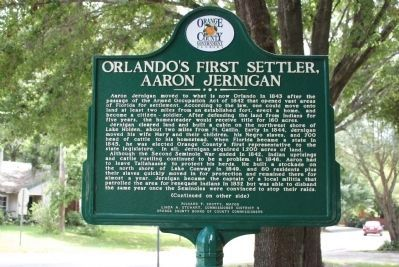
Have a great vacation! I hope it’s relaxing and rejuvenating. And (at least a little bit) educational. I plan to find the marker in Orlando where Orlando’s first settler, Aaron Jernigan built his home. Because.....well ...... history. And geography.

If you learn something awesome about where you live, work or travel -- let me know! I’m always interested!  Drop me an email newmantr@pcsb.org
-Tracy