Showing posts with label frozen teaching. Show all posts

Wednesday, May 27, 2020

Pivot Into the Unknown

Every summer, I end the school year with a final Wednesday Summer Reading List for teachers. You know, a way to kick back and spend time getting around to that stuff you don’t have time or brain power for during the school year.


This year? 

I’m not sure if my brain power will ever come back!

So, if your summer is filled with summer house projects and workouts and actual PLANS and you don’t have time for reading .. good for you! 

But before I do, I want to say thank you. And if I wasn’t paid the same amount you were, I’d buy you all a beverage. 

Thank you! 

This has been the craziest, weirdest, hardest 4th quarter in memory. 
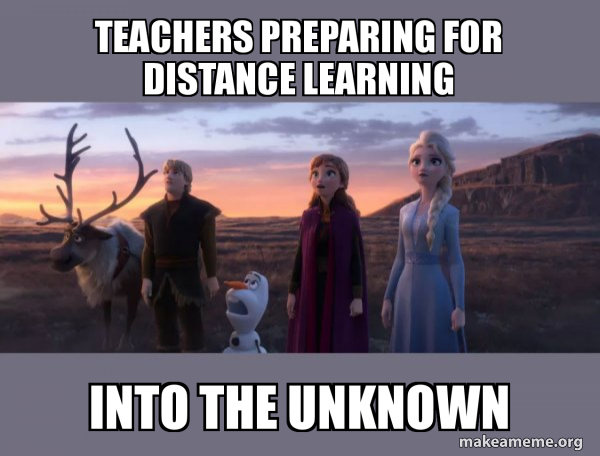
You have gone from the Before Times where we hugged kids and taught in classrooms and had extracurriculars and put on regular clothes and drove our vehicles from our homes to our schools and heard bells ring to tell us when class was over. 

To the Now Times when we sit on our couches all day in PJ pants and never see kids at all and do everything virtually and kids turn in work at 3 am and disappear completely and meet virtually and turn in blank worksheets or else do a week’s worth of work in a day. Where we have video call meetings where we all turn off our cameras and where we use Teams AND Focus AND email to get work turned in. 

You have done a GIANT shift in your teaching and you are amazing. I know you have to bob and weave all the time. It’s what teachers do.

But this was above and beyond the usual. This was huge and wild and different. 

Thank you for your giant shift -- your “pivot” in teaching during this crazy time. 
And now, on with the booklist. 

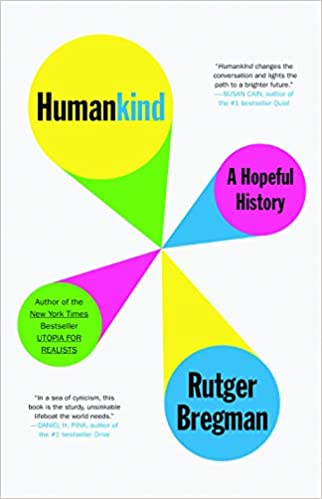
  1. Humankind: A Hopeful History by Rutger Bregman. This book looks pretty cool. It’s based on the idea that humans are hardwired for kindness, cooperation, and trust. In our current political climate, I could really use a book like this. It doesn't come out until next week, but I am looking forward to it.
  2.  The Great Influenza by John M. Barry. It’ll be interesting to read about the Great Influenza epidemic of 100 years ago that killed millions while people have been making both accurate and inaccurate comparisons to it. 
  3. Culturally Responsive Teaching and the Brain by Zaretta Hammond. This book brings together CRT and neuroscience to bring a “hard science” angle to what equity champions and CRT practitioners already know: that CRT can change everything, literally including the brain of you and your students.*Look for the Equity Department's book study on this in the fall! 
  4. Hitting a Straight Lick with A Crooked Stick: Stories from the Harlem Renaissance by Zora Neale Hurston. Nothing like a “new” book by one of your favorite (long deceased) authors to get you (um, me) all ready to sit in the hammock and read! Ms. Hurston was a master storyteller and an anthropologist, so these long forgotten stories are bound to be great. I already bought it but haven’t gotten to it yet! 
  5. The Radium Girls: The Dark Story of America’s Shining Women  by Kate Moore. This book about the “girls” and young women who worked in factories making radium dials and (spoiler alert) got sick in the early 20th century looks fascinating. And looks like something I don’t know much about. And that’s always my kind of history! 
  6. The Color of Law: A Forgotten History of Our Government Segregated America by Richard Rothstein. I have seen these maps but I have never read the actual book. Supposed to be amazing. As someone who lives in Pinellas County, where we could probably draw these maps ourselves based on who lives where. These are things we sort of know “a little something about”, but not exactly everything this book will teach. I can’t wait to learn. 
  7. Balance with Blended Learning by Caitlin R. Tucker. I think we have all learned this quarter what DOES work about digital learning, what the benefits ARE. Well, how can we keep those with us when (IhopeIhopeIhope) we are in the brick and mortar classroom in the fall? Maybe this book has some ideas that we can use to blend the good parts of the digital with the good parts of the traditional classroom. I’m intrigued. 

What are you reading this summer? Anything other than the news? I can’t wait to hear all about it! Please share with me! I will be around and I will check my email. I’d love to chat about one of these books (or another one)! 

And again, thank you for your “pivot” and for being amazing all the time -- but even more amazing for your flexibility and adaptability in this time of Crisis Learning. I am so thankful for you! 

Have a great summer. Stay safe and well! 
-Tracy

Wednesday, January 13, 2016

Sand Mandalas and the Utility Room

Image result for sand mandalaLast Monday on my trade day, I ended up at the Museum of Fine Arts in downtown St. Pete. It happened to be the day that the Venerable Losang Samten, a renowned Tibetan scholar and former Buddhist monk started his sand mandala in the museum. 

A sand mandala is an incredibly intricate work of art created by sand that takes days and days to complete. He used a ruler and a compass and math and drew out his plan on a huge board. He did a chant and blessed the sand and then allowed the museum visitors to add tiny amounts of sand to the mandala. He then spent six hours a day for the next two weeks (still ongoing) creating this incredible work of art. My daughter was so enthralled by the chanting and the artistry and the math and the sand! (she’s a little artsy...)

On this Saturday, Jan 16, Losang Samten (and others) will “dismantle” it. Sweep it away. Two weeks of math, science, and art. Gone.

Isn’t that what it feels like in the classroom sometimes? We work day in and day out to create something amazing and intricate and beautiful and then we sweep it all away and start over.

It can feel overwhelming and frustrating and futile.

But it can be really, really awesome when it’s “right”, in the “now”.

I am an artist. I am a scientist. I am a social studies teacher.

M. Colleen Cruz, author of The Unstoppable Writing Teacher, says this.
                        I believe, as many people do, that teachers are both scientists and artists.
                        Yet, so many of us, myself included, wish time and again that once we have learned something, once we have mastered a lesson, a teaching method, a unit, a rubric, a parent letter, that it should be preserved in amber -- never to be touched or changed again. This is very understandable. You work so d*&% hard. Why can’t our work be preserved and used again and again for always?

            The answer is of course: we are scientists and artists. And just as we would be horrified by the notion that a scientist today was still using radioactive materials without protective equipment the way Marie Curie did, or repelled by the notion of someone killing and stuffing an endangered animal to paint it the way Audubon did, we should feel just as horrified by the notion that a teacher in her thirtieth year would be teaching exactly the same things in the same way as she did when she started. We have all heard stories about those teachers. There are even sayings about them: “He’s been teaching the same year for twenty-five years”

I know most of you aren't teaching the same “year” for twenty five years. That's impractical, out of date, and would possibly involve a filmstrip machine and a slide carousel from 1965. Plus - how would you make a scale for that's? (Ha!)

But we can all learn to live more comfortably in the “ now” of what we do and to understand the relative impermanence of our lessons. It's not that “those administrators” or “those coaches” or “the big District Blobby Monster” are trying to come up with new ways of teacher-torture. It's that the world changes. Kids change. Research teaches us new things about education.

We build a new sand mandala, which is a beautiful, perfect work of art, and then we start all over again.

For goodness sake, work smarter not harder. Use the sand from the last mandala to build a new one. Don't reinvent the wheel (ha!). But don't use the same old tire that's worn out, either.

I don't have a garage in my house. The people who lived there before me enclosed it into a big utility room. Or as I call it, the futility room. Because it's futile to try to keep it permanently clean and organized. It is a constant task to organize and rework the shelves, containers, and miscellaneous stuff in there.

It's annoying, and always a mess. But it's also a little bit of Harry Potter’s “room of requirement”. The room turns into different things as I need them. This month I need a place to stash all my holiday gift wrap, gifts, and whatnot? The futility room! Need an extra bed for an additional houseguest? The futility room! Need a place to organize tools and craft supplies? The futility room!

I hope as you think about the new semester (and the new year), I hope you can find a little peace with the impermanence of your craft, like the sand mandala. I hope you can reorganize and update your tools out of necessity, like my futility room. I hope you don't capture your lessons in Amber, never to be changed. I really hope you aren't using radioactive materials like Marie Curie did. Or filmstrip machines or slide carousels.

In second semester, as 2016 dawns, think about the art and science of your classroom. And update what you do, knowing that the last sand mandala (or lesson)you created was incredibly beautiful. And the next one will be too.

Use your artistic and scientific sides to be more flexible and adaptive. It will pay off in your classroom.

What are your New Year's resolutions? Do you capture your lessons in amber or do you make new sand mandalas all the time? I love to hear what you're trying out, changing, and adapting this semester. Email me! Newmantr@pcsb.org


Tuesday, December 16, 2014

Let It Show! A Testing Holiday Remix

I’ve been shopping, therefore my brain is full of retail remixes of holiday songs. Here is my reflection on this week’s midterm/dd-EOC experiences remixed with holiday music, for funsies. Enjoy!
Oh the testing in here is frightful
But my lessons were so delightful
And since we’ve learned all we know
Let it show! Let it show! Let it show!

Oh, tests don’t show signs of stopping
And my students’ energy is dropping
High level questions and low
Let it show! Let it show! Let it show!


When we finally get items right
How I’ll hate to see any wrong
But if my lessons did engage and excite
Despite mistakes, scores will be strong!

Now the kids are really trying
and it looks like no one’s crying
But as long as we learned all we know
Let it show! Let it show! Let it show!


I hope that despite some glitches and confusion, your testing went as smoothly as possible and that it reflects all your hard work this semester. Have a wonderful, restful, joyful vacation!
-Tracy