Ten Ways to Get Your Kids to Talk About Content (and not about other stuff)
Teachers talk too much, myself included (I apologize to everyone in every PD I have ever facilitated). We know that LISTENING is not the best way to learn. It doesn't help us process information. Listening alone is what makes content go in one ear and out the other.
 In order to make content stick, you have to DO something with it. No, not YOU-the-teacher. The KID has to do something with it.
Talking about it helps. Talking about the CONTENT helps us all learn the CONTENT. Teachers can talk less and kids can talk more (about content)
(Shhh. Sitting quietly while we do a worksheet or read or while the teacher talks does NOT help us learn the CONTENT!)
 10. Turn and Talk -- It’s a classic for a reason. Because it works, because it’s easy, because it requires little to no planning. Pose a decent, open-ended question to the class. Show them how to physically turn so that they face each other. Have them talk about the question. Teacher should physically walk around the room, listening to the conversations. (It’s not eavesdropping if it’s in your classroom!). Teacher should share what they heard from students. And if the kids struggle? Model it in the front of the room with a willing volunteer or another adult. Show them what it looks like. Sometimes, they’re not sure you’re serious about it. Be for real about all of it -- the turning part, the talking part, the “on-topic” part, the sharing what you heard part!

9. Make them write it first (white board?). Sometimes, kids don’t know what to say. They don’t know what to think about content right off the bat. Sometimes, they need a little processing time. Just like they get scratch paper in math, it’s ok to let them jot down a thought or two in your class before they say it out loud. Whiteboards are brilliant for this, because they allow kids to erase every scrap of evidence that they ever had an answer or an idea that they suddenly feel is “dumb” or “wrong” or that they wouldn’t want their peers or teachers seeing. So give them a minute to get their thoughts together before sharing their words.

8. THINK -- then pair, share -- How many of you have done a “Think/Pair/Share” -- but really cheated the “think” part? I have! Ten seconds is not enough think time, Tracy! Make sure to give kids the THINK time before they Pair and Share. It honestly makes a difference in their conversations and in their understanding of content.
 7. Debate it -- Teenagers love to argue. It’s developmentally appropriate (not to mention bolstered by social media and election season). So give them a great question and as much or as little structure as a particular class needs and let them verbally duke it out. Nothing is more fun than arguing! Kids will suddenly care about stuff they didn’t care about before. Do you have a particularly boring unit or piece of text? Ask about the “best” or “most important” or “most significant” part and voila! Suddenly that boring topic is fun! And kids are talking! And engaged! And thinking and learning!

6.Make it a court case -- Have kids argue famous court cases so they have to think about both sides of an issue. Whether it’s Marbury vs. Madison or the Trial of Socrates, it’s helpful for kids to see the arguments for and against a side and have to talk those out.
5. Give them an interesting conversation topic -- I’ll be honest. Half the time a student conversation activity fell flat was because I had a not-so-hot conversation topic. Make kids pick the “best” or “should they?” or “most important” or “if you were” (but never about slavery or the holocaust!). Make them relate it to their lives or to something else they know or learned about. Make it interesting enough that it piques their interest.
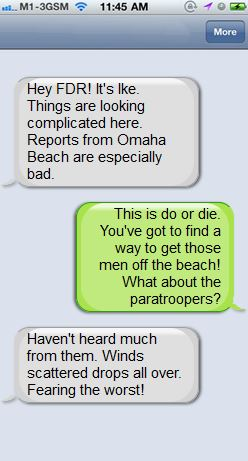
4. Social Media -- Have them type/write it like a social media thread. There’s nothing like a Fakebook Post or a back-and-forth text-looking conversation to get kids involved in a way they prefer to communicate anyway Don’t judge them because they communicate differently than we old-grown-ups. Run with their strengths. Or, have them START with their strengths on fake social media/texts (try https://ifaketextmessage.com/ and then continue the conversation out loud

3. Sentence Starters/Historical Talking Tools -- Sometimes, kids don’t know what to say. Or, they don’t know where to begin. Or, they know what to say in a kid-way, but not in an academic way. Enter, sentence-starters or Historical Talking Tools! Start them off so that instead of saying “you’re stupid!” or “no! You're wrong!” they say “I disagree with you because...” or “Although you say __, I believe __”
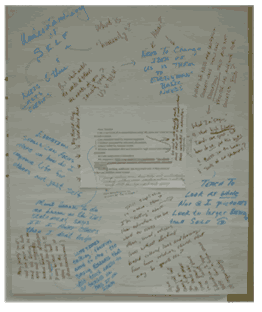
2. Silent Conversation -- Put a quote or a short piece of text or a political cartoon on a piece of paper. And put that same piece of paper in front of every kid, but the kids are in groups of 3-4. And give each kid 1-2 minutes to write to respond to that quote/text/cartoon. Then, within the groups, have them pass the papers around to another group member and each kid will respond to what the previous group member wrote. Then, the pass it again to another member of their group, read what the previous two wrote, and add to that conversation. And another time (if you have 4 kids in a group). It’s brilliant for getting kids to dig deep into a great quote/text/cartoon and to have conversation with each other in a way you can structure and monitor.

1.Model it -- Kids don’t always know how to collaborate effectively. So SHOW THEM! Literally, act it out in front of them and model it. The more explicitly you show them what you want, the more they “get it”. Modelling is a great way to help them get better at what you want them to do, the way you want them to do it.
Non-negotiables -- These things are non-negotiable when it comes to student collaboration.
- Walk around and monitor their conversations by joining in. As kids talk, teachers can’t sit back. Teachers need to be monitoring and listening to every student conversation. And it's ok to join in conversation with the kids so you can ask them probing questions.
- Raised hands is NOT student talk. Having kids raise their hands is STUDENT talk. Studnet, singular. As in one student can talk while the other 28 cannot. So, one kid is thinking about content while the other 28 are thinking about pizza or sports or their crush or whatever. It is the least efficient way to have students talk. It’s like painting your whole house with a q-tip. Least efficient tool for the job. Why wouldn’t you have ALL the kids talk so ALL the kids are thinking and learning?

How do you have kids talk about content? How can you mix it up and do more student-talk about content, more often? As always, I love to hear from you! Email me newmantr@pcsb.org


