Showing posts with label higher order thinking in social studies. Show all posts

Tuesday, May 2, 2017

Gosh Yarn It! Wool You Play?

So this is Teacher Appreciation Week! I want you to know how much I appreciate you. I know how ridiculously hard you work. Please know how amazing and powerful I think you are!

In honor of Teacher Appreciation Week, today’s WW email

One of the best ways to review for exams is to use fun & engagement with higher order thinking. The fun and engagement make the content memorable and make the info “stick” in the kids’ brains and the higher order thinking helps the kids apply their content and make connections.

One of my favorite review games is the “Yarn Game”.  (All props to my colleague JK, the inventor of this review game!)

You may have come across this game as a kid as part of an ice-breaker game or maybe a team building activity.

But I LOVELOVELOVE it as a review activity.

Here’s how you do it.

Prep:
  1. EITHER create notecards with vocabulary terms on them OR use your Vocab Sticky Note cards from a previous activity.
  2. Make sure each student has ONE vocab term card or sticky note.
  3. You-the-teacher should have a term, too.
  4. Depending on your students, do this either whole class or in two larger-sized groups.
  5. Bring a ball of yarn (or two) to class. Available at Walmart for $2-$3.
  6. Have students look up their term ahead of time and jot down a few key terms or connecting words on the back.

Play:
  1. Have students stand in a circle around the room so they can see each other (or two big circles)
  2. You-the-teacher should hold the very end of the yarn.
  3. Explain to the students that each person in the circle will hold on to a part of the yarn and then throw the ball of yarn to another person across the circle, effectively linking one person to another.
  4. The person who throws it has to explain how their term relates with the term of the person to whom they throw it.
  5. For example: Devonte’s term is “Impeach”, which is related to Jasmine’s “Judicial Review” because they are both ways to check the Executive Branch.
  6. Then, that person holds on to part of the yarn and throws the rest of the ball of yarn to a new person and explains how his or her term relates to the person they threw to.
  7. As the yarn is passed from person to person, a web should form within the circle.
  8. The last person should throw the yarn back to the teacher and explain how that last term relates to the first term.
  9. You may want to ask the students to explain (or defend) their connections “How do those terms each check the Executive Branch?”
  10. Formatively assess -- by asking kids afterwards to reflect on two or three connections they learned in the game that they had not previously thought of.
Benefits of Yarn Game:
  • Student collaboration and discussion.
  • Students are active and out of their seats.
  • Students have to make connections between unlike terms in the same unit.
  • Students will see how many terms in the unit connect to each other.
Watch Out For:
  • Kids dropping the yarn and letting the web fall apart.
  • The last few people often have a tougher time. You may allow the rest of the circle to help them out.
  • Differentiation. Choose more concrete terms for struggling kids and more abstract terms for more advanced learners.  
  • If terms are from a long time ago (first semester?) then provide a word bank on the board or screen, so they don’t have to squint to see that term way across the circle from them.

Let me know how it goes! As always, email me! newmantr@pcsb.org
-Tracy

Wednesday, March 22, 2017

R&R, and R and R and R

R & R ... and R and R and R and arrrrgghhh.....

Today’s Wednesday Words are brought to you by the letter “R”.

I hope you got great R&R last week. The weather wasn’t exactly beachy for a Floridian but it was lovely for chilling on the hammock in the back yard.

I was thinking about our R&R -- rest and relaxation -- last week while I was on said hammock.

And then I thought about how it’s fourth quarter - omg it’s fourth quarter, y’all!

How did that happen already? I can’t believe it’s already fourth quarter!!

Fourth quarter!!  Time to cram in everything you missed this year and then go back over it all and get them ready to take a test ...

Now that you are done with your R&R on spring break and on the downward slope toward the end of the year, I’d like to think about ... R and R and R

Review and Reteach and Remediation.

What’s the difference? Isn’t it all the same? Aren’t they just different names for talking about all the stuff at the end of the year?

In a word? Nope.

  • Review is where you go back over the content from earlier in the year. Of course adolescents don’t remember what they learned in September! They don’t remember the homework you assigned yesterday or the Ice Bucket Challenge (RIP, Ice Bucket Challenge. SMH.) Of course they don’t remember content from seven months ago. At this age, they were, like, totally different people seven months ago!
    • How to Review? Review whole class with games and activities. Just don’t forget the higher levels! The test isn’t all recall, so your reviews shouldn’t be either...

  • Reteach is where your whole class bombed (or, more appropriately “didn’t master”) certain material. Check your data. Reteach is needed when you taught the three branches or westward expansion or the Vietnam War and then discovered  that somehow your whole class has no clue what that topic even is.
    • How to Reteach? Think about your lesson, look at your benchmarks, and then make a new lesson to teach it again, differently. Your kids didn’t get it, so they need to start all over.

  • Remediation is where you figure out which kids didn’t get which material  and pinpoint specific activities to help those particular kids learn that particular material. Kid A  missed benchmark 2.9 and Kid B missed benchmark 2.11? Then your whole class doesn't need a whole-class lesson on 2.9 or 2.11. Those individual kids need something to help them master those benchmarks that they need to improve upon.
    • How to Remediate? Look at your data and pick a few benchmarks with which a handful of kids struggled. Create a couple of benchmark-specific activities to have those kids work on. Then, have kids work on JUST the benchmarks they need.

If review was like the a frosting on a good cake, then reteach is like baking the cake all over again and remediation is like adjusting the quantities of specific ingredients. It’s more precise, more scientific.

We are beginning the fourth quarter and it’s time to start thinking about the three Rs -- Review, Reteach, and Review.

Which one do each of your kids need for which content? And how do you plan to do each?

As always, I love to hear from you! Email me at newmantr@pcsb.org
-Tracy

Wednesday, March 8, 2017

Baby & Bathwater


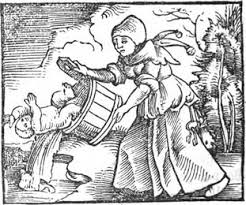
Have you ever thought about the weird expression “don’t throw out the baby with the bathwater”?

It’s a really strange expression. I mean, who throws out a baby? Or, maybe more precisely, who doesn’t notice a baby falling out when they dump a bath, no matter how dirty the water may or may not be?

This is a really a colorful, impactful, German expression, used by everyone from Martin Luther to Von Bismark. It means “don’t get rid of something important/good when you get rid of something not-so-important/not-so-good.”

As we slide into Spring Break (ya-hoooooo!!!!!) and into fourth quarter, I want to ask if you have thrown out a baby accidently with your bathwater this year -- and if you can save said baby in the last quarter....

Meaning, what have you decided your kids “can’t” do? How can you help them ACTUALLY DO that thing? And how can you help save the good parts (the baby in this metaphor)

Image result for beginning for the school year to end of the school yearIt has been seven months since school started. Your kids have grown and matured (probably). They have learned things in your class and in other classes. They have gone from an incoming whatever-grader (7th grader or 10th grader, for example) to an almost-the-next-grader (almost an 8th grader, or almost an 11th grader). Most of the school year has passed. It’s a new day, a new quarter, a new game.


What I mean is ... stuff changes. Kids change. That thing you thought they couldn’t do? Maybe they can now.

Image result for you can't handle this class memeTry again.

Save the baby you may have thrown out with that bathwater.

  • Have your kids struggled so much with Higher Order Thinking (HOTs) that you decided that they “can’t handle” higher order thinking?
    • Maybe you can try some different higher-order thinking on a smaller scale, with more modelling, more scaffolding, in a task where they are more likely to be successful. Think about a HOT turn-and-talk or a quickwrite with HOT, instead of a elaborate HOT assignment or a long series of HOT questions
  • Have your kids struggled with collaboration? Have they gotten off-task or got “squirrely” or loud or whatever when you let them collaborate -- so much that you decided that they “can’t” work together?
    • Maybe you can try some smaller, shorter, highly-structured collaboration. Structured turn-and-talks (each kid gets 30 seconds of uninterrupted talk time or each kid gets a role). Give them the “Oh Groups” five rules of groupwork
      • On Task
      • On Topic
      • Only Talk To Your Group Members
      • On (or in) Your Seat
      • Level One Volume
  • Have you-the-teacher struggled with a particular piece of technology?
    • Maybe the bugs have been worked out by now. Maybe you’ve seen or heard your peers use it and they can give you tips. Maybe now that you have so much else mastered that this time or year you can try it again. Try Plickers or myunify or whatever.

  • Are your kids giving you terrible writing? So awful that you’ve decided that they “can’t write”?
    • Don’t forget -- the only way to get better at something is to practice, practice, practice! Give your kids a chance to write frequently, in a practice-format (not a big grade) sort of way.  Give them quick writes, sentence starters, words-to-use, graphic organizers, or any other support they need.

  • Are your kids struggling readers? Have they struggled so much that you got tired of watching them struggle and you have been giving them the content notes to write down so they don’t have to read it?
    • Again, the only thing that helps us improve is to continue to try. Give your kids more readings, different readings, more reading strategies. Use gradual release again and again. Explicitly teach the skill, not just the content.Give them easier text with which they can feel successful AND text that is a little tougher to make them S-T-R-E-T-C-H.

Where have you tried to throw out the baby with the bathwater this year? It’s not too late to SAVE THAT BABY! You still have a whole quarter left. I encourage you to give whatever it is another try, maybe from a different perspective.

Take some time over this spring break and put this in the back of your mind. Let it “percolate” back there and think about what didn’t work earlier this year -- and how can you try it again later in the year and be successful.

What “baby” in your classes are you going to try to rescue? What are you doing over spring break? Have a wonderful, restful spring break! As always, I love to hear from you! Email me newmantr@pcsb.org
-Tracy

Wednesday, March 1, 2017

Old Dead White Men and Multiple Perspectives

I spend a lot of time teaching/working with middle school US History and Civics. In case you haven’t looked at those benchmarks in a while, I’ll fill you in.:

They are overwhelmingly about old, white men who are now dead. There are very few women or people of color or children or teenagers in those benchmarks, and when they do appear in the benchmarks, they show up all in one benchmark which literally says  “examine the time period from the perspective of historically underrepresented groups (children, indentured servants, Native Americans, slaves, women, working class).”

John Adams has his own benchmark (Hamilton says, “Sit down, John, you --”). So does Thomas Jefferson.

Not to detract from those important men. But there aren’t any benchmarks about specific individuals that aren’t white men.

Look around your middle school or high school classroom.
  • It is probably roughly half male and half female (except that one weirdly unbalanced class...).
  • You probably have varying diversity depending on your school, but most schools are not as overwhelmingly white as the list of presidents in the back of your textbook.
  • And although some of your teen boys might THINK they should be referred to as “men” the rest of us call them all “boys” until they’re 18.  And if they’re in high school, we usually refer to them that way until graduation.

All that to say -- none of us teach a classroom of old, white men in our classrooms. And none of us teach dead ones  And none of our kids dress or live like the 1800s.

It’s hard to help kids feel a connection to someone from so long ago that really doesn’t look like they do.

So how on earth are we going to make a curriculum of old, dead, white men (ODWM) relevant to young, alive, multicultural students?

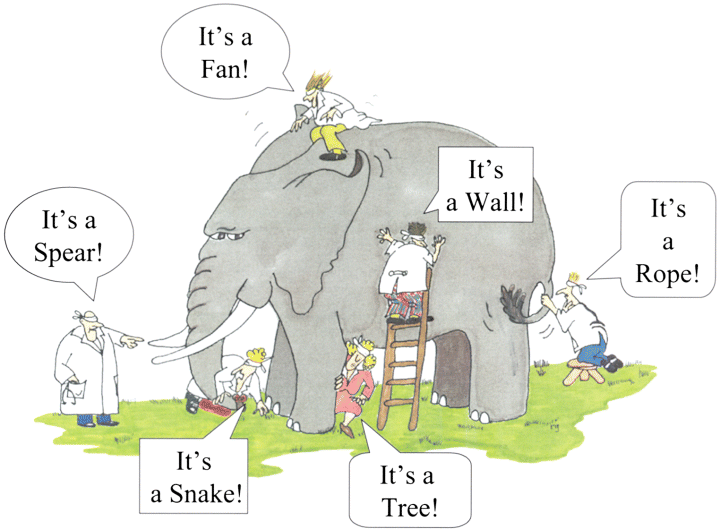
It’s all about multiple perspectives and humanity-sized issues.

If your benchmarks and resources point you toward the ODWM, please remember that these men did not live in isolation. Some portraits and resources may look like a sea of white, male, powdered-wig-wearing faces ... but really, these men saw and interacted with women and children (and often people of color) all the time.

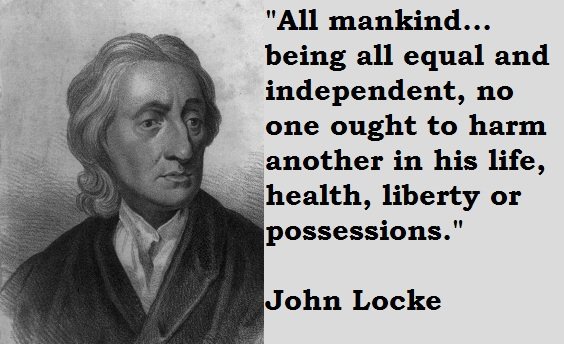
There is no way that Locke or Montesquieu lived lives free of women. So, let’s bring women into the conversation. What might women have thought about those men’s views? What women might have agreed with them? What women might have disagreed with them? How might that imaginary conversation looked?

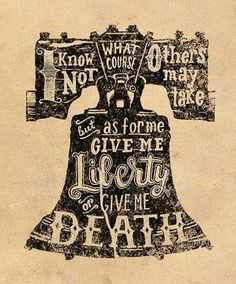
There is no way that Patrick Henry and Thomas Paine lived in New England without encountering Native Americans or African Americans. What might each group have thought about the man and his writings? In what ways might they have interacted? How would Patrick Henry have answered an African American or a Native American questioning his “give me liberty or give me death”?

This is a great opportunity for kids to do higher-order thinking. “What-if thinking”, when done well, can be like a hypothesis. One that’s hard to prove, but still one that’s good for learning about context and the relationships between people and ideas.

There’s even a BENCHMARK about multiple perspectives -- in almost every course!
In Middle School US History, the benchmark is SS.8.A.1.6 “Compare interpretations of key events and issues throughout American History.”

In Middle School Civics, the benchmark is SS.7.C.2.13 “Examine multiple perspectives on public and current issues”.

In High School World History, the benchmark is SS.912.W.1.5 “Compare conflicting interpretations or schools of thought about world events and individual contributions to history (historiography)”

In High School US History, the idea of multiple perspectives is laced into a tone of individual benchmarks -- but the most explicit one is LAFS.1112.RH.3.7 “Integrate and evaluate multiple sources of information presented in diverse formats and media (e.g., visually, quantitatively, as well as in words) in order to address a question or solve a problem.”

If your child is not an “old, dead, white man” (and ... it would be super-creepy if you taught dead kids), it’s not the FACE a kid needs to connect with. A kid will best connect with the human issues at stake in history. The “Old Dead White Men” grappled with issues of power, understanding, greed, relationships,  survival, culture, change, and obstacles. Our kids may not live in the same times as the people in history, but they can wrestle with the thinking of those ODWM and the others who lived in their time period.

Take a look at the place where your students and your content fail to connect. Then, look for a way for your kids to connect -- can they examine that person’s motives, struggles, purposes? Can they look at the issue from the perspective of another non-ODWM? Can they put a modern spin on the issue?

Multiple perspectives are so important in our personal lives and in our lives as citizens.

How do you make ODWM relevant to live, diverse, modern students? How do you teach multiple perspectives? As always, I love to hear from you -- email me at newmantr@pcsb.org
-Tracy