Showing posts with label teaching with growth mindset. Show all posts

Monday, February 24, 2020

They don't care about education

Sometimes, the universe converges so we hear the same phrase over and over again. I heard some version of this phrase at DWT, in classrooms, in meetings, overheard in hallways. 

It was teachers, expressing frustration about their students. Saying some version of “they don’t value (or care about) education”. Sometimes it was about the kids’ parents or families. 

And I totally get being frustrated with your students! I wish I could name all the kids who refused to do anything in my class. It sure looks like lack of caring, lack of value on education! But here’s four that stick out in my mind.
  • Corey, who literally didn’t put pencil to paper all semester. He had an 8% in my class. 
  • Yasmin, who showed up to school so rarely, I had to look up her name when she finally did. 
  • Jeremy, who just wanted to goof off and crack jokes all period. He really didn’t take class seriously and was a distraction to the rest of the class. 
  • Brianna, who argued with anything and everything I said (or anyone else, really). She didn’t like the assignments or how I gave them or how I graded them -- so she wouldn’t do them. 
So frustrating! 

I keep thinking back about them and about the phrase I kept hearing this week, about kids who “don’t care about their education”. 

Did I say that about Corey? About Yasmin? About Jeremy? About Brianna? I hope I didn’t. But maybe I did?

Did I actually think about the fact that their brains were in development and not fully “done” yet? That their impulse control and their problem solving skills were not fully formed and imperfect because of biology? Did I think that maybe I didn’t have a full picture of what’s going on in their lives? That while my housing and relationships are stable, maybe theirs are not?
Did I actually presume to make judgments about their inner values based on their adolescent behaviors?

Oh dear god. I hope not.

Did I really know what was going on in their lives? Did I know that Corey had executive function struggles, especially with the“task initiation” part of executive function?  Did I know that Yasmin’s mom was really sick and that Yasmin was skipping school to watch her little sister? Did I know that Jeremy lived with his mom but his dad had come back after being gone for a while and Jeremy was acting out because he didn’t know how he felt about Dad being back? Did I know that Brianna was acting tough and arguing with everyone because she was battling a bully? A bully that was making her feel awful about herself so she was making everyone around her feel awful too?
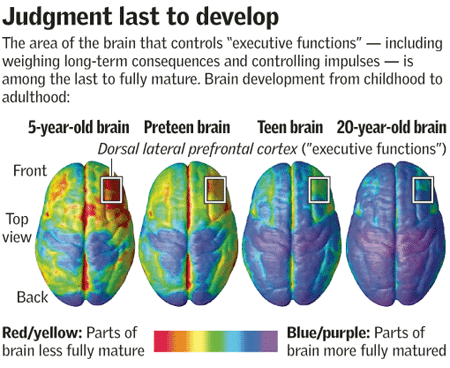
All that was happening to hormone-uneven, social beings with issues. They’re not fully formed human brains. They're still developing. They don’t make good decisions because the parts of the brain involved in decision-making aren’t fully developed until they’re 25 or so. These kids are nowhere near 25! So of course they're going to make bad choices. It’s part of growing up, not a sign of poor values.

It’s like asking an elementary school kid to dunk a basket on a regulation height hoop. Of course they can’t. They’re not done growing! They're not there yet, even if they’re trying. 

Same with asking a 15 year old to consistently make good decisions. They can’t. They’re not done growing. They're not there yet, even if they’re trying. 

That doesn't mean we don't ask kids to make good choices and we don’t expect them to and we don't teach them how to and we don’t reinforce HOW TO make good choices. Of course we do! 

It means we don’t assume that poor choices on the kids’ part equate to poor values. 

Poor choices equate to mistakes. Period.

I made poor choices when I was their age. You did too. 
A kid who skips school might value education just fine. She might just value not getting beat up by a bully that day even more. If I were in her shoes I might value the same priorities. 

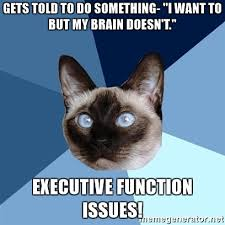
A kid who doesn’t do any work might value education but not know how to start. It might be like how I avoid cleaning out my closet because it’s such a big task and I don’t know where to start. It’s called “task initiation” and it’s a real area of executive function. It’s not a problem with his values. It's a problem with his brain development. He might just need some accommodations. Sometimes, I don’t know where to start either. But I have developed strategies. He might not have those yet.  

A kid going through something emotional will act out. So will I. I was a lousy teacher the year I got divorced, all those years ago. Because while I prioritized my job, my emotions got in the way and distracted me. And I even had a fully developed brain at the time! 

(Remember being a teen and going through a break up and not knowing how to handle it because your brain wasn’t done growing and you didn't have experience to draw from? Ugh! That was so awful and heartbreaking!!

So I hope I didn’t make judgments about my kids ... but I probably did, because none of us are perfect. I’ve been caught up in negative thinking, too. So I hope you don’t make the mistakes I did. I hope you don’t take the behavior of poor choices and emotions and partially-formed brains and called those “values” or “caring”. 
Instead, I hope you DO the caring. Remember that these are children. They don’t have your experience or your perspective or your stability or your fully-formed brain. 

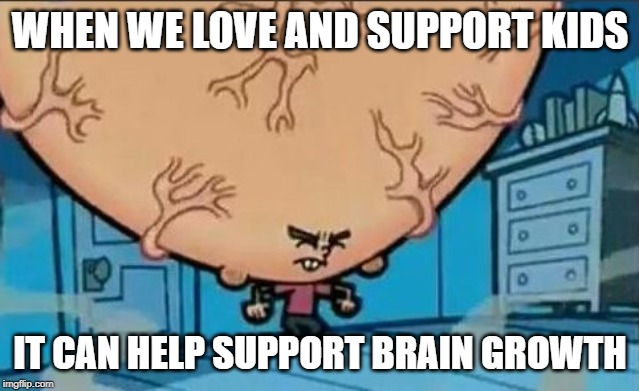
I hope you give them the love and support and caring  in your class that will HELP THEIR BRAINS DEVELOP FURTHER AND BETTER. Honestly, not to simplify, but feeling safe and loved and supported is like a cast on a broken bone. It supports the brokenness and lets it heal and grow what and where it needs to safely without being further damaged. 

Getting on their case regularly, yelling at them, or writing them up for not working -- it’s like bumping that broken bone. It doesn't let it heal. 

Kids who struggle have hormones and emotional turmoil. They have social media drama that we didn't have. They have family problems we don’t know about. They have romance confusion we have forgotten about. They have executive functioning struggles and learning disabilities many of us don’t know as much about.  

But 94% of them want to go to college. Most of them care about their education. But that other stuff gets in the way, just like my couch (or my last bout of being sick) gets in the way of my valuing my health and exercise. :) 

How can you help them develop their brains and become stronger students? How can you work to see the caring behind all the crap they have to deal with? How can you bring that out of them in a positive way? I love to hear the amazing things you’re doing? Email me newmantr@pcsb.org

Tuesday, May 21, 2019

Summertime and the Reading's Easy

It's about that time, y’all!

The school year is almost over!  We are so close, I can almost SMELL the beach from here!

So, it’s time for my annual summer reading list. You definitely don’t have to read the same book I AM, but I do recommend that you find SOME books to read, preferably the kind you don’t have time to read during the school year.


I fully admit to being academically “tired” during the year and reading mostly flaky stuff. But in the SUMMER, my brain is less worn out and more fresh. It’s a great time to read some “real” books while I have a little distance from the school day and school year. It’s easier to get through “real” books in the summer.

It’s important to do your OWN summer PD your OWN way, and reading books to refresh your thinking and practice is a great way to do that.


Read on the plane.
Read at the beach.
Read on your couch.
Listen in your car.
It doesn’t matter WHERE or WHEN, just read!

So, here is my book list for Summer 2019!
  1. These Kids Are Out Of Control: Why We Must Re-imagine Classroom Management for Equity by H. Richard Milner IV et al.  admit to having this one already downloaded and ready to go! So many of us struggle with classroom management. And we also struggle with equity and how to use/apply/cultivate it effectively. And maybe some of us have noticed that the teachers with the best relationships with kids, with the strongest equity practices -- have fewer classroom management issues. Let’s work on figuring this out together! (PS -- If I love this book as much as I think I will, I’d like to do it as a book study in the fall. Who’s with me?)
  2. Why Learn History (When It’s Already on Your Phone)? By Sam Wineburg. I admit, I’m already a couple chapters into this one. It’s pretty brutal, leaving no sacred cows alone. Roasting Howard Zinn, TAH grants, Bloom’s Taxonomy, George Washington, Google, pretty much all assessments of the past 100 years, and lots of other things I generally like and think highly of, Wineburg shoots right through all that stuff to the heart of teaching history and to historical thinking. And, despite me really being a fan of things like George Washington, the TAH, and Bloom, this book is amazing so far. It really gets past all the pieces to the Big Question: Why do we teach history to kids, and how can we do that better?
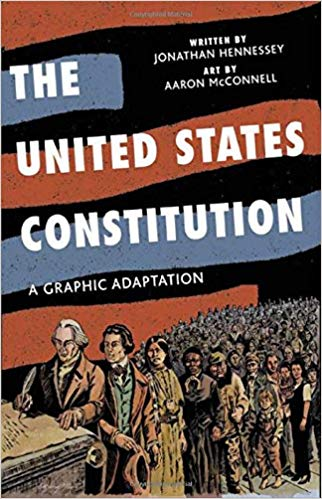
  3. The United States Constitution: A Graphic Adaptation by Jonathan Hennessy. This year, I have two graphic novels on my list, in an attempt to see if and how I can use them with students next year. The first is a graphic novel of the US Constitution -- which should be wonderful for students struggling to read and get engaged in Civics & Gov. Imagine giving it to a struggling reader to give him or her a little background before jumping to the actual text of the actual constitution! That could be a great scaffold!
  4. The Odyssey, A Graphic Novel by Gareth Hinds looks promising, too! I admit that my third grader read it and found nothing objectionable (and she still gets outraged by the “h” word -- hell). But I don’t know how I would use it -- yet. I have to actually read it to think through that.
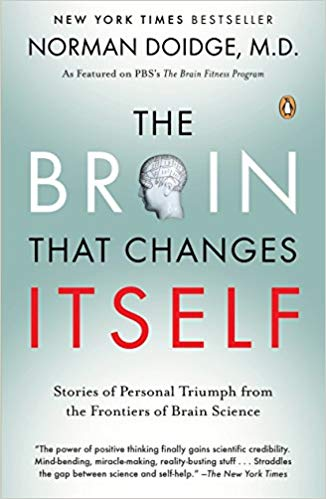
  5. The Brain That Changes Itself by Norman Doidge. This book blew my mind. I’m not much of a scientist -- and definitely not knowledgeable enough to be a NEUROSCIENTIST, but this book was practical and easy to understand and explained SO MUCH about our world, about education, about our kids and ourselves. It really amazed me with it’s readability and about how much useful stuff I got out of it!
    1. *Caveat: there is a chapter about human sexuality in there. It has nothing to do with teaching social studies, but don’t be shocked when it is in the book. That’s not why I am recommending the book. It's the rest of the book that I recommend!
  6. Beneath A Ruthless Sun: A True Story of Violence, Race, and Justice Lost and Found by Gilbert King (author of The Devil in the Grove. This is another important, powerful book about racial terror in Florida. You will see the familiar Willis McCall reappear in this book. It looks like an emotionally difficult read, but I can handle that in the summer.
  7. Prisoners of Geography: Ten Maps That Explain Everything About The World by Tim Marshall. I am so intrigued, I can’t help myself. Which maps, in particular, explain everything about the world? I have no idea. But I plan to read and find out!  

How about you? What’s on your teacher summer reading list? Want to read one on my list and talk about it via email?Or over fruity beachy beverages? Want to share what YOU plan on reading? Or tell me what you thought of a book?

Email me! I love to know! newmantr@pcsb.org
-Tracy

Tuesday, May 14, 2019

Thank U, Next

I realize that I am too old to listen to Ariana Grande but I do anyway. I refuse to be the kind of person who stopped listening to new music when grunge died.

If you are too old to listen to Ariana Grande, too, you might have missed the song, “Thank U, Next” where she sings to all of her exes and tells them what she learned from them and how ready she was/is to move on from them.

At this point in the school year, you may be ready to say “Thank U, Next” to this year’s group of kids. Some years, I remember feeling that way in February.

“Thanks, kids. Is it time for next year yet? Or at least, is it time for summer yet? When will these children be GONE?!?!?!”

What I really want to focus on, is the ability to learn from anyone who crosses your path -- including the students.

I know THEY are supposed to learn from YOU. But I think you can learn a lot from them, too.

The best way to do that is through an end-of-the-year survey.

Sure, your students have been annoying and ... REALLY annoying ... and some of them have been dishonest or unpleasant or bewildering or even outright nasty.

But you will be surprised at how many of them will be honest and helpful on a survey like this. Sometimes even the toughest kids might open up on this sort of thing.

You can survey them on paper. You can survey them digitally. You can survey them pre-printed (does anyone have any copies left?!) You can survey them on index cards, or with QR codes or on their phones or on plain old notebook paper or in OneDrive or Google Docs or on scantron.

It’s a great thing to do on one of those weird days when you see one group for three hours and the other for 15 minutes.

But just do it.

What  should I ask on a survey?

It depends on what you want to know and where you want to grow....

Here is a huge pile of questions. DON’T ask them ALL! Choose the 5-10 you most want to know about and ask those. You can gear them more toward your management, your lesson planning, your learning activities or your emotional support.

  • Which unit was the most interesting to you this year?  
  • Why was this unit the most interesting to you?
  • Which way did you learn the most? (then, give options like “reading”, “group work”, “projects”, “graphic organizers”, etc.)
  • Why do you think these ways were the best?
  • If you could go back and start the year/semester over again, would you do anything differently? Why or why not?
  • What was the best part of this class?
  • What was the worst part of this class?
  • What could I have done to teach you better?
  • What did I do that was the most helpful to you?
  • What was the most important thing you learned this year?
  • What could I have done to improve this class?
  • What will you remember most about this class?
  • What else do you want to tell me about this class?
  • Name something that made it hard for you to learn this year.
  • What should your teacher do differently next year?
  • Did you feel challenged this year? Why or why not?
  • How has your confidence in _________ (subject) improved this year?
  • What is one piece of advice that you would share with a student who is entering this class next year?
  • Did you feel as though I had high expectations of you?
  • Explain a time in class in which you were able to overcome a struggle.
  • Finish this sentence: “If Mr./Ms. ______ only knew __________________”

I’ve said it before and I’ll say it again.

Kids are surprisingly insightful and honest on these things.

I know you are end-of-the-year exhausted, but this is totally worth the 5 minutes it will take to pick your favorite questions from above and put them in the format of your choice.  

Your kids will surprise you.

In a good way.

Have any great survey questions I missed? Email me at newmantr@pcsb.org


Tuesday, February 5, 2019

What Are You Good At?

Everyone has strengths and gifts.


When I was in the classroom, I taught down the hall from Ms. C. Ms. C was somehow magic. Kids who were squirrely in most classes came into her class quietly, prepared, and behaving beautifully with “yes ma’am”s and “no, ma’am”s.  She was magic.

Before I knew that it was ok to learn from colleagues, I used to lurk outside her door during class change to see what it was she did that made these goofball kids and turn them into model students.

She thanked every kid personally, by name for coming into her room quietly and respectfully. She didn’t yell. She expected them to behave and they did. And she had some pretty powerful one-on-one conversations in the hall with kids when they didn’t behave. She didn’t try to be their best friend.

She was strong in an area where I needed to grow.

Outside of school, some of you are great cooks or restore old cars or teach Sunday School or foster homeless pets or make beautiful crafts or volunteer or grow kumquats or bartend or play tennis.

Everyone has their strengths outside of school. But I want to talk about those strengths you bring to the INSIDE of school.

What are you particularly good at, teaching-related?

Some teachers make wonderful lesson plans. Some teachers have incredible relationships with their students. Some use innovative technology effortlessly. Some of you get things graded thoughtfully and entered almost immediately.

I used to have great relationships with kids -- but I was never the teacher the kids confided sensitive problems to.

I love writing great lesson plans -- but I take two weeks to get everything graded and then I rush through it and give lousy feedback.  

I was strong at planning and doing one-time events -- running the awards ceremony or the Valentine’s Day dance. But I struggled with corralling and focusing the Student Government kids every single week.

I have had the wonderful fortune to observe in tons of classes over the years in this job. And this year, I have had the joy of taking teachers to go observe other teachers to see them teach.

It is one of my favorite things to do --- and it might be the most powerful PD I can offer! There is nothing more REAL than to see a REAL teacher teach a REAL lesson to a REAL class in REAL time.

And I love getting to see so many different teaching strengths!

Every teacher I see has strengths. Check the list below and identify a few of your OWN strengths.
  • Tons of content knowledge  
  • Strong processes and procedures
  • Gives great feedback to students
  • Manages classroom beautifully.
  • Creates powerful relationships with students
  • Teaches kids higher order thinking well and frequently
  • Runs engaging classes regularly
  • Uses tons of strategies that are “just right” for each lesson and class
  • Really good with English Language Learners.
  • Awesome at putting scaffolds into lessons to help struggling students
  • Use turn and talks a couple times a period
  • Great storyteller
  • Makes solid assessments
  • Uses new and effective technology -- and uses it well
  • Inspires the best in kids to work and learn hard
  • Organizes materials and kids for optimal learning
  • Keeps a gorgeous classroom
  • Makes learning relevant to the kids’ real worlds
  • Teaches to different modalities, learning styles and multiple intelligences
  • Keeps parents happy and informed
  • Differentiates for different kids
  • Gives clear, quick, specific directions and transitions
  • Stays positive
  • Collaborates well with colleagues
  • Intentionally teaches study/thinking skills .
  • Formative assessment ninja -- and uses that info
  • Tries new things regularly -- and adapts them so they work
  • __________________________________
  • __________________________________

I’m sure there are more teaching skills that I missed. Feel free to add a few more on to the end.


Now, make SURE you have identified a few of YOUR STRENGTHS.

In a field like ours where you never get enough praise and props for what you do, please pat yourself on the back and give yourself a high-five.

Now, think of how you could help another teacher who needed to strengthen that particular skill. If you are a master at giving clear, quick, specific directions and transitions, think about how you could help a colleague who could use some improving in that area.  If you form great relationships with students, how could you help someone who needs to improve their relationships with kids? What would you say or do?

Now, go back through the list again. Identify 3 or 4 of the skills where you could use a little improving.

Nobody is perfect. No shame -- and you don’t have to share this with anyone. We all have strengths and areas to improve!  

As  you talk with your colleagues, have official PLCs, team meetings, informal hallway chats, lunch conversation, even just back-and-forth emails... Think about who has skills you could learn from.

Then, just ask them.

It requires us to admit to being imperfect. But other than that, it is POWERFUL for use to ask our colleagues -- “hey, how come you never have any behavior problems in your classes? What’s your secret?” or “What do you do that works so well with ELL students?” or “How do you keep your class so engaging? Kids are always talking about what they’re doing in your class!”

It’s a little humbling to ask for help. But it’s also the only way we grow.

Even a teacher you might not be BFFs with or who might be out of your grade level or content area or magnet program -- that teacher may have something to teach you.

Ask them how they manage to remember to use turn and talks daily or how they manage to make everything relevant or how they keep such a calm, well-run classroom or how they get everything graded so quickly!

There’s a ton of PD we can provide -- or teachers can be doin’ it for themselves. Think about your strengths and areas for growth. Then, take it in your own hands and figure out who to learn from and go learn it.

Any ideas? Or need help finding out WHO is awesome at a particular skill? As always, I love to hear and help! Email me at newmantr@pcsb.org