Showing posts with label social studies testing. Show all posts

Wednesday, February 7, 2018

What Are You Asking?

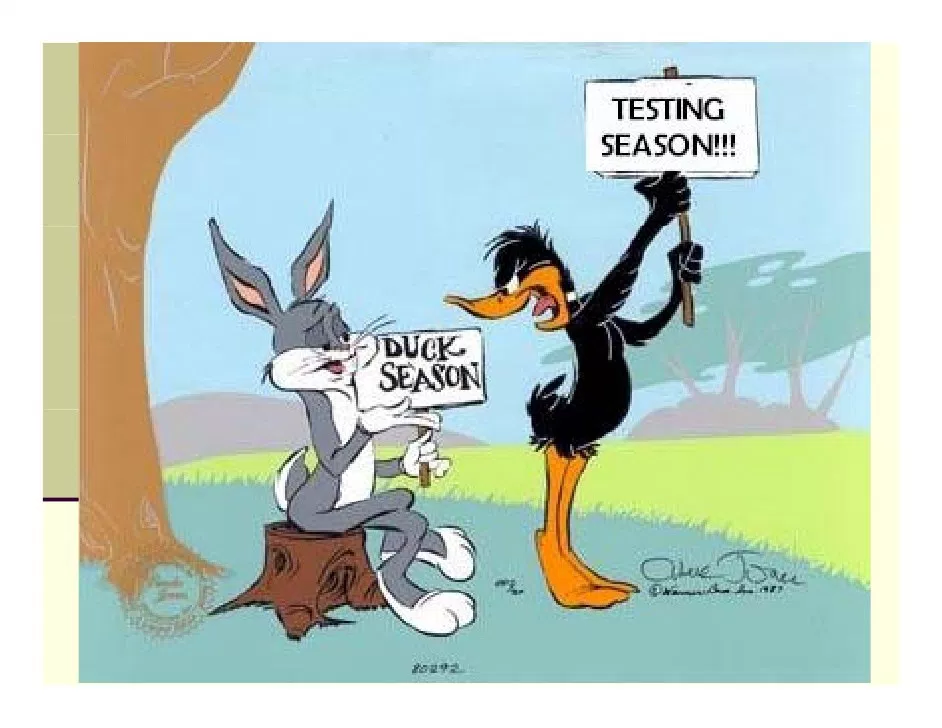
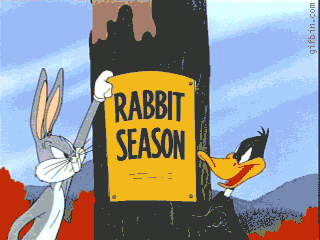
It’s not Duck Season! It’s not Wabbit Season!

It’s almost Testing Season! The time of year when schedules get crazy and your pacing goes out the window!

One of my least favorite things about testing season is the post-game talk of the students. After the test is over, despite the fact that they swear that they won’t talk about it, they of course DO talk about it.


So they come in my class after a three-hour testing block and the kids start talking about the test. And invariably, some kid will talk about something and some other kid will say “holy $#@!! Is that what that part was about? I totally thought it was asking about blahblahblah”

Aha. Here lies the problem. It happens on my classroom assessments, in district assessments, on the FSA, SAT, ACT, ASFAB, GED, GRE, and any other alphabet-soup of a test.

Kids don’t understand what the question is asking for.

For example, the question asks kids to analyze, but they describe. Or it asks them to contrast but the kids compare.
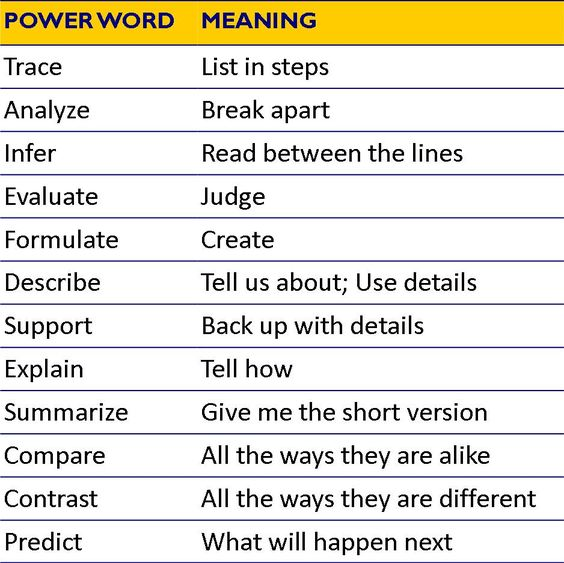
I’d like to propose that over the next couple of weeks, as we get closer to testing season, that we explicitly teach what those “power words” are and what they mean and what a kid should do if given that word in a test.

It depends on where you take your words from, but the internet (which, I know, I know, is NOT the authority of everything) often uses the “12 Power Words”.

Every teacher does NOT have to teach every one of these words.

But when they come up in your class over the next few weeks (and they should come up frequently), STOP! And explicitly teach the word.  (Honestly, if your class is not tackling at least SOME of those words, then your class is not hitting a lot of higher order thinking.)

It shouldn’t take a lot of time. A couple of minutes, at most. Which is worth it if your kids are mastering Tier Two Vocab.


What do I mean by teaching it explicitly?

  1. Well, when that word comes up in an assignment or assessment or whatever, I will stop the class and see how many students can define the term with their shoulder partner.
  2. Then (because kids will so often tell us that they understand things when they don’t) I will either solicit a few student definitions or give them my own.
  3. I will have the kids practice  their acquisition of the term by having them do a turn and talk where each partner uses the word in a real sentence about anything they want. We will share those out, too.
  4. I will have each team practice using the term by making a content-related question.
  5. We will talk about the type of answer the question (the one we began with) is asking for. Is the question asking for you to compare? What would a compare answer look like?
For example: Based on the document, infer the author’s point of view.  
  1. Turn to your partner and see if you can explain what “infer” means! Who wants to share  with the class?
  2. Student A had a great definition! Infer means to get something out of words that isn’t “right there”!
  3. Turn to your partner and use the word “infer” about something in your life. Mine is “I can infer from the fact that you’re not answering my texts that you don’t want to talk to me”.
  4. Now, use the term “infer” about something regarding the Treaty of Versailles. “I can infer from the fact that Germany has to pay a bijillion dollars, that it’s kind of a punishment”
  5. Now, what would an “infer” answer look like? It should include us getting something out of the document/text/cartoon/whatever that isn’t “right there”.

How do you teach the “power words”? What steps do you take? How can you really hammer this home in the next few weeks?

Tuesday, May 2, 2017

Gosh Yarn It! Wool You Play?

So this is Teacher Appreciation Week! I want you to know how much I appreciate you. I know how ridiculously hard you work. Please know how amazing and powerful I think you are!

In honor of Teacher Appreciation Week, today’s WW email

One of the best ways to review for exams is to use fun & engagement with higher order thinking. The fun and engagement make the content memorable and make the info “stick” in the kids’ brains and the higher order thinking helps the kids apply their content and make connections.

One of my favorite review games is the “Yarn Game”.  (All props to my colleague JK, the inventor of this review game!)

You may have come across this game as a kid as part of an ice-breaker game or maybe a team building activity.

But I LOVELOVELOVE it as a review activity.

Here’s how you do it.

Prep:
  1. EITHER create notecards with vocabulary terms on them OR use your Vocab Sticky Note cards from a previous activity.
  2. Make sure each student has ONE vocab term card or sticky note.
  3. You-the-teacher should have a term, too.
  4. Depending on your students, do this either whole class or in two larger-sized groups.
  5. Bring a ball of yarn (or two) to class. Available at Walmart for $2-$3.
  6. Have students look up their term ahead of time and jot down a few key terms or connecting words on the back.
Play:
  1. Have students stand in a circle around the room so they can see each other (or two big circles)
  2. You-the-teacher should hold the very end of the yarn.
  3. Explain to the students that each person in the circle will hold on to a part of the yarn and then throw the ball of yarn to another person across the circle, effectively linking one person to another.
  4. The person who throws it has to explain how their term relates with the term of the person to whom they throw it.
  5. For example: Devonte’s term is “Impeach”, which is related to Jasmine’s “Judicial Review” because they are both ways to check the Executive Branch.
  6. Then, that person holds on to part of the yarn and throws the rest of the ball of yarn to a new person and explains how his or her term relates to the person they threw to.
  7. As the yarn is passed from person to person, a web should form within the circle.
  8. The last person should throw the yarn back to the teacher and explain how that last term relates to the first term.
  9. You may want to ask the students to explain (or defend) their connections “How do those terms each check the Executive Branch?”
  10. Formatively assess -- by asking kids afterwards to reflect on two or three connections they learned in the game that they had not previously thought of.
Benefits of Yarn Game:
  • Student collaboration and discussion.
  • Students are active and out of their seats.
  • Students have to make connections between unlike terms in the same unit.
  • Students will see how many terms in the unit connect to each other.
Watch Out For:
  • Kids dropping the yarn and letting the web fall apart.
  • The last few people often have a tougher time. You may allow the rest of the circle to help them out.
  • Differentiation. Choose more concrete terms for struggling kids and more abstract terms for more advanced learners.  
  • If terms are from a long time ago (first semester?) then provide a word bank on the board or screen, so they don’t have to squint to see that term way across the circle from them.

Let me know how it goes! As always, email me! newmantr@pcsb.org
-Tracy

Wednesday, April 19, 2017

While You Have Time


I always dreaded Testing Season. All the crazy scheduling. All the top secret, CIA-style agreements to secrecy.  All that extra time when some kids are testing and the bells have been held and the kids YOU have aren’t testing. All the uneven scheduling when you see your third period seven times in a week but you haven’t seen fifth period in 6 days.

All that weird silence. (Schools aren’t normally silent. It’s weird when they are.)

All that down time when you’re proctoring and not allowed to be on your computer, or grading papers, or on your phone, or having conversations, or looking at student work.

When do teachers ever have weird down time like that?


While you’re proctoring a million tests this week/month and you’re stuck with the down time where you can’t do anything but get your steps in while you circle the room for the hundredth time ...  

It’s actually a good time for reflection.

You’re stuck in a room with nothing else to do, maybe you can reflect on your year.

You can just ponder on your own, or maybe you can pull off a note to yourself on a sticky note or something during down time.

Here are some questions to reflect on during your down time. Pick one or two or all of them. Hey. I don’t judge!

Please DON’T turn in your answers, although feel free to discuss them with me/your colleague/your significant other/your AP/your neighbor/your pet.

14 Reflection Questions For Teachers

  1. What are some things you accomplished this year that you are proud of?
  2. What is something you tried in your classroom this year for the first time? How did it go?
  3. What is something you found particularly frustrating this year?
  4. Which student in your class do you think showed the most improvement? Why do you think this student did so well?
  5. What is something you would change about this year if you could?
  6. What is one way that you grew professionally this year?
  7. Who amongst your colleagues was the most helpful to you?
  8. What has caused you the most stress this year?
  9. When was a time this year that you felt joyful and/or inspired about the work that you do?
  10. What do you hope your students remember most about you as a teacher?
  11. In what ways were you helpful to your colleagues this year?
  12. What was the biggest mistake you made this year? How can you avoid making the same mistake in the future?
  13. What is something you did this year that went better than you thought it would?
  14. In what ways did you change the lives of your students this year?
Just ponder. And maybe jot down a note or two to yourself when you get a sec.
It’s been a heck of a year. Let’s think about it while we still have time, before we’re all at the beach.
How has your year gone? As always, I love to hear from you! Email me at newmantr@pcsb.org

Wednesday, February 8, 2017

What's On The Test?

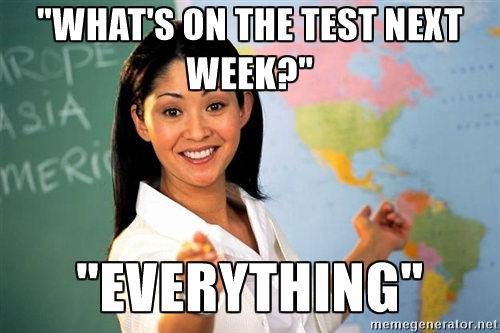
What’s on the test?
Is THIS on the test?
Kids, you need to know this for the test...

I feel like I have these conversations all the time with teachers. They want to know what’s on the test - the EOC, the Cycle Assessment, the midterm, etc.

Some are even still nurturing a grudge, all these years later, of not being able to “see the test” (like you could see the FSA or SAT or GRE of the FELE or whatever!)

So, I want to tell you what’s on the test -- by telling you what’s NOT on the test.

Are you ready?

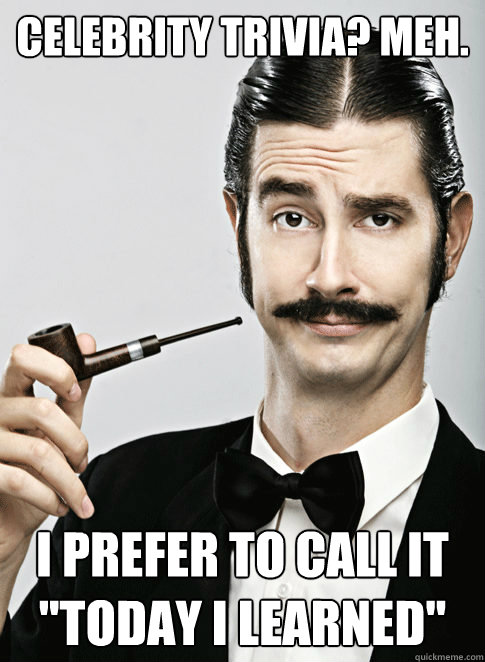
It’s trivia. Despite what so many of us tell our students, the details are not really on the test.

Here are questions that are NOT on the test:
  • What year was the Battle of New Orleans?
  • What are the 15 Cabinet positions?
  • Define “push factors”
  • What two cities were decimated by the atomic bomb?
  • Who was the fourth president of the US?
  • What are the requirements to be a Supreme Court Justice?
  • What does “suffrage” mean?
  • What happened in Brown Vs. Board of Education?
  • Define “containment” policy.
  • Who invented the steam boat?
  • What countries were part of the Warsaw Pact?

One of my wonderful colleagues once wondered aloud to me “which set of trivia” his kids needed to know this year.

I feel like I say this again and again but folks still are confused. So I must not say it well enough Let me try again.


Your EOC, your midterm, your final exam ...  

IS. NOT. A. TRIVIA TEST.

It’s just not.

First, that would suck for kids. No one wants to memorize useless trivia.
Second, that would suck to teach. How boring is it to teach just pure memorization.
Third, that would produce good trivia players but lousy citizens.

So what IS on the test?

Historical/Civic thinking skills. Reading. Higher-order thinking. Application of knowledge.

You know ... the kinds of things a real citizen needs to be able to do to make informed decisions like voting...

You probably know (but maybe haven’t focused on recently) that EOCs, midterms, and finals are written at a 20-60-20.

Meaning,
  • 20% of the items are low complexity meaning they could include trivia, but more likely to include main themes or use low-complexity skills)
  • 60% of the items are moderate complexity, requiring multiple steps of reasoning and/or use of context
  • 20% of the items are high complexity, meaning they require multiple steps of reasoning AND use of context.


So even if there IS trivia on the test, it makes up less than 20% of the test.

Trivia is kind of a waste of time. No one needs to memorize very much now that we all have Google in our pockets.


Please don’t think I’m advocating that we skip teaching facts or details. I’m not. But I AM advocating that we don’t learn facts for facts sake -- but we use them.

Take a load off. Give yourself a break. I know how much you have to do in such little time. So take some low-level facts off of your “to teach” list and make sure most of the rest are really essential and related to some higher-order thinking.

Stop telling kids that they “need to know” the qualifications for office. The test won’t ask them that. And if they decide to run for office in the real world, they can look it up. But ask them who can run for office or why that’s important or whether those are the best qualifications.

Stop telling kids that they “need to know” when the Battle of New Orleans was. They don’t. But as you teach about it, ask them why a winning battle would affect national pride and identity or how do battles affect a national “mood”.

Let’s focus less on the details and more on the big ideas and enduring understandings and skills.

How do you teach with higher-order thinking in mind? Do you make sure to let your kids practice their higher-order thinking several times a period? Do you need ideas on how to do that? As always, I love to hear from you! Email me newmantr@pcsb.org
-Tracy