Showing posts with label game of thrones and social studies. Show all posts

Wednesday, April 5, 2017

Your Own Oxygen

Are you going crazy?

I feel like this is the downhill slide toward summer, with a HUGE jump over the testing seasons.

This is the time of year when teachers start taking “mental health” days and kids are mentally checking out and test hype rises to extreme levels of silliness and we all feel stressed.
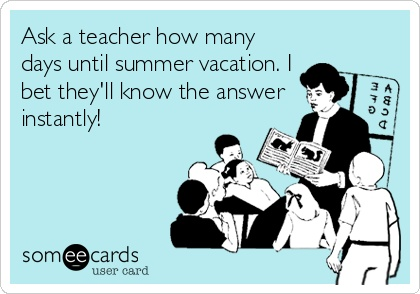


Checklist time!
  • Are you mentally spending more time planning your summer than planning for tomorrow’s class?
  • Are you wondering if you’re taking too many mental health days?
  • Are your students mentally “checking out”?
  • Has your school’s test hype risen to unprecedented levels of silliness?
  • Is your stack of notebooks and or papers to grade so large you have considered taking a day off to grade them?
  • Have you written more referrals in the past week than you wrote all of first semester?
  • Are you keeping a countdown to summer on your board already?

Hello. And welcome to the Fourth Quarter.

I joke about some of the above, but really, I’m completely serious.

This is the time of year when teachers need to examine their own mental well being.

I read recently that “it is impossible to support the social and emotional health of young people if we as teachers do not attend to our own emotional health.” (Nick Haisman-Smith).
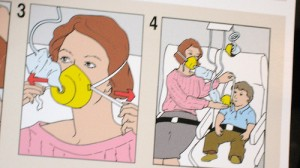
Just like flight attendants advise flyers to secure their own oxygen masks before securing the oxygen masks on their children, I would like you to recognize and secure  the  mental health at this time of year so you can help support the mental health of your children (or teenagers) in your classes.

I know that you have enormous workloads, increased accountability, challenging student behavior, ongoing policy changes and sometimes unhealthy school or departmental cultures.

Teachers report poor physical and mental health as a result of their work -- and this impacts their students. Research has shown that teacher wellbeing not only affects student test scores but has an effect on student social and emotional well-being. This can really hurt the learning environment and the relationship between teachers and students (Haisman-Smith)

This problem is bigger than individual teachers. It is certainly bigger than social studies and it is bigger than your school.

Please know that I am not an expert. I do too much and stress myself out, too. I have honestly taken the aforementioned “day off” to catch up on grading myself (and more than once).


But I can make a few small suggestions.
  1. EAP: If you think you can use it, please call the EAP (Employee Assistance Program). They are really helpful. I can personally attest to that!
  2. Effect on Students: Teachers, please be aware of the impact of your mental and emotional health on the well-being of your students. It’s hard to see that connection sometimes, but is definitely there. Look around your school, at the way students talk about you and your colleagues and you can begin to see this.
  3. Your own oxygen: Do what you need to do to relieve stress (preferably in a healthy way). Don’t grade every piece of paper. Go for a walk or a run. Practice mindfulness. Go to your religious organization. Veg out. Don’t neglect yourself!  
  4. Each other: Take care of each other. A school works best when the teachers work together and have each other’s backs. If you can cover for a colleague so he or she can get themselves together, then that colleague can return the favor. If you can just listen to a colleague, you can do wonders! And everyone feels a little less lonely, less isolated, and more supported.
I know this is a crazy time of year that makes us all feel more stressed. Be intentional and don’t feel guilty for taking time for yourself.

Seriously. Attend to your own oxygen mask before you secure the mask of another.
Seriously. Attend to your mental and emotional health so you can support the mental and emotional health of your students.

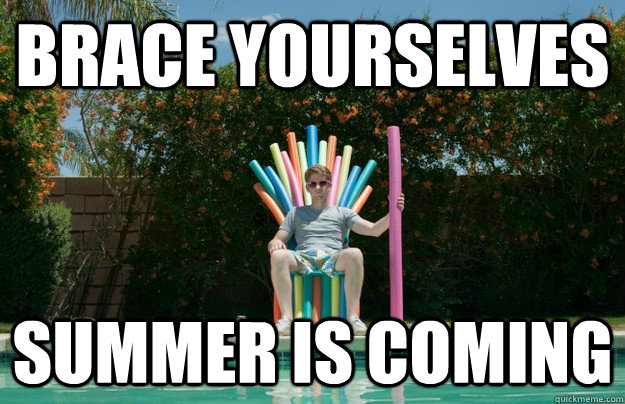
Seriously. Take care of yourself. Summer is coming.

Thoughts, ideas, comments? As always, email me at newmantr@pcsb.org

Wednesday, April 23, 2014

Spoiler Alert: Game of Thrones and China's Cultural Revolution

Are you a book-before-the-movie person? I usually am. I had to read all the Game of Thrones books before we started watching the TV series. I read “The Book Thief” and now don’t want to see a movie version of it (there’s no way a movie can get that right!). I did read “The Fault in Our Stars” and I can’t wait to see that movie. I had to reread “The Hobbit” again before the first movie came out and I’m glad I did. I was rusty before that!


So, Game of Thrones is a fictional, medieval-ish, fantasy TV show based on a book series. It’s known for being gory and racy and unpredictable and terribly addictive TV. The going joke is that “some old guy has been publishing Game of Thrones spoilers” (referring to the author and the books he wrote years before they were adapted for the TV series). When the TV show is based on a book, there are a lot of people out there who know what happens next.

As I thought about the problem of spoilers in the Internet Age, I thought about the problem of spoilers in our social studies classes.

Have you ever done an activity in class where kids are supposed to choose what to do in a historical situation? You know -- “Should Truman Drop the Bomb?” or “Valley Forge: Would You Have Quit?”

Invariably, the kids want to know THE Answer. Should Truman have dropped that bomb? Did he? Did all the soldiers at Valley Forge quit? Would YOU, the teacher, have quit? I used to tease my kids by calling those answers “spoilers” and tell them they wouldn't get the spoilers until the end of the lesson/unit/DBQ. Of course, often a resourceful kid would check Wikipedia or the textbook and “spoil the ending” for everyone. I mean, it’s not like the “ending” isn't findable.

I kind of think of our textbooks as spoilers. They give away the ending without making us emotionally work for it. It’s like giving away the ending of the movie before we've gotten involved with the characters and made it through all the plot points.
*Spoiler Alert!!* (Wizard of Oz)  

Like, if you had never seen the Wizard of Oz and I told you, “Never seen the Wizard of Oz? Oh, Dorothy just has to click her heels three times and she can go home. No big deal”  

Sometimes our textbooks really do act as spoilers. Hey -- don’t know much about the Haitian Revolution?  Haiti ends up free but poor. Or-- What about Alexander the Great? He conquered a LOT of land from Greece to India. Or What happened in China’s Cultural Revolution? Well, it was a political, social, and economic mess. But it’s over now. End of story.

There’s something matter-of fact about our textbooks, which is part of what appeals to us. They make history sound neat and settled, black and white. Alexander the Great was Great. That’s why we call him Alexander the Great. Get it? It’s done. It does make it easier and simpler for teachers and students.

But history isn't neat and settled. It’s messy and debatable and full of grey area. Historians still quibble about whether Alexander was great. They still argue about the effects of the Haitian Revolution. They are still trying to figure out China’s Cultural Revolution.

How can I get a kid absorbed? How can I get him or her engaged in the story of post WWII China?

You really wouldn't care if I told you the end of the last Game of Thrones book -- unless you were already a Game of Thrones fan. Unless you were invested in the characters and plot. Along the same lines, a student is unlikely to care about the China’s Cultural Revolution unless he is already invested in China’s Communist Revolution, unless he can get absorbed in the major players and historical characters.

How can I engage a kid in the characters and the story?

The answer is documents. Good ones.

Through well-chosen documents, students hear the voices of the actual participants in history. They can become absorbed in an individual or group’s point of view. They can make history real and not just a spoiler for something they don’t care about.  Letters, speeches, advertisements, newspaper articles -- these things can tell the story, absorb the kids, and engage them.

Part of a speech from Chairman Mao and an excerpt from Mao's Last Dancer by Li Cunxin makes a kid really wonder how that whole Cultural Revolution thing turns out. It makes him or her curious and interested and maybe look up that whole "spoiler" thing in a textbook or online.

Use the idea of your textbook as the spoiler that tells the "ending" -- and the documents as the story itself. Think of good ways to "tell the story" through documents. 

At this time of year, I tend to get tired of the same-old, same-old and go hunting for new strategies. Although most of us already have tried and true ones in use, if you need a new strategy for examining and analyzing documents to mix things up, try the Six Cs. 

The Six Cs (by University of California Irvine's History-Social Science Project)are just one more tool to help you and your students analyze primary or secondary source documents. 

The Six Cs are:
1. Content (What is it about?)
2. Citation (Who wrote it and when?)
3. Context (What's going on at the time and place this was created?)
4. Connections (Link this doc to other things you know)
5. Communication (What's the point of view or bias?)
6. Conclusions (How does this document contribute to the understanding of history?)

Try to keep your kids and yourself on your toes as the year starts winds down -- see how the 6 Cs work for you and for them. The goal, as always, is for kids to internalize the strategy and be able to analyze a document without a worksheet. So, maybe the Six Cs are a great way to do that. 

Game of Thrones Fans are constantly avoiding spoilers. Students of China's Cultural Revolution should be avoiding spoilers, too -- because they're too engaged in the story through documents.

Either way, start thinking about your textbook as a spoiler. How can you get your kids engaged so that they will WANT to find out what happens next? How can you get your kids to get mad at spoilers in the textbook?  

Have you thought about this before? Do you have a tried and true document analysis strategy you love? Or will you try using the 6Cs (and let me know how it goes)? 

As always, I love to hear from you! Email me at newmantr521@gmail.com