Showing posts with label complexity levels in social studies. Show all posts

Tuesday, February 11, 2020

Teaching To Who?

Imagine you had a class of 26 kids. Not to get into a discussion about class sizes (nope! Not going there!)  but so we can “name” them Kid A through Kid Z for the purposes of this conversation. 

Now, let’s assume we can rank them according to whatever criteria you think is most important to your class — FSA Reading scores, midterm scores, grade in your class, GPA, etc. 

(I know we don’t actually rank children. That’s a lousy thing to do and a terrible way to treat kids. But since these are fictitious children, will you humor me?)

So let’s assume Kid A is your highest achieving student and Kid Z is your most struggling student. 

Who do you teach to? I mean, when you’re planning your lesson, which achievement level is in your mind?
Let’s assume that you had already planned a lesson that was ON GRADE LEVEL, not below grade level because we think the kids aren’t ready or they need this other thing first. 

Most teachers would say they’re teaching to the “LMNO” region of the class. The middle. Kid M. They plan their lessons to the middle abilities, the middle achievement group. 
I think they definitely start there. And then they groan at the idea of Kid T, Kid U, and Kid V (and let’s not talk about W, X, Y, and Z!) and the struggles those three are going to have. And then they adapt that lesson downward so that Kids  T, U, and V can do it. 

Which is honorable and kind! 

Meanwhile, Kid A is done with the assignment and doing her math homework before you’re done giving directions. Kids B-E are working diligently while you give instructions. 

But Kids F-S ... that’s 15 kids that are acting up. That’s 15 kids (plus the the earlier five, Kids A-E) for whom this assignment is now was too easy. The lesson that WAS on grade level is now below grade level. 

And just like that, we have lowered our expectations of the whole class. We don’t allow the whole class to do on-grade level, meeting-standards level work. 

Because we were kind. Because we were worried about certain kids. 

I remember Kids T, U, and V. I loved them. I worried about them. I got tired of seeing them constantly frustrated. I hated for them to fail, so I set up assignments where they were more likely to be successful.

But in doing so, I cheated the rest of my class. I underestimated the rest of them. When I said “they can’t do this assignment”, I meant “Kid T through Kid Z” couldn’t do this assignment. 

Kids T-Z are struggling for sure. They’re more likely to act up because they’re frustrated. They might be more needy in the attention department. But they’re 7 kids. I have nineteen kids that CAN do this assignment. 

And this is where we talk about scaffolding and opportunity. 

It wasn’t fair of me to deny those 19 kids the opportunity to try to do those assignments. I had low expectations and that was wrong. I cheated them of the chance to excel. Of the chance to learn. 

Those seven who weren’t ready? There are a million ways to scaffold the task so they COULD be successful. I could have 
  • Sat with them in a small group to help
  • Had them do fewer parts of the assignment (5 questions instead of 10)
  • Highlighted some key passages to help
  • Frontloaded some vocabulary 
  • Let them work with a partner
  • Given them extra time
  • Modeled the first part of the task
  • Given them sentence starters 

Ok, you’re thinking. Maybe I won’t direct my lesson to the “TUV” range. I can just keep it at the “LMNO” level where I started.

That’s definitely a start. But I’d like to challenge you further. 

Every kid deserves a chance to STRIVE. To stretch. To be challenged. Can you take that lesson written at the level where your Kid L, Kid M, Kid N, is now and help them stretch to the next level? Can you challenge those kids to get to where a Level G is? What about a Level D (in this scenario, not a grade of a D)? 

The goal is to continually raise our kids higher, to challenge them further, to push them harder. (Not in a pushy way) 

Every kid deserves to move up, from Kid Z to Kid A, from our “Level Ones” and our “Level Fives”. Every single kid. 

When we teach to the lower level or to the middle achievement level in our class, we don’t help our kids stretch to the next level.

And stretching kids up to the next level is our whole job. 

How do you already do this? How do you remember to stretch your kids and “up” your lessons? As always, I love to hear from you! 

Thursday, February 14, 2019

Problem Questions

Ask a better question...

Life is full of questions.

So is teaching!

Tell me if this looks familiar:

  • You are teaching something.
  • You are not sure if the kids are getting it.
  • You ask a question about what the class just heard/read/saw/did.
  • A couple of hands raise in the air.
  • You call on one
  • That kids attempts an answer (that isn’t quite what you’re looking for)
  • You call on another kid
  • That kid answers well.
  • You move on.

This is how we were taught. But what problems might be a part of that?
Problem #1: We only hear back from one or two kids.
    1. Really, in many classes the rest of the class has learned to let “Lisa Simpson” or “Hermione Granger” answer the question all the time so everyone else can sit back and not have to think.
    2. Possible Solution A -- Try a turn and talk BEFORE you ask for raised hands. That gives kids a chance to TRY OUT a thought or idea. It raises the number of kids THINKING and  TALKING about the question. It increases the number of kids who feel confident about raising their hands and trying to answer.
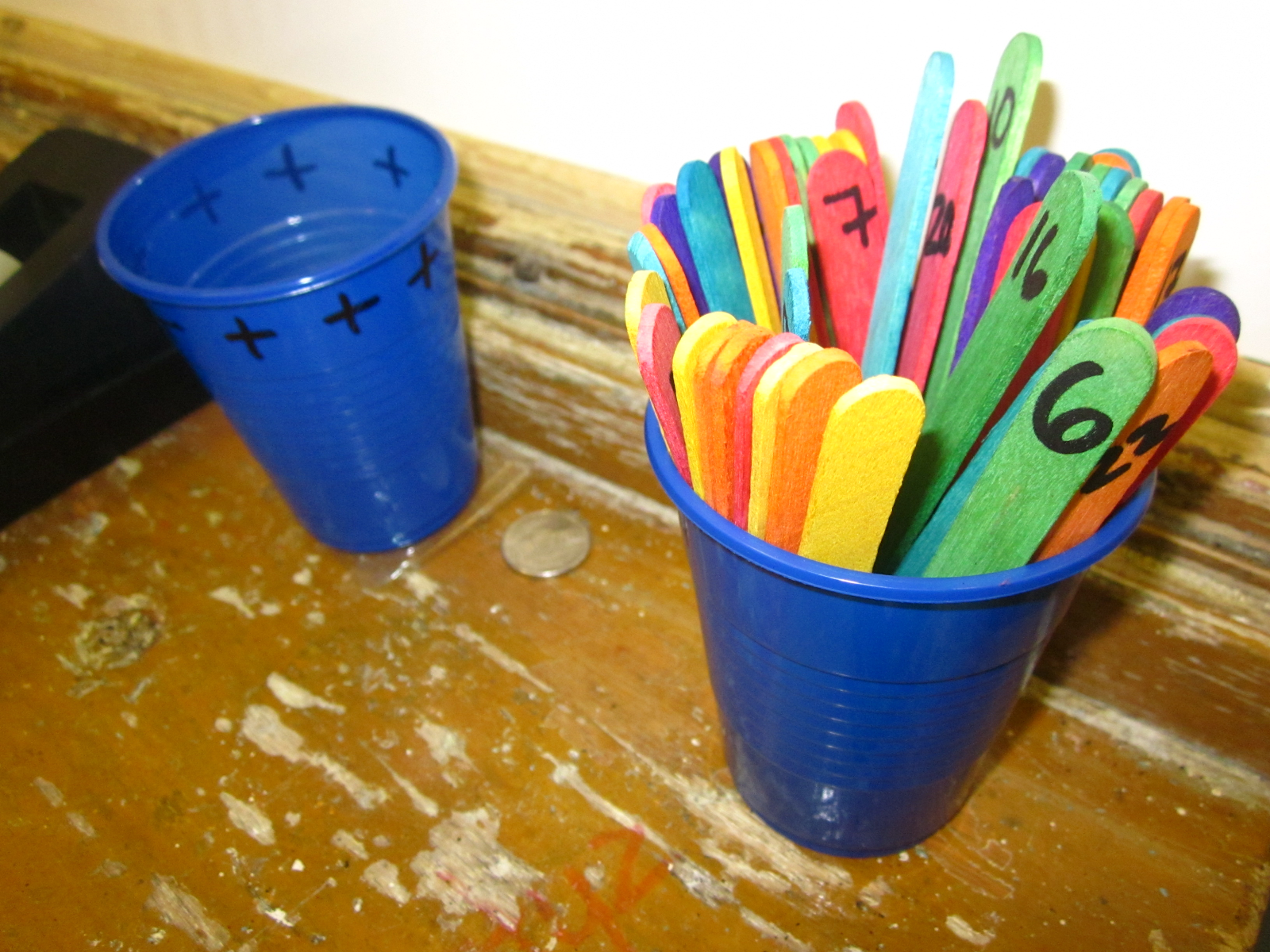
    3. Possible Solution B -- Hold EVERY kid accountable by using a randomized “call on” system. Sometimes these are digital systems (like Class Dojo) but more often, I see teachers with numbered seats and a can of popsicle sticks where every popsicle has a number that corresponds to a seat number. The teacher pulls the popsicle stick out of the can and if they call #17, then the kid in seat #17 has to try to answer. This helps everyone be “on the hook” for participating and trying to answer, not just the hand-raisers.

Problem #2: We ask low level questions
  1. Really, kids often trick us into THINKING they can’t do higher level thinking. And because we are honest people ourselves, we BELIEVE them! Sometimes they aren’t ready to answer the question, but they make us think they might NEVER be ready!
  2. Possible Solution C -- Try asking “spiraling questions”. Start with a low level (or two) to build confidence and work your way up. One of the things I learned from Core Connections is the idea that kids need to gain a little confidence by answering some “right there” questions -- and them move up from there. What did Hamilton say about a National Bank? WHY did he say that? Or, “what did China trade along the Silk Roads. WHY did they trade THOSE things and WHY is that important? How did that change their lives?
  3. Possible Solution D -- open ended “what if” questions with no “wrong answer”. Why would people risk their lives to trade halfway across the known world? Why would the Chinese historians hate Empress Wu? What would you do if you were faced with this choice? If we struggle to ask higher order questions, start with just making open-ended questions.
Problem #3: We-the-teachers ask all the questions.
  1. Why is it that the teachers always ask all the questions. Aren’t we (at least theoretically) supposed to know more “answers” than the kids? How can we get our kids to ask more (and better) questions?
  2. Possible Solution E -- Start with “Why”.. Once upon a time, your adolescent students were curious toddlers who asked “why” until their parents wanted to go nuts. So, let’s bring that back. Teach them to ask “why” about everything -- and then try to make educated guesses as to the answers.
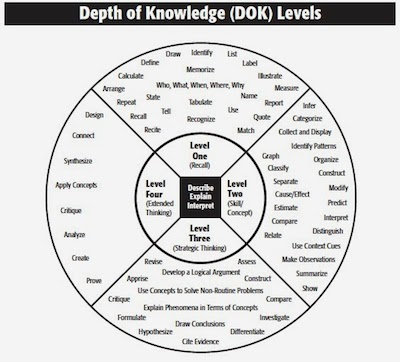
  3. Possible Solution F --Teach higher order thinking explicitly. Give them the Costas Questioning House, the DOK Wheel or the Bloom’s Flipbook. Then, directly teach them how to to make good questions from the various levels -- and how to answer them!
Kids are kids and they struggle with questions. How can we keep them all accountable, using higher order questions AND creating their own questions?  Same way you get to Carnegie Hall -- practice, practice, practice!

How to you deal with problems that come up around questioning? As always, I love to hear from you!

-Tracy

Tuesday, December 4, 2018

Review Dos and Don'ts -- and a game for the Brave

It’s the MOST wonderful time of the year!!

Yes, it’s REVIEW TIME!!!

Yup! It’s the time of year when all your darling little classroom elves swear that they have never before seen that content you are reviewing form October!

I know that most people either love or hate review games. So, in the spirit of holiday lists, let’s look at some Review Dos and Don’ts.

DO: Do make it fun (kids are more likely to participate AND are more likely to remember what they’re reviewing)

DON’T: Don’t make kids do a giant packet. That’s boring and kids are less likely to do it (and less likely to actually learn anything from it).

DO: Use higher order thinking! If the assessment is all over the DOK, then your reviews need to be all over the DOK.

DON’T: Don’t give all recall-level review. Because then kids just memorize stuff short-term and they don’t actually learn it long-term!

DO: Do use the benchmarks to guide your review.   

DON’T: Don’t just give the kids the questions to study.  That’s dumb. They all get good grades and they don’t learn anything real.

DO: Do give them the topics/benchmarks and help them PRACTICE different levels of thinking with the topics/benchmarks.


Ok -- let’s check out a new Review Game. It is NOT for the faint of heart!

You’re going to need to buy a couple of flyswatters....

Prep:
1.      Create/compile a list of vocab terms – and examples or non-examples of each. These examples could be much like the stimuli on their assessment, quotes, excerpts, images, etc. (I wouldn’t use straight definitions because students will memorize them and it won’t be higher order thinking and it won’t help them much on their EOC or final)
2.      Post the words on a wall/bulletin board that kids can access.  (not your SMARTBOARD!). Hall might be a good option if your room is too small
3.      Put a tape line on your floor that The Swatters need to be behind, a foot or two   away from the wall.
4.      Divide class into two equal groups and line them up behind each other and sit or stand in order.
Play:
5.   Explain to the class that each team will have the first student in line “play” at a time. When they have completed their turn, out of the two teams, the first student to “swat” the correct answer gets the point for his or her team. When the student is done with his or her turn, that student goes to the end of the line.  
6.   All students in line need to listen to the example since they might get a different example for the same word. They will listen better if they know they’re hearing “clues” about a word they might get.
7.   Read the example or non-example to the group. (Be clear if it is a NOT example). The two students with the fly swatters listen to the example.
8.   The first student to swat the correct term gets the point for his or her team.
9.   The team with the most points wins.
Benefits of Swatter Game:
·         Students examine multiple facets of a concept or vocab term.
·         Students are listening to usage and application of their vocab terms and practicing using and applying those terms.
·         Active and engaging activity.
Watch Out For:
Ø Kids struggling to remember terms. Maybe let them use their notes?
Ø Kids acting up in line.  Maybe take away points for teams not listening? Or remind students that if the Swatter can’t hear the hint he or she can’t get the point.
Ø Kids swatting each other.  The child who uses a flyswatter on another child is instantly removed from the game, his team loses points, and you use the discipline consequence for that kid that you would normally use. Please don’t punish the entire class for one kid who acts like a fool.

Soooo ... Are YOU brave enough for the flyswatter game? If so, let me know how it goes!! Email me at newmantr@pcsb.org

-Tracy

Wednesday, September 12, 2018

How Do I Increase My Rigor?

So, your administrator is asking about the rigor in your class? And Marzano asks that students “engage in cognitively complex tasks”. And those ISM walk-throughs are checking for the “level of rigor” on their walk through forms.


And, honestly, you know as well as I do that nobody cares if kids know a whole lot of lower-level facts when they grow up. We all know that kids using those facts, information, and skills is a more frequently used part of academics.

Rigor is king of a big deal

I recently had a colleague tell me about lesson plan and ask me how I would increase the rigor of it.

OMG!!! WHAT A FABULOUS QUESTION!!!!

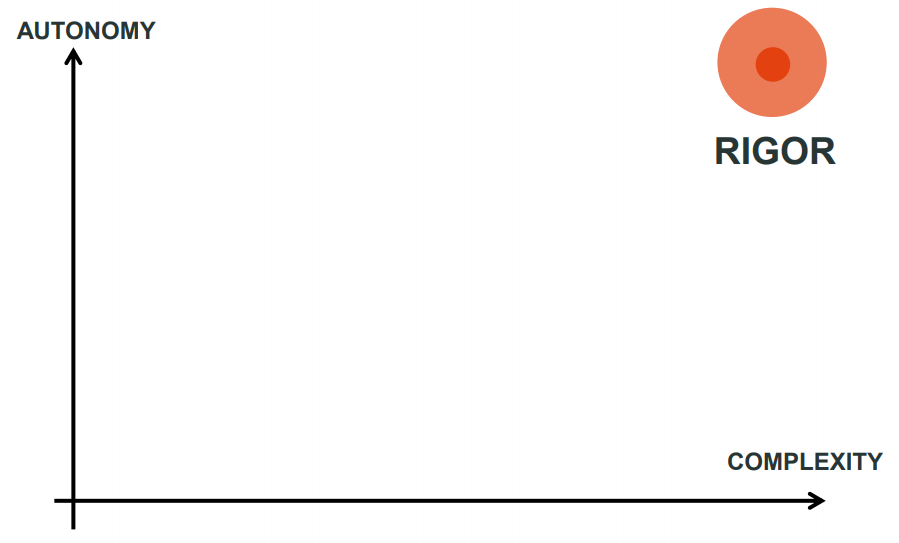
For a long time, I hadn’t found a solid, consistent definition of rigor. And then I found this: Rigor is the higher level thinking a student can do on his or her own.

Now, rigor can ABSOLUTELY include scaffolding. (pleasepleaseplease use scaffolding! Don’t skip the scaffolding!!!!)

But then, the kids need  to be doing higher level thinking without the teacher doing it for them.

Check out this visual to help it make sense -->

Meaning, lead them up to the higher order thinking but then take off their training wheels and let them try it on their own.

(Actually, HOT thinking is likely to fall apart into disaster if you DON’T lead them up and give them scaffolding. But that’s another conversation for another day.

Do you know  my friend, the DOK Wheel? The DOK Wheel isn’t actually my favorite, but it’s the one the FLDOE uses to describe benchmarks and EOC questions, so we can go with it.

So let’s back that up. How can we increase higher level thinking without making kids’ (and teachers’) brains explode?

  1. Don’t let kids off the hook. They will pretend to be stupid. They will pretend to “only” be able to give you the “right there” answer. Use wait time and probing questions to get them to think at higher levels. Don’t accept “I can’t” (or “I don’t know”) for an answer.
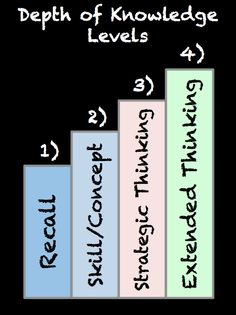
  2. We slowly increase the rigor through the lesson. We sometimes call this “Spiraling questions”. OF COURSE we start with “right there” tasks! “Where was?” “What was?” “When was?” Then we move to putting pieces together, summarizing multiple parts, apply knowledge  to another topic/time/term.
  3. Then, we raise the questioning up to level three and sometimes 4 of DOK. Here are some quick and easy HOT (Higher Order Thinking) question stems. Choose ones that match what you’re teaching.  https://www.saydel.k12.ia.us/cms_files/resources/general%20hots%20question%20stems%20and%20processing%20activities.pdf

Ok, Tracy, I think I’ve got WHAT Higher Order Thinking actually IS. But what does that actually look like? What does rigorous learning look like?

Here are a few quick ideas to start to introduce more rigor in small, manageable ways in your classroom.
  • HOT Question Turn and Talks: The quickest and easiest (and most natural-feeling) way to incorporate rigor is to incorporate it into quick turn and talks. Talk/read/watch about some lower-level stuff and the ask the kids to turn and talk about it with higher-level stuff. That’s a quick and easy way to include rigor.
  • HOT quickwrites: Not feeling the turn and talk ideas? Use the same questions as above but pose one or two as a quick write. Bam. Kids are thinking and you have both blissful peace and quiet AND evidence of their rigorous thinking (or what you need to work on tomorrow...)
  • HOT Plickers: Don’t have a lot of time? Throw a HOT multiple choice question up on the board and use Plickers (Paper+Clickers) to have kids answer a quick higher-level multiple choice question in less than a minute. Bonus -- now you have DATA on that rigor stuff...
  • HOT Focused Notes: Taking Focused Notes? When students make connections (not YOU making the connections for them, but them making their OWN connections), that’s more rigorous. When students take notes and reflect on them and add some Higher Order THinking
  • HOT Benchmark Reflection: Don’t have anything prepared -- but you DO have your  Learning Goal (aka Benchmark) posted on the board? Turn it into a question and ask the kids to reflect on it. Here are a few examples ...
    • SS.6.W.2.5 “Summarize important achievements of Egyptian civilization.”
      • Describe two important achievements of Egyptian civilization AND connect how they impacted Egyptian Civilization.

    • SS.7.C.2.11 “Examine the impact of media, individuals, and interest groups on
    • monitoring and influencing the government”
      • How do the media, individuals and interest groups (pick one or two) monitor the government?How does that work? Give an example.
    • SS.912.A.3.4 “Compare the first and second Industrial Revolutions in the United States.”
      • What’s the same between the first and second Industrial Revolution? What’s different? Why are they more same or more different?

There are hundreds of ways to increase your rigor in the classroom. But there’s no reason you can’t start small.

Let’s start small and grow from there! Questions? Email me at newmantr@pcsb.org