Showing posts with label challenging social studies. Show all posts

Thursday, August 13, 2020

Welcome Back and Adjust Expectations


 Welcome Back, my friends and colleagues, 


I HAVE MISSED YOU ALL SO, SO MUCH!!!!

I am so glad that you are back, whether you are back to traditional classrooms, virtual classrooms, some of each, or blended classes. 


Welcome to what is going to be the weirdest year on record! It “otter” be a wild year!


This is my 20th year in teaching. I was in teaching during 9/11, Hurricane Irma, the year of the 5 hurricanes, the year our school got a new building, the year of the Marjorie Stoneman Douglas shootings, the year we didn’t know the results of the presidential election for weeks, and even the year Swine Flu (or was it SARS?) taught my middle schoolers to fling hand sanitizer on each other and snap the elastic of masks at each other.


Nothing could have prepared us for this. 


Whether you are at peace with the school year now, whether you are not that worried, or whether you are crying into your adult beverage nightly, here we are. 


The world has changed so much since you left your classroom. 


There are 4 major events that have occurred. They may not all have been major to you. But be aware that it’s pretty likely that at least one has been major to the kids in your class and the colleagues in your building -- and different events have hit differently to different people. 


  1. Coronavirus -- of course, the ‘Rona is the most obvious event. The global pandemic is a big deal. 17,000 Pinellas County residents have tested positive. 500 have died. Hundreds have been hospitalized. This has been big and scary and traumatic for us and for the kids. You and they likely know someone who has had the virus, maybe someone who has been really sick or someone who has died. 

  2. Economy -- As of this week, in Pinellas County, nearly 150,000 (16% of the population) is identified as “food insecure”, meaning they don’t know where their next meal is coming from. Families that have never needed food banks or financial help before may need it now. Maybe that’s your family or your neighbors. It’s definitely some of our students. Small businesses & folks in hospitality have been hit especially hard. This happened fast and it hit families hard. 

  3. Loneliness -- A lot of us or our kids have quarantined and limited our interactions a lot. We have not gone to Disney or to bars (us) or to camps (them) or travelled or to many other places. We have been lonely. This has affected people differently, but know that people (kids and adults) are fragile. Things we could have handled with ease last year will be tough this year. Some kids literally haven’t seen another kid in 6 months.Others have been to day camps or have spent plenty of time with friends. There’s so much variety, but virtual interactions are not the same as in-person and it shows. 

  4. Racial Reckoning -- With the violent death of George Floyd seen by all of us, America’s anti racism movement went mainstream. Kids who, before, felt that nobody heard their cries of racism -- suddenly felt that a lot of somebodies heard, and felt empowered. Americans of all races, ages, and socioeconomic groups took (and are still taking) to the streets in mostly peaceful protests.... And then there are students coming from households that are pushing against this movement, households where racism is still acceptable (or where it is an invisible topic and thus racism is still acceptable that way)


Whew, friends! That’s a lot to work through. 


Things are going to be different. 

So, so different. 


Today, I’d like you to let them. 


Let them be different. Adjust your expectations.


The only way to a) be safe and b) keep your sanity is to NOT expect things to look like normal. We’re going to have to adjust our expectations. 

  • Your classroom can’t look like it usually does

  • Your teaching style can’t look like it usually does

  • Your supply requests can’t look like it usually does

  • The kids are deeply affected by some (all?) of the above Big 4 events. They won’t act like they usually do. 

  • You can’t see each others’ faces like you usually do. 

  • You can’t do the same classroom culture building you usually do. 

  • You can’t pass out supplies and handouts like you usually do.

  • Kids can’t even walk down the halls like they usually do.

EVERYTHING. WILL. BE. DIFFERENT. 

(or at least everything is “on the table” for being different). 


Our wedding anniversary was last week. LAST YEAR for our wedding anniversary, my husband and I went to the Bahamas. So, uhhh... we had to have different expectations this year. The pandemic changes everything. Instead, our kids (both in elementary school) threw us an “anniversary party” (for just the 4 of us) with some decorations we picked up from the order-and-drive-up at Target, some art they made, and some Thai food take-out. They even used streamers across the dining room and made us have a ribbon cutting ceremony. 


I will never forget this anniversary. It cost next-to-nothing, had no travel, no date night, and not even a babysitter to get away from the kids. But it was meaningful and lovely and sweet.


In a pandemic, we have to adjust our expectations. And out of new expectations can come different beautiful things. 


We humans can adapt to anything. You, my colleagues, showed us this in the spring, showed us all how amazingly adaptable you are. I was constantly amazed and awed by you all. 


So here are my two pieces of advice for you as we start this school year. Maybe they’re my wishes for you, like little blessings. 


  1. I wish for you to be adaptable and flexible. Put away your expectations of certain types of

  2. collaboration and specific notebooks you like and favorite classroom procedures that won’t work in the new normal. Try something new. And if that doesn’t work, try something else. And if that doesn't work, try something else. Don’t stick to your Old Ways because they’re habits. It’s time to form some new habits. Adjust your expectations. 

  3. Take extra-good care of yourself. The best parenting advice I ever got holds just as true for the classroom. As every airline safety video says, put your own oxygen mask on before that of your children. You have to be so, so aware of your own mental health this year, now, more than ever. Be aware of your signs of stress and signs of being overwhelmed. And step back and care for yourself. You can’t care for your kids if you aren’t caring for yourself.


I know you all. You will teach through a freaking pandemic and be rockstars. You will find safe ways of making meaningful connections with kids through masks and through computers and through plexiglass and through all the chaos to come. 


But we have to adjust our expectations before we can create new ways of doing things. 


I wish you flexibility and self-care. Those tools will serve you well in this wild year. Don’t forget we are all in this together. 


I hope to see you all (virtually) at DWT or elsewhere soon! Stay safe! 

-Tracy


Thursday, May 7, 2020

So, raise your hand if you are doing great, during the weirdest Teacher Appreciation Week ever.  

Raise your hand if your house is clean, your heart is joyful, your belly is full of healthy foods, you are showered and dressed today, your brain is anxiety-free, you have exercised several days in a row, you are not angry at any politicians, neighbors, or family members, your students are ALL learning what they need to, and you aren’t worried about any of them. 

Yeah me neither. 

These times are hard. We keep saying unprecedented because there is literally. No. Precedent.  Sure, there was the huge Influenza outbreak in 1917-1918, but they didn’t have Zoom back then. Or 24 hour new cycles. Or social media. Or toilet paper (I guess we don’t have as much of that these days either)

This is different. And it’s ok to recognize that life is different. It’s not just “Regular Life: At Home Edition”.


I don’t know about you, but I am struggling with this new life. I have been sick (not COVID, just normal sick). I usually run a busy, active life and I find being at home all the time depressing. My house is a disaster. My kids are so socially isolated from friends, they’re depressed and acting out. Because I am a teacher, I can mitigate the effect that has on their grades and schoolwork, but I can’t imagine not having a Teacher Brain for this.  If I had a Retail Brain. Or an Accountant Brain or Some Other Brain. 

Let’s use my children (because they’re the ones in front of me) to look at kids as a whole.

I have a kindergartner and a 4th grader, but feel free to extrapolate this to middle and high school students who also have MUCH higher stakes (hormones, depression, graduation, etc.). 

My kids can’t see their friends. They are supremely isolated, despite the fact that their entire lives are normally lived communally -- at school, at before-care, at church, at scouts, at sports, at other activities. Kids spend most of their lives in “piles” and “packs” of other kids. 

So they’re withdrawing.  My 4th grader is spending more time on the computer than necessary. And my kindergartner is spending more time playing by himself. I have to drag them to talk and play and do things. 

Getting them to do or finish schoolwork is like pulling teeth despite the fact that there are TWO educated adults in this house working from home -- and ONE OF US IS A TEACHER!!!

They have lost their caring about schoolwork. Why?

Because as we all know, kids don’t work just because it’s “good for them”. They work because of relationships.  

And right now those relationships are a lot harder to see. 
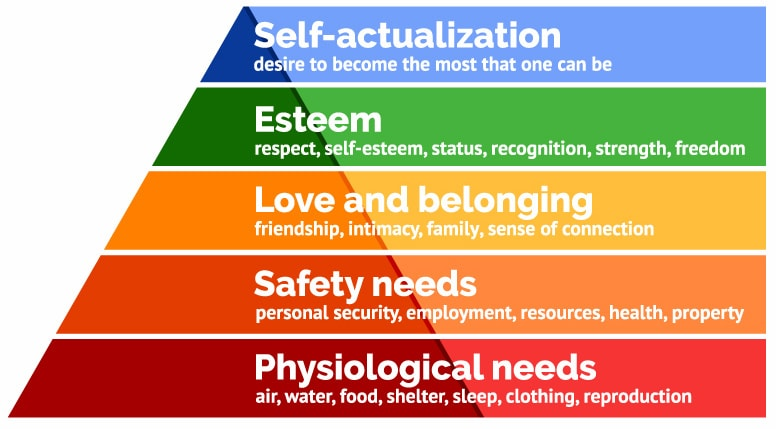
In the regular world, we pull every trick in the book face to face to get kids to learn because learning doesn’t look very high up on Maslow’s hierarchy of needs to a kid struggling with food insecurity or safety needs who’s going to get beat up today. 

Guess what? 

Learning looks a whole lot less important when there isn’t even a teacher’s face to cajole them into it. 

When there’s a pandemic going on. When there’s less food in the house than usual. When there’s no contact with other kids. When there’s no adults at school to notice that there’s a problem. When domestic violence is up. When neglect is rising. When depression is increasing exponentially. When kids are lonely and sad

Somehow, that assigned reading with the questions at the end doesn't seem that important to a kid with everything else going on. Especially if there’s no “you” (the teacher) in front of them to use the power of relationship to persuade them to do it. 

Heck, if that were me, I might not not even login. Depression and isolation are powerful forces. 

It is HARD to get motivated in the face of a pandemic. So says the disaster in my family room. So says my kindergartener who cries every time he has to do an assignment that he doesn't like (that doesn’t come with a video of his teacher to help him feel connected). So says my 4th grader who has no idea how to do time management (and neither do most of our middle and high schoolers). So says me, who is used to seeing the faces of my friends and colleagues. 

So says our students who are lonely and isolated. 

As you work through student grades, please be kind. Assume goodwill. Assume hardships that you don’t know about yet, not just in “those” households, but in any household. Please keep this unprecedented event in mind. Please keep the fact that you have no idea what’s happening behind closed doors and unlogged-in accounts.  Please keep in mind that there are bigger events happening than a couple of assignments.

This is not “Tracy-from-the-district” giving you a policy. I don’t make policy. This is Tracy the mom. Tracy the teacher. Tracy who loves kids. Tracy who knows kids who can’t handle all this. Who knows parents who are struggling. Who knows teachers who are struggling. 

And if you’re struggling, (as we ALL are) I hope you can get a chance to listen to the webinar that the amazing Ms. Darlene Rivers from Employee Wellness provided yesterday on Teams. She is so wise and helpful. Some of her advice for us was...
  • Keeping perspective
  • Finding good in any bad situation 
  • Noticing when you are feeling stressed
  • Breathing
  • Focusing on things within your control
  • Asking for help
  • Following a schedule
  • Making your bed daily
  • Showering and putting on different clothes daily
  • Sticking to a meal schedule
  • Disconnecting from electronics and spend time with family 
  • Planning your time
  • Staying CALM
    • C- Coping skills (give yourself positive messages, engage in enjoyable activities, relaxation techniques)
    • A- Be aware but not opposed (stay informed but limit the amount of news)
    • L -- Listen to reliable sources of information (CDC, WHO)
    • M - Monitor yourself -- eat well, exercise, get enough sleep.
This is still hard, even if we’ve (mostly) figured out Teams. It’s still hard, maybe getting harder despite some stores and beaches opening. It’s still hard for kids, most of whom are still isolated and scared and lonely

Don’t forget to keep that in mind as you continue to keep up your relationships with them (when they log in) and as you work through grades. 

And PLEASE take care of yourself. You are essential workers with the craziest, fastest changes and moving targets. Your job is hard. I know. I see you working crazy hours. 

I appreciate you so, so much. Please appreciate yourself this week by taking care of yourself. Happy (weirdest) Teacher appreciation week!!  Please practice self-care, now, more than ever!!!  

As always, email me any time. I love to hear from you all! newmantr@pcsb.org 
-Tracy


Tuesday, February 11, 2020

Teaching To Who?

Imagine you had a class of 26 kids. Not to get into a discussion about class sizes (nope! Not going there!)  but so we can “name” them Kid A through Kid Z for the purposes of this conversation. 

Now, let’s assume we can rank them according to whatever criteria you think is most important to your class — FSA Reading scores, midterm scores, grade in your class, GPA, etc. 

(I know we don’t actually rank children. That’s a lousy thing to do and a terrible way to treat kids. But since these are fictitious children, will you humor me?)

So let’s assume Kid A is your highest achieving student and Kid Z is your most struggling student. 

Who do you teach to? I mean, when you’re planning your lesson, which achievement level is in your mind?

Let’s assume that you had already planned a lesson that was ON GRADE LEVEL, not below grade level because we think the kids aren’t ready or they need this other thing first. 

Most teachers would say they’re teaching to the “LMNO” region of the class. The middle. Kid M. They plan their lessons to the middle abilities, the middle achievement group. 

I think they definitely start there. And then they groan at the idea of Kid T, Kid U, and Kid V (and let’s not talk about W, X, Y, and Z!) and the struggles those three are going to have. And then they adapt that lesson downward so that Kids  T, U, and V can do it. 

Which is honorable and kind! 

Meanwhile, Kid A is done with the assignment and doing her math homework before you’re done giving directions. Kids B-E are working diligently while you give instructions. 

But Kids F-S ... that’s 15 kids that are acting up. That’s 15 kids (plus the the earlier five, Kids A-E) for whom this assignment is now was too easy. The lesson that WAS on grade level is now below grade level. 

And just like that, we have lowered our expectations of the whole class. We don’t allow the whole class to do on-grade level, meeting-standards level work. 

Because we were kind. Because we were worried about certain kids. 

I remember Kids T, U, and V. I loved them. I worried about them. I got tired of seeing them constantly frustrated. I hated for them to fail, so I set up assignments where they were more likely to be successful.

But in doing so, I cheated the rest of my class. I underestimated the rest of them. When I said “they can’t do this assignment”, I meant “Kid T through Kid Z” couldn’t do this assignment. 

Kids T-Z are struggling for sure. They’re more likely to act up because they’re frustrated. They might be more needy in the attention department. But they’re 7 kids. I have nineteen kids that CAN do this assignment. 

And this is where we talk about scaffolding and opportunity. 

It wasn’t fair of me to deny those 19 kids the opportunity to try to do those assignments. I had low expectations and that was wrong. I cheated them of the chance to excel. Of the chance to learn. 

Those seven who weren’t ready? There are a million ways to scaffold the task so they COULD be successful. I could have 
  • Sat with them in a small group to help
  • Had them do fewer parts of the assignment (5 questions instead of 10)
  • Highlighted some key passages to help
  • Frontloaded some vocabulary 
  • Let them work with a partner
  • Given them extra time
  • Modeled the first part of the task
  • Given them sentence starters 

Ok, you’re thinking. Maybe I won’t direct my lesson to the “TUV” range. I can just keep it at the “LMNO” level where I started.

That’s definitely a start. But I’d like to challenge you further. 

Every kid deserves a chance to STRIVE. To stretch. To be challenged. Can you take that lesson written at the level where your Kid L, Kid M, Kid N, is now and help them stretch to the next level? Can you challenge those kids to get to where a Level G is? What about a Level D (in this scenario, not a grade of a D)? 

The goal is to continually raise our kids higher, to challenge them further, to push them harder. (Not in a pushy way) 

Every kid deserves to move up, from Kid Z to Kid A, from our “Level Ones” and our “Level Fives”. Every single kid. 

When we teach to the lower level or to the middle achievement level in our class, we don’t help our kids stretch to the next level.

And stretching kids up to the next level is our whole job. 

How do you already do this? How do you remember to stretch your kids and “up” your lessons? As always, I love to hear from you!