Tuesday, November 3, 2020

Our Most Important Job

 I know, I know. It’s TUESDAY. 


The first Tuesday after the first Monday, to be exact. 


And it is most certainly NOT Wednesday. And I am sending a Wednesday email on a Tuesday. What the heck?


Well, TODAY (in case you’ve been living under a rock) is Election Day. Which means tomorrow is a great/awful/hard/facinating day to teach Social Studies. 


On the one hand, it is your job, as a social studies teacher -- and nobody else in the world’s -- to teach the impartial, non-partisan part of the election. The PROCESS. The WHAT happened. (It’s the families’ jobs to teach what their family values and who they vote for. It’s YOUR job to teach the impartial part)

*And if you’re not a Social Studies teacher and you can allow your students to address the election in a fair and unbiased way, rock on. 


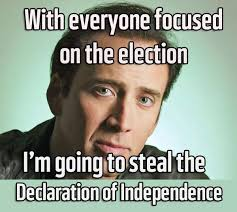
On the other hand -- uuggggghhhhhhhh!!!! Ew, David! I get it. No matter what happens, tomorrow is going to be ugly. There are going to be unhappy voters and unhappy students. We may or may not know the outcome. There is even talk of violence. Nicolas Cage is even going to steal the Declaration of Independence again! (JK). 


But imma be straight with you. 

It is entirely possible -- even probable -- that NOBODY ELSE that is going to teach what happened/is happening in a fair and unbiased way in most kids lives --  OTHER THAN YOU. Democracy depends on you -- not just because of your vote but because of your processing and debriefing in a fair and unbiased way with your students


And there is nothing more important than that. I don’t care what your pacing guide says. I don’t care if you teach Ancient World History or the American Revolution or Economics or AP HuG or whatever. I don’t care if you’re way behind. So is everybody else. 


The. Whole. Reason. Free and public. Education. Exists. Is For. Informed. Citizens. 

(It’s not for tests. It’s not for grades. It’s so they can be good citizens) ‘Kay. ‘Nuff preaching. 


And if social media is going to misinform them, you can take one day and talk about it the right way. 


What IS the right way?? (These suggestions are adapted from Facinghistory.org )


  1. Start with yourself. You are a human. One that lives in the US and who has lived through the really tough year of 2020 and who has political opinions of your own. I hope you do! I hope you voted! Then be intentional in your own reflections:

    1. What emotions does this election raise for you?

    2. What perspectives will you bring to your reflection on the election with your students?

    3. What can you do to ensure that students with a range of perspectives are supported in your class reflection?

    4. As news continues to develop throughout the day, how will you continue to learn alongside your students?


  1. Consider your students needs: Kids have feelings. Lots of them. And they don’t always control their feelings as well as you do. If results aren’t known, kids may feel anxious or uncertain. If results are determined, kids who supported the losing candidate may feel disappointed or maybe even unsafe! Use these questions to reflect on the students needs and emotions:

    1. What emotions might your students bring to a discussion of the election? For example, which students might be feeling excited, disappointed, or vulnerable?

    2. How can you foster a learning environment that respects a range of emotional reactions?

    3. Are there any students who might benefit from one-on-one follow up from you or another staff member at your school?

 

  1. Class Contract: Remind kids that your classroom is a safe and brave space. Make a class contract or refresh your class contract (especially with all the schedule changes!) and emphasize the respect and listening parts. If you already have a class contract, invite kids to add or modify the contract especially for THIS conversation. Use these questions to prompt their thinking: 

    1. What would a meaningful conversation about the election look like, sound like, and feel like?

    2. Which norms in our class contract are most important for guiding a meaningful conversation about the election and why?

    3. Are there any new norms we need to add

      1. For Online-kids, check out Contracting for remote learning (you might need a free account to Facinghistory.org, but it’s totally worth it) 

      2.  

  2. Update your kids: You, as a plugged-in, social-studies-teacher-adult may know what happened, but your kids may not. Especially if the results have been trickling in. They may not know the updates you know. TELL THEM in kind ways based on RELIABLE INFORMATION SOURCES (not social media updates). If violence or unrest is happening, you should also share reliable info about that in order to dispel rumors and misinformation. 

 

Helpful sources of information on the election include:

To share the results of local elections and ballot initiatives go to Tampa Bay Times and Bay News 9


  1. Journaling: Doesn’t matter if it’s digital or pencil/paper, individual reflection time is the absolute best place to start. Give kids a few minutes to write in their notebooks or a Canvas assignment (NOT a discussion board today!). You might have them divide their paper into three sections and answer these three questions:

    1. Section 1: What information do we currently know about the results of the election?

    2. Section 2: How do you feel about the election and what is happening in the aftermath?

    3. Section 3: How should individuals or politicians act in order to protect our democratic institutions? You may or may not choose to have your students share any of their reflections. If you choose to have them share, the Wraparound strategy can help make sure that all voices are heard.

      1. If kids are simultaneous, make sure that all voices are heard. This is a touchy day. We want to be especially careful to make sure that all kids are given a voice!


  1. Discuss how to find accurate information: Misinformation is everywhere on social media, and many kids don’t go anywhere BUT social media! Today is a great day to teach reliability! Ask kids:

    1. How could seeing or reading misinformation about the election make people less likely to trust the results of the election?

    2. What impact could it have if people lose trust in our government or elections?

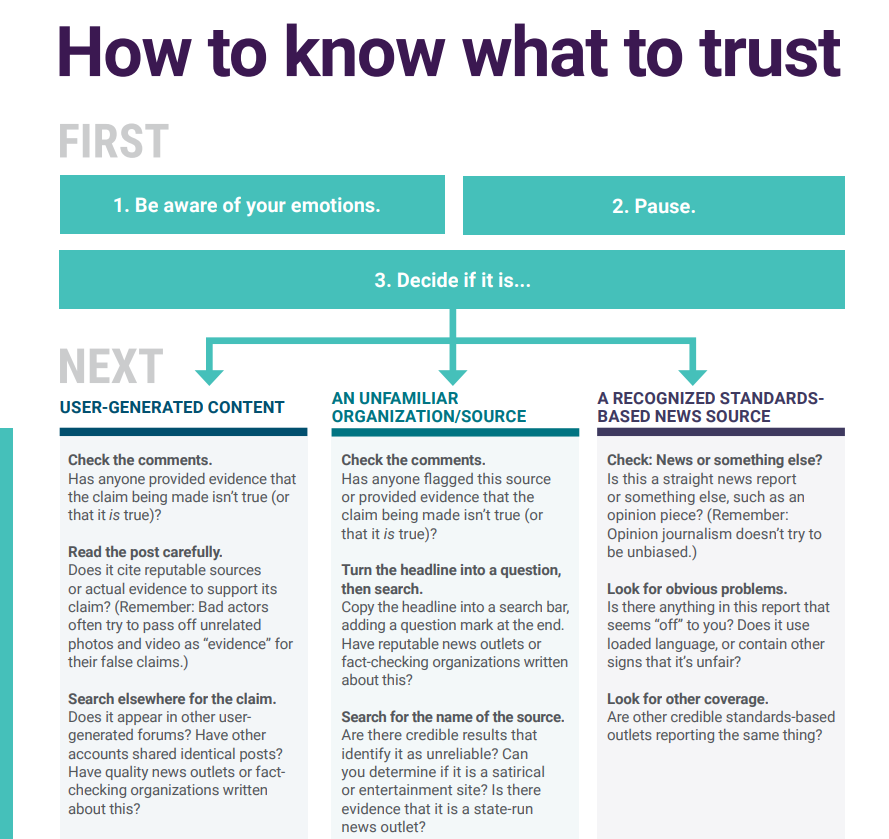
    3. Share the How to Know What to Trust resource and have students discuss if they follow any of those processes and if they can work on them

      1. Invite students to write down their goals for how they will follow the news. Prompt them to respond to the following questions:

        1. What can you do to ensure that the news and information you use to form your opinions is accurate?

        2. How will you decide what news to share with your friends or family or post on social media?

        3. What effect could misinformation have on our democracy?

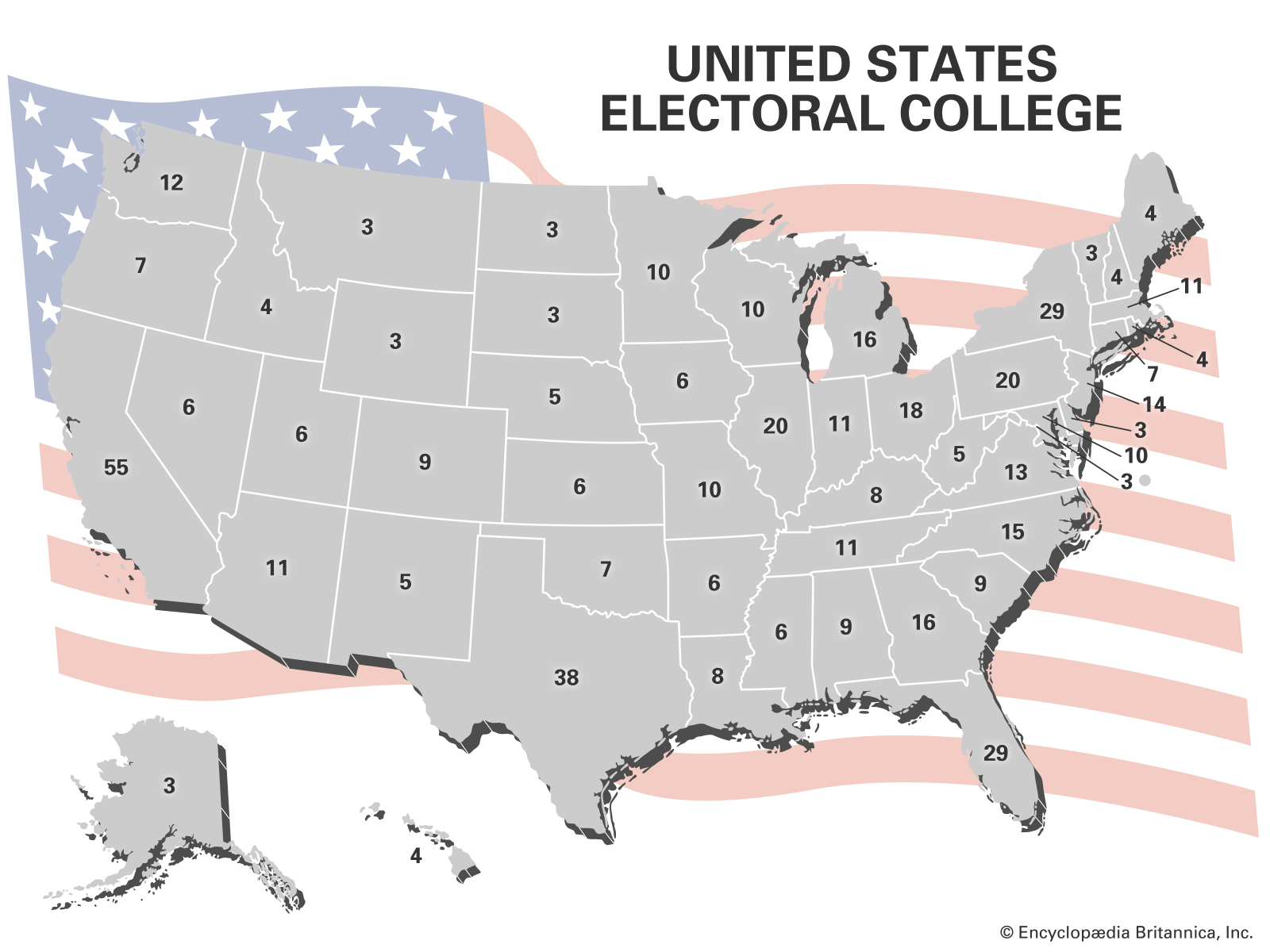
  1. Analyze the Election Results: Have kids write their answers first and then share what they’re comfortable with second. 

    1. Why might the results of the 2020 presidential election matter to me?

    2. Why might they matter to people around me (my family, friends, or community)?

    3. Why might they matter to the country?

    4. How might recent events in the United States have influenced the turnout and the outcome of the elections?

    5. How are the election results making you and people you know feel in terms of their own agency, vulnerability, and inclusion in American society?

      1. Lead a discussion around the answers, reminding kids of their agreements in the class contract. 

  1. Look to the Future: Finally, ask students to think about how the results affect their thinking about the future. 

    1. Because of the election results, do you think things will get better, worse, or stay the same?

    2. How can we support people who are feeling vulnerable because of the election results?

    3. What’s next for me/us? What can we do to strengthen our schools, communities, and country, regardless of the election results?

I know it’s a lot. I know you’re here, feeling your own feelings. But I promise you, this is the most important thing you will do all year. Stop teaching the Declaration of Independence. Stop teaching the legislative branch or Egypt & Kush. Stop teaching the Renaissance or US Imperialism or indicators of economic performance. 


Take a day to talk about what all the kids want to talk about anyway. There’s built-in engagement and social-emotional learning. It’s your civic duty as a social studies teacher. The tests don’t really matter (especially in a pandemic year). THIS is what matters. Not just the election, but how the kids PROCESS the election. 
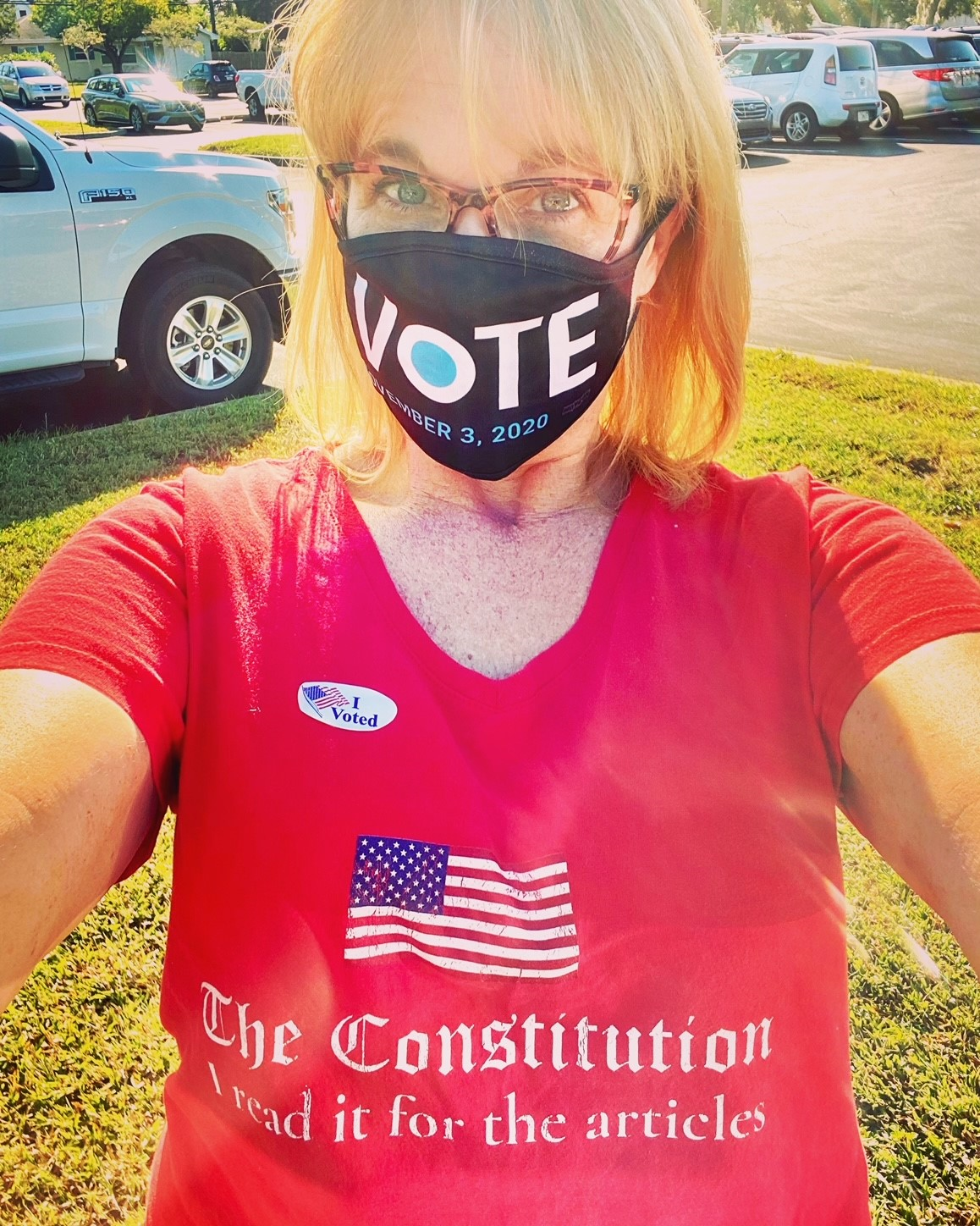

Go with it -- but do it carefully, respectfully, and thoughtfully. 


And take care of yourself tonight! It’s hard to handle all those adolescent emotions if you haven't slept. Remember to practice self-care. This ain't a football game. Your candidate’s winning or losing isn’t dependent on your staying up late watching. Go to bed if the election isn’t clearly called by a REPUTABLE NEWS ORG by your usual bedtime. You are not going to affect the outcome by staying up late. 


But you ARE going to affect the way your classes go tomorrow.  


Take care of yourself and do the most important teaching day of your year! 


Email me if you want to talk through the lesson! I’m here! newmantr@pcsb.org 


Wednesday, October 7, 2020

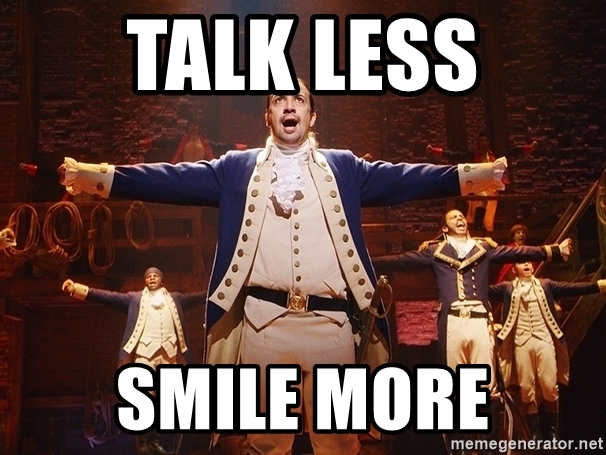
Talk Less, Smile More

In the musical Hamilton, the fictional version of Aaron Burr tries to convince fast-talking, say-whatever-you-think Alexander Hamilton to “talk less, smile more”. What Burr really means is to keep people guessing so they won’t have a reason to dislike him. 


But it’s not a terrible way to think about online & hybrid teaching. 


No, not the “keep em guessing“ part. But the teacher-talking-less part is good advice for all of us. And the keep ‘em bonding part is pretty good, too


Teaching is SO WEIRD right now, right? The online part is definitely one of the weirder parts. For most of us, there are a handful of kids who answer questions and participate. 


And then there are the silent icons. Silent initials.  


Are they listening? Are they learning? Thinking? I have no idea. A bunch of them turn in work. Some of them are just weird lurking icons. They turned off their mics and cameras. Did they turn off the incoming sound and video so they could just watch TV, too?


Their silence unnerves us. As does the repetitive nature of those same four kids who participate. 


And so in our awkwardness and discomfort with the silence, we-the-teachers talk into the abyss. 


And some days, we talk and talk and talk and talk...


It’s a teacher-talkapalooza. And it makes time slow down and class kind of boring. Even those teachers who are natural-born storytellers (and god help the kids who have teachers like me who aren’t). 


Why is this not our best idea? 


First, I think of those poor kids who spend 7 periods a day listening to teachers talk all day. Whew. That’s a whole new kind of tired. I also know that as a teacher, it is exhausting to talk all day - and even more exhausting to talk ON SCREEN. All those studies on Zoom Fatigue are real. It’s reason #815 why you’re so tired. It makes the day go soooo sloooowwww....


But there's one thing I do know about learning 


That the “person doing the talking (about content) is doing the thinking (about content). 


So if the teacher is doing all the talking (about content), the teacher is doing all the thinking (about content). 


If the same four kids are doing the talking, THEY are doing the learning and the thinking.


What are the other kids thinking about? 


Who knows? Pizza? Minecraft? Romantic interests? What are they going to eat tonight? Grandpa’s health? Fave tv shows? Tiktok dances? All of those? 


But probably not content. They don’t need to. The teacher is doing all the work. So they can kick back and daydream about Kid Thoughts that don’t involve content. 


Hey, teacher! Like Aaron Burr says, “talk less”. Maybe have those same four kids talk less, too. 


You might ask what else to do instead of talking. These are weird times in which to teach and we can all use some new thoughts.  


Here are some ideas:

  1. Chunk your class (with timers!): Use a timer for yourself to only talk for 5 or 8 minutes. Use a timer for how long kids should go watch that video you dropped in the chat. Use timers for how long they should take on bellwork, quickwrites, readings, discussions, or anything else you give them to do. Keep. Class. Hopping! Keep it moving to keep kids engaged. 

  2. Use wait time differently: If you want to talk less, it’s only logical that ALL the kids should talk more. But what if they won’t? Wait time hits differently when everyone is silent and unseen. Suddenly, everyone thinks class is over? Or the internet went out? Or the sound stopped working? You can’t just be silent like you could in your all-live class. Nor is it fair to let the only-in-person kids be the only ones to talk. It’s time to use music, a ticking kitchen timer, the Jeopardy tune, or a countdown clock to let them know that you’re waiting -- but that the internet hasn’t actually crashed (not this time, anyway)

  3. Call On Kids: It helps to tell them this ahead of time and not spring it on them like a wacky surprise, but let them know that you are going to call on all of them. And maybe if they answer, it will be for a point somewhere that you have built into participation or something or maybe they get a school “buck” or maybe they can earn a free homework pass or something. But call on every kid. Give them all the opportunity to answer (even if it’s in the chat if they don’t have a mic) You can spin to choose who will answer with Wheeldecide or SuperteachertoolsSpinner OR you can use the RandomNameGenerator Or RandomNamePicker Or any of those tools.But don’t let them off the hook just because they don’t raise their hands. I know, because I have heard from the online kids in the Hybrid class that it is hard, even for the outgoing ones. It’s hard 

  4. Make it Fast: Make it a race. For your in-person kids, give them 30 seconds to write a quick response to what you just read/said/wrote/viewed on their desks with dry-erase markers (everyone is cleaning all the time anyway, right? Might as well wipe down desks again. For your online kids, give them the same 30 seconds to put something in the chat (emojis and gifs count ONLY IF they are a response to the thing you just  read/said/wrote/viewed). Then, have kids share out their answers if they like. 

  5. Walk Away: Give kids a specific SHORT amount of time to do THE THING you just asked them to do. Like, “You all have 5 minutes to read the first paragraph (or two) and underline/highlight any words you don’t know.” or “Please answer the first two questions on your one paper and we will come back together in 8 minutes (at 11:15) and talk about it.” I am HERE at my desk and in the chat if you have questions”. Then, let them do their thing. 

  6. Process, Process, Process: Kids need to process content and information. They need time to “chew” it up. There are 100 ways to do that but some are

    1. Draw something they learned

    2. Talk about it to a partner

    3. Connect it to something they know

    4. Agree/disagree with a statement about the content

    5. Summarize

    6. Address misconceptions

    7. Compare/contrast the content

    8. Examine it from multiple perspectives

    9. Ask questions about what they learned


It’s okay to talk less, even into the silent abyss. But smile more and find ways to make class move at that “lively pace” that you used to have. Make it fun and quick and the kids will learn more. 


And guess what -- I promise, that if you end up talking less during your day, you will be LESS TIRED. (I really DO want you to feel better, work less, be less exhausted, and enjoy your job more. One small baby step at a time. 


I want to make your day easier. I also want to make it easier (and more successful) for your kids. Hopefully, there are one or two ideas here that will work for you AND for them :) 


You got this. Let’s pump up the Pumpkin Spice Lattes and pep up our classes so we can be less tired! 


Let me know if I can help! As always, I love to hear from you! 

-Tracy


Wednesday, September 30, 2020

Insane, Sane?

 This is so hard, you guys. 


I know. I see and hear and watch you all. You are working, so, so hard. 


I am not sure if we acknowledge this enough. This is insanely hard on, like, 50 different levels.  Here is a non-exhaustive list of things that are insane. 


  • It is insane to teach online and in person, whether you are doing it at the same time or alternating class periods. 

  • It is insane to try to gauge kids’ reactions and expressions behind masks. 

  • It is even more insand to try to gauge it with cameras and mics turned off. 

  • It is insane to have kids ghost your class. 

  • It is insane to try to keep naturally-social yourg human beings 6-feet apart. 

  • It is insane to think we have 6 feet space in our classrooms, and to keep them 3 feet apart. 

  • It is insane to try to do this with some kids on computers, some on phones and some on no devices. 

  • It is insane to ban student devices from classrooms like it’s 2019.

  • It is insand to plan for in-person and online lessons like they’re the same. 

  • It is insane to grade for in-person and online lessons like they’re the same.

  • It is insane to assess for in-person and online lessons like they’re the same.  

  • It is insane to think you will sleep or see your friends and family again. 

  • It is insane to think that the stress of health and safety doesn’t take a huge toll on you.

  • It is insane to think that they


This is all so crazy. And I wish it wasn’t. If I could snap my fingers and become a virologist and magically solve Covid, I would. 


In a heartbeat. Because this sucks for a lot of people, but you all are the ones I worry about. 


So, I have two things for you today. First, huge props and thanks. I know that you’re working your butts off and if you haven’t been thanked profusely lately, please hear my thanks. 


THANK YOU!!!!!!!!!!!!!!!!!!!!!!! 

YOU ARE WONDERFUL AND AMAZING AND MAKING A GIANT, HUGE DIFFERENCE!!!!!!!!!!! 

YOU MAY NOT BE PERFECT BUT YOU ARE WHAT YOUR KIDS NEED TODAY!!!!!!!!!!!!  

CHEERS TO YOOOUUUUU!!!!!!!!


Second, I don’t have any magic wand, but I do hear a few small tips of what’s working from some colleagues. Maybe some of the ideas might help? 


If not, take the thanks and run. 


Otherwise, here are the smaller tips and ideas I have been hearing from some of you that seem to be making life slightly easier. 

  1. Bond with your kids: Nothing else matters. Most years, you already have that bond “glued” and you have moved on to solid content. This year, between masks, computers, lack of computers, and switching back and forth between computers & face-to-face -- our bonding isn’t quite as strong as it normally is. Keep working on it, and keep being intentional about it and it will make things easier as you go (I promise).  


  1. Plan for Online First: I keep hearing this from you guys: it is easier to take an online resource and turn it into an offline resource -- than the other way around. Take the reading offline and make a copy or project it. Don’t take a textbook reading or a paper copy and figure out how to put it on Canvas. 


  1. Use The Resources: Your district staff (in secondary SS: Me, Josh, Michelle, Matt, Jess) are working so hard to get every possible resource up on Canvas for you that we possibly can. You are welcome to spend your evenings and weekends searching for and creating your own resources. But if you want some downtime, use our stuff. And if you don’t love our stuff, it’s okay to tell us. We can see what we can find. But we do this, not to mandate stuff, but purely to take some burden off of you.


  1. Use Speedgrader in Canvas: If you haven’t used Speedgrader yet, please do. It is, indeed, speedy.  It’s easy to quickly see kids’ work (whether in the text-boxes of an assignment or in an upload) and quick to grade. And then, sync to Focus and you don’t have to do double the work. 

And PS - don’t grade too much (but don’t grade too little). Take it easy-but-fair on yourselves and on the kids!


  1. Ask for Help:  Back when we used to use Mac computers, someone sent me something NSFW and I spent an entire planning period trying to figure out how to delete it. If I had asked for help, it would have been gone in under a minute, I would have had a new skill and I would have had my time back. ASK FOR HELP. We are all learning here. This is crazy for all of us and someone has figured out something you need to know that they can solve for you quickly. OR -- they didn’t know it was a problem and they can try to solve it, stat. 


A  reminder. You are amazing. Your kids are learning to love you and you are making a difference. You can handle this by putting one foot in front of the other. You have support when you ask for it. You can do one task at a time. Everyone is struggling (it’s not just you). 


This is a pandemic and teachers all over the country are losing their minds. You are not alone. You can make it through tech problems, mask renegades, virtual meetings, schedule changes, Canvas issues, and the Pumpkin Spice Faculty Meeting.  (Mmm!). Just hang in there and don’t let it get too bad. 


Please know how thankful your kids and parents are (even if they don’t say it. They’re going through some stuff too) and please ask for help when (not if, when) you need it. 


Have  a great rest of the week. This weather, amirite?

-Tracy