Showing posts with label lecture and social studies. Show all posts

Thursday, February 2, 2017

Binge Watching

We live in the age of Netflix, which encourages a strange habit these days of “binge watching” TV shows. “Binge Watching”, as a phrase, means watching numerous (too many?) episodes of a show all in one sitting.  I recently went to watch a new TV show I had heard about only, to download 8 episodes at once.

I know I sound old, but it wasn’t that long ago that we used to have to wait for a specific channel to bring us a rare “marathon” on an off-season Sunday afternoon. Now, with streaming TV, we can binge-watch shows all the time.

So, the problem is, when I binge-watch, I go on overload. My brain can’t actually process all that stuff. The next thing I know, it’s the middle of the night and I can’t actually remember what happened or in what order in the “Series of Unfortunate Events” or “Portlandia” or “Man in the High Castle” or whatever.

And then one of two things happens.Either my brain shuts down like a full belly on Thanksgiving -- orr I need to process some of the info to make room for more.

We used to take commercial breaks. Or wait a week for the next episode. Now, we have to force ourselves to pause it for a restroom break.

Kids brains get “full” too. They can really only handle 10-15 minutes of school content before they can’t handle any more and they either shut down or need to process.

What can we do to prevent kids’ brains from shutting down?

There are plenty of ways to process classroom content. Here are a few of my quick  favorites:
  1. Talk About It -- Turn and Talks are the best classroom hack ever.. Take a break from your lecture/discussion/video/reading/activity and have the kids turn and talk about it.
    1. How? You can either ask them to recap what they just learned or ask a higher-order question for kids to discuss/process together. I would eavesdrop to see how well they’re getting the material.
  2. Write About It -- Quick writes can be a brief and simple way to get kids to process content. They don’t require a lot of set-up and they don’t require a lot of management.

    1. How?  You can ask them what they just learned, how they can apply it, or what it has to do with another thing they learned. Give them a short time limit and ask them to write the whole time.Then, you can use what they write to see where they are in their thinking and learning
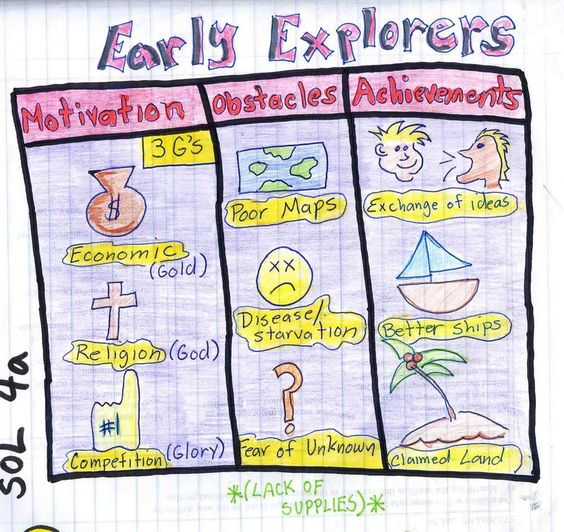
3. Draw about it -- Having kids create a meaningful representation of their learning is powerful -- if THEY make the drawing (not copying one from somewhere).
  1. How? Ask kids to make a visual illustration of a vocab term, a concept, or how two ideas go together. This makes them process the info and make it their own. Again, you can use this info to see where they are in their thinking.

There are, of course, plenty of longer, more involved ways to process content. But these three are the quickest and most adaptable. I highly suggest you give your kids a “processing break” and give them time to digest their learning. I honestly believe that they learn and retain better when they process their learning.


Do you give processing breaks? If so, how do they work for you? If not, will you try one? If you aren’t changing up the activity, try taking a processing break! Let me know how it goes!
-Tracy


Wednesday, October 21, 2015

Life Hacks and Teaching Hacks: Part 2

I’m on a Life Hack “kick”. I actually watched an awesome video on youtube where my secret author-crush, John Green tested several Life Hacks out, kind of like Mythbusters-style. Hilarious and helpful!


Life Hacks that are dumb:

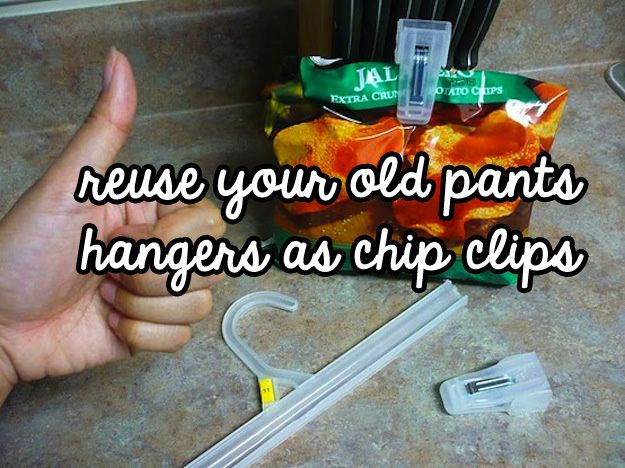
  1. Using your pants hanger as a chip clip. Are your pants on the floor now? Are your chip needs stronger than your clean-pants needs? I would vote for unwrinkled pants, but that’s just me...
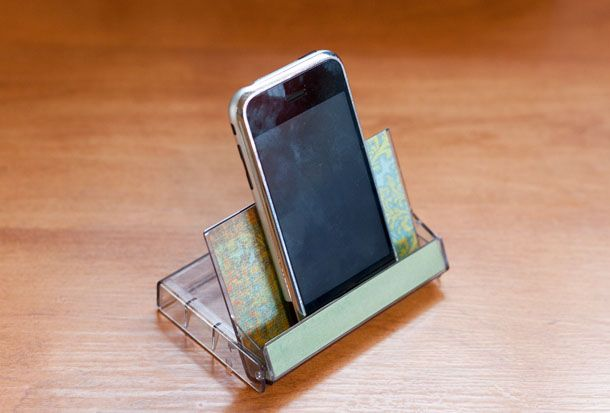
  2. Using a cassette case as a cell phone stand. Do you really need to stand your phone up? Do you need that enough to get your cassettes out of that box in your garage and use one of the few cassette cases that did not break in the 90s and leave that cassette hanging out un-cased and put the cassette liner back in the box to get crumpled -- all because you can’t look down onto your table or desk or counter? Really?
  3. Using your soda can tab to hold your straw. First of all, do you really need a straw with your can? Do you carry straws with you, just in case you decide to have a can of soda? Second, does the floating straw really bother you that much? Really? It doesn’t float away into the sky, you know.

Teaching Hack that is dumb:

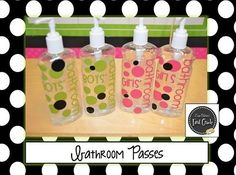
Hand sanitizer as a bathroom pass. Can someone count all the ways this could go wrong? Sprayed all over campus? Gotten in eyes? A “hand sanitizer flinging fight”? Someone ingesting that stuff? Yikes!


GOOD Teaching Hack:

Use a “call-on system”. Don’t just call on the kids with their hands up. Calling on only raised hands gives you four problems:
    1. Problem #1: Kids with their hands up learn. Everyone else sits back and lets the hand-raisers do the thinking. This is scheduled napping-with-your-eyes-open time for the non-hand-raisers!
    2. Problem #2: You, the teacher, have no idea what, if anything, the rest of the class is learning. And you won’t know for a week or two until the test and you say, “Wow! These kids didn’t learn anything!”
    3. Problem #3: Kids who don’t raise their hands learn that you won’t call on them and assume that you don’t care if they learn or not.
    4. Problem #4: Or they learn that being called on is a “gotcha”. When teachers run out of raised hands, they often call on the kids that look the least engaged as a way of “busting” the kid who is lost or daydreaming or whatever.

Instead -- use a Call-on system.

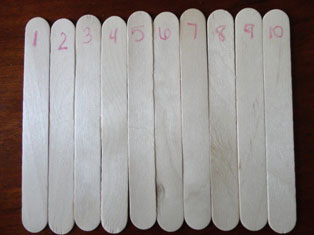
You can go low tech -- like putting a number on each desk, putting the same numbers on a set of popsicle sticks, and pulling a popsicle stick out of a bag and calling on the student sitting in the corresponding desk.

Or, you can go high-tech with Class Dojo which will randomly call on a kid when you have entered all the student names into the system. You-the-teacher can use it on your projector, your smart board, your phone, your ipad, whatever.

But however you do this, make sure you set it up correctly -- TELL YOUR KIDS WHAT YOU’RE DOING AND WHY. You can’t start a call-on system in October without some good preparation

Even high school kids need a call on system. Why?
  1. It holds every kid accountable. Every kid has to learn the material (or at least TRY) and be prepared to answer or share.
  2. It tells your kids that you care that each of them learns. That you’re not just interested in what the hand-raisers have to say (and what those hand-raisers have learned) -- you’re interested in what EVERY kid has to say and what every kid is learning.
  3. It helps you figure out where your kids are lost, stuck, confused, or wrong EARLY in your instruction. This way, you are doing formative assessment and you know where they need help or re-teaching BEFORE you get to the formal test or quiz. So you can, you know reteach or adapt your lesson.

Tips:
  • Set up a plan for the kid who can’t or won’t answer. Do you allow him to “phone a friend” (I mean, talk to a neighbor)? Do you give him a minute to think and come back to him? Are you aware of the kid who just got a referral last period and is struggling to keep himself from blowing up this period? I would skip that kid if he asks you to.
  • Preach again and again that you are doing this because you CARE, not because you’re a “gotcha”-kind-of-jerk.
  • Be consistent with your system. Use it frequently, at least until your kids are used to it. Make it a part of your procedures.


Do you use a “call-on” system? How do you use it? What have you learned from it? Any tips for folks new to “call-on” systems?

AS always, I love to hear from you! Email me! newmantr@pcsb.org

Wednesday, October 14, 2015

Life Hacks and Teaching Hacks


The internet is full of “Life Hacks” -- simple things you can do to make your life easier.

Some are silly. I have no interest in cooking noodles in my coffee maker. I have a pot and a stove top and I don’t want coffee-tasting noodles.

I will not put my bagel in an old CD spindle. Why do I need a bagel tote? What’s wrong with a ziplock bag? And how many old CD spindles are you storing in your home anyway?

C’mon, people! Don’t FORCE this whole lifehack thing...

My favorites ACTUAL life hacks?
  • The carabiner-clipped-grocery-bag = trash bag for your car. Genius.
  • Nail polish on your keys -- so you know which key is which. Fun AND sparkly!
  • Putting smelly shoes in the freezer (in a bag) to kill whatever bacteria are making them stinky.
  • Use toothpaste to patch nail-holes in your apartment walls. Or to make pimples go away. Or to fix scratches in CDs. Or to clear up hazy headlights... Toothpaste is the best lifehack.

What’s my favorite Teaching Hack?
It’s called “Turn and Talk”.
Period.


So simple. So quick. So powerful.
So underused.

The average teacher probably uses turn and talk once or twice a week.

How do I do it?
Step One: Ask a question, preferably higher-order (you do this a million times a day anyway)

Step Two: Give a time limit. I like 30 seconds, but you can choose a larger or smaller time frame depending on the question, your time frame, your students, etc.

Step Three: Have your students turn to a neighbor and discuss your question
*Use some explicit instruction -- teach them how to do this. I know you THINK they know how, but your expectations and your next-door colleague’s expectations may be a bit different. Teach your kids:  
  • how to stay seated
  • how to actually TURN their heads and shoulders toward their partners
  • how only 2 (or three in an odd-numbered class) per partnership
  • who should turn to whom
  • go over your group expectations  (mine are the Five Ohs: On task, On topic, Only your partner, One-level volume, On (in) your seat)


Step Four: This is the most important step. Walk around your room and LISTEN to the students turning and talking. If you don’t listen, you aren’t holding students accountable. How do you know that they’re not talking about Snapchat or whatever? If you don’t listen, the kids pick that up pretty quick and will never make this work right. *Fix the problem if kids are not on task and on topic.

Step Five: Ask each group to share out, either something they said or something they heard. Again -- to make sure EVERY kid has some thinking going on - and to make sure that every kid’s thinking matters!

Why is this a great Teaching Hack? (I thought you’d never ask...)

Here’s another Life Hack: People love countdowns. Spin it countdown style, and people love to find out the #1 answer.....  

So here are my Top Five Reasons To Do a Turn-and-Talk, countdown style

5. Because students turning and talking can break up monotony, make the pace pick up, and better “chunk” content.

4. Because when a teacher voices a great discussion question -- and then takes raised hands, the teacher only holds the students accountable who have raised their hands. The rest of the class can tune out and daydream and get away with slacking off. Turn-and-talk holds ALL kids accountable.

3. Because when students turn and talk -- and the teacher listens carefully -- the teacher can correct misconceptions and mistakes right there on the spot, instead of waiting until the quiz or test next week.

2. Because a kid who is talking about content is engaged in the learning. He or she is interested. His or her brain has woken up. Endorphins from talking about their own understanding and ideas can flow.

1. Because when kids get to talk, they get to try out their ideas and words -- and they OWN those ideas and words. The talking and thinking doesn’t belong to the teacher anymore. The learning belongs to the kids! And then they UNDERSTAND THE CONTENT BETTER. It seriously makes kids actually learn better!!!!!

It seems like we don’t have 30 seconds of class time to spare. But if those thirty seconds mean that the kids better understand and retain content -- they we don’t have time to NOT turn and talk.

If you take your class discussion questions (where you often take raised hands) and turn those into turn and talks -- you might actually GAIN learning time. (Hypothesis: it takes longer to call on 5 raised hands than it does to turn and talk for thirty seconds and share out? Someone test this one for me!)

I want to challenge you to use turn-and-talks obsessively. Every day, multiple times a period.  How many times a period can you turn-and-talk? 5? 10? 15? 20? more?

The more your kids turn and talk -- the more they retain. Period.

Best. Teaching Hack. Ever.

Let me know how it goes! As always, let me know! newmantr@pcsb.org

Wednesday, October 7, 2015

Wake Up Sleeping Beauty

My five year old daughter is kind of a princess. Despite my best efforts to NOT create a Kardashian-style princess-narcissist, princesses are unavoidable in my house. They creep into my house through books, costumes, t-shirts, bags, toys, even princess soup!

I am learning to adapt to my initial dislike of princess culture. But I’m holding out on one.

I can’t stand Sleeping Beauty.

Seriously -- the girl is asleep pretty much the whole story.  Most boring -- and useless -- princess ever.

Do you ever feel like your students are kind of like sleeping beauties (minus the whole prince thing)?

Like they’re the title and the point of the whole thing (the “thing” being school) -- but that they’re asleep or not engaged half the time?

Well, take away the icky kissing metaphor and let’s come up with a solid instructional plan to wake the princesses (and princes) in our classes. Sometimes we need kids to physically, actually wake up, and sometimes we need them to wake up their brains and get engaged in their learning.

If you’ve been spending time with your Marzano Framework (always some light reading before bedtime, right?) you may have noticed Design Question 5 -- which is all about engagement.

Marzano himself says that “Nobody has students engaged all the time”, which, at first, I thought was kind of weird. But then I thought about myself-as-a-student, how even in a GREAT training, my mind sometimes wanders or I try to jump ahead in the training or jump back or make a connection that isn’t necessarily related or think of my to-do list or.....

What makes a class engaging is the ability to bring me back to engagement when I mentally wander. Or, really, Marzano Element #24 which says “Noticing when students are not engaged”.

But once you notice . . . what the heck do you do to keep ‘em or bring ‘em back?

Marzano, of course, has a list (Elements #24-32). Let’s look at my three favorites...
  1. 1. Lively Pace Element #28: I know, I know,  I am a caffeinated teacher. I know that it takes a lot of energy to do what we do. But a class that moves too slowly or too fast-paced will lose a lot of kids. How can you tell that your class is moving at a “lively” pace? You have multiple activities in a class period, your students are moving through them with minimal “what are we doing again?” moments, the kids are “with you” and not dozing off from snail speed nor unable to keep up. And you are adapting your pace to the needs of your class.
Check with your lesson today. What kind of speed is it? Are you keeping it hoppin’? Moving at warp speed? How can you adjust to meet the needs of your students?

  1. Movement Element #27: I hate sitting down all day. It’s tough on me -- and I’m not hyperactive (or regular) kid. Find a way to get your kids to move -- whether they do a gallery walk or just take a stand-and-stretch break, get your kids up twice during a traditional class period (three times or more during block). There are instructional uses (like four-corners or dramatic interpretation of history content) or just getting up to get materials or turn something in. Get your kids out of their seats (in a controlled manner) and your kids will wake up and learn more. I promise.
Again, keep an eye on your own classes today. Do your students get up? How many times? For how long? How is their engagement before they move? How about after? What do you notice about your own class?

3. Enthusiasm: The third of my favorite ways to increase engagement is Element #29: Demonstrate intensity and enthusiasm. Seriously. This one is one of my favorites -- act like you like what you do and what you teach and the kids might pay attention. Confession time -- when I taught US History, my least favorite unit was the Colonial unit. Ugh --  I just found the colonies boring. So do you know what I did? I wore a complete Colonial Lady costume and served tea (to set the stage of colonial culture before the Boston Tea Party and all that). You fake it (the enthusiasm) until you make it (you actually FEEL enthusiastic).
Again -- check your own classes today. How much enthusiasm do you have today? Is it contagious enthusiasm -- meaning, are your kids picking up the intensity that you’re putting out in class? Are they catching some of that enthusiasm from you? How can you demonstrate that enthusiasm?

Check your classes today! How is your student engagement? Are you noticing when kids lose engagement? How can you MANAGE your student engagement?

Wake up those sleeping beauties -- those lovely princes and princesses in your classes -- and let me know how it goes! As always -- email me at newmantr@pcsb.org