Wednesday, May 27, 2015

Tracy's Annual Summer Reading List

So, sometimes the kids get Summer Reading Lists. I certainly never had one growing up, but maybe my county didn’t do that. Or my teachers didn’t like it. I don’t know.

Every summer I bring home a pile of books on my own Summer Reading List. Every summer, I make it only halfway through. But I still try!

I like to have high expectations for myself, even if I don’t always complete my task lists...

Anyway, here’s this year’s Summer Self-Selected, Self-Paced PD for me.

  • 1491 By Charles C. Mann. I have somehow never gotten around to reading this book. As I look more at the Pre-Columbian Americas, I am amazed by both this book -- and by the fact that I have somehow missed it before now!
  • Building Students’ Historical Literacies: Learning to Read and Reason with Historical Texts and Evidence by Jeffery D. Nokes is a history professor at BYU. And his foreword is written by Sam Windburg, the #1 Top Dog in the field of History Education. I think I will really learn a lot with this one.
  • The Wrong Side of Right by Jean Marie Thorne. I am halfway through this teen fiction novel about a girl who discovers that the father she never knew -- is a US Senator running for President! It’s a teen-oriented look at fitting in  -- with a nice “side” of elections.
  • The Highly Engaged Classroom by THE Robert Marzano, the same Marzano who has designed the evaluation systems. I want to know what highly engaged students look like and how to make that happen.
  • The Immortal Life of Henrietta Lacks by Rebecca Skloot. I know that this came out a few years ago and that it is supposed to be a huge hit. 4,000 people on Amazon gave it 4.5 stars out of 5. It’s the story of a poor, black, tobacco farmer whose cells were taken -- without her knowledge -- and use to make amazing advances in medicine and science.

I know, I know. I’m behind. Some of those books came out quite a while ago. But, hey! Life gets busy and then summer comes and I get a chance to catch up.

What’s on your summer reading pile? Will you get to anything other than beach reads? As always, I love to hear from you! Email me at newmantr@pcsb.org

Wednesday, May 20, 2015

The Big District Blobby Monster

So there is a hilarious blogger, Allie Brosh,who had a blog called “Hyperbole and a Half”. It sometimes uses the kinds of inappropriate words that middle and high school teachers are TOTALLY unfamiliar with (HA!), so I won’t link it here.

But in her blog, Allie once channeled her inner English teacher and freaked out once about the way some people write a lot as one word: alot, instead of the correct separation into two words: a lot.

Allie decided that the one-word version was a monster. An Alot Monster. Allie is a pretty funny woman who draws like a six year old. Here’s how she describes the Alot Monster:

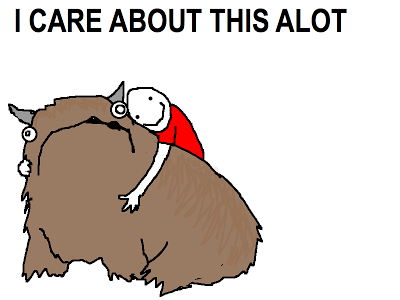
The Alot is an imaginary creature that I made up to help me deal with my compulsive need to correct other people's grammar.  It kind of looks like a cross between a bear, a yak and a pug, and it has provided hours of entertainment for me in a situation where I'd normally be left feeling angry and disillusioned with the world.  

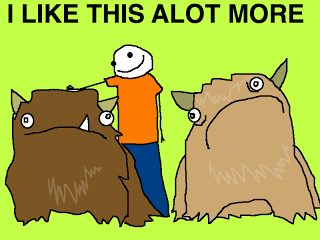
For example, when I read the sentence "I care about this alot," this is what I imagine:
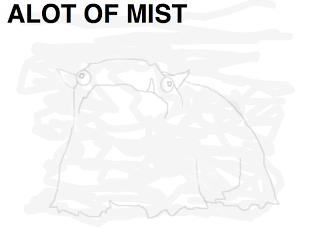
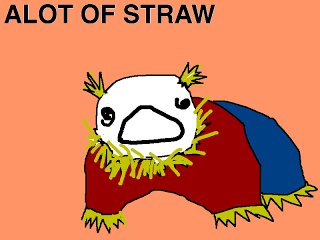
Similarly, when someone says "alot of _______", I picture an Alot made out of whatever they are talking about.  


You can read her blog yourself -- and see the various versions of Alot monsters that the creative folks on the internet have created.

But I have to say, that I have an imaginary visual in my head, too. Only instead of seeing the mis-typed Alot Monster, my monster visual is when someone talks about The District.

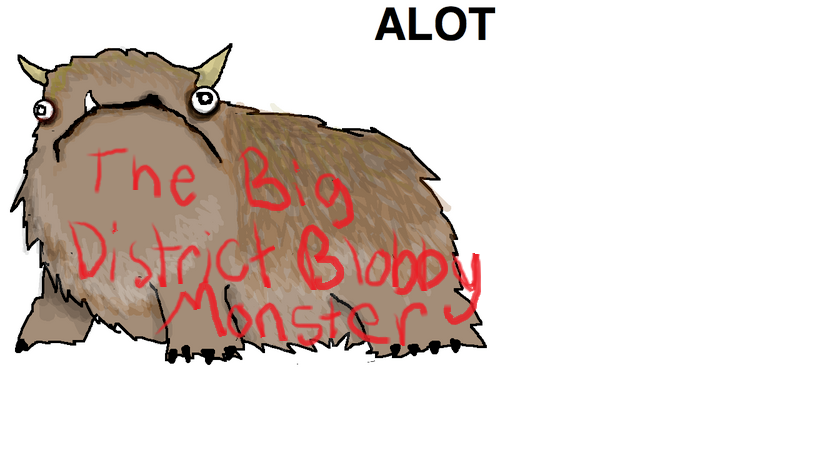
For example, whenever someone says “The District” (pronounced with capital letters, of course) I imagine the Big District Blobby Monster.

He looks a lot like the Alot monster in my head

I mean, when they refer to the district in certain ways -- like “The District is making us do  _____” or “The District is looking at _____________” or “ The District has this new initiative of _________”-- it kinda sounds like the district isn’t made of real people. It’s like the district is a Big District Blobby Monster.

It’s particularly funny when they refer to Social Studies, because there are only 6 of us. If you need an introduction, here you go!
  • Linda Whitley is the K-8 Social Studies Specialist.
  • Matt Blum is the 9-12 Social Studies Specialist.
  • Cassie Slone is the Elementary SS staff developer.
  • Kim Jackson is the Social Studies secretary.
  • Cindy Flora is the Multicultural/PMAC/Character Ed Staff Developer.
  • I am the Middle School SS Staff Developer

That’s it. That’s all of us for aaalllll of K-12 Social Studies. We are so busy trying to do the work of a billion people, we don’t often even get us all in the same room together!

So, the next time you think of The District as a Big Blobby District Monster (that is the cousin of the Alot monster), think about the individuals behind that Big District Blobby Monster. Sometimes, it really does seem like a Big District Blobby Monster. But sometimes, it’s just one member of our little department :)

Has the Big District Blobby Monster been an image in your mind, too? As always, I leve to hear from you! Email me at newmantr@pcsb.org

Thursday, May 14, 2015

Level Up!

When I was a kid, I had a neighbor who had a cool, new Nintendo game system. We had an old, knock-off Atari-wannabe at my house. 

But my neighbor, Laura, had a Nintendo – and had a Super Mario Brothers game! Every afternoon, I went to her house and waited patiently for my turn to save the princess.

This was the biggest deal in the neighborhood. At any given moment, all of my neighborhood buddies and I knew who had gotten to what level and who had discovered what secret passage and what secret point booster and every other “Easter egg” in the game.

There was nothing more satisfying than that musical beeps (de-de-de-da-da-DEE)  and the announcement “level up!” from the game.

I was thinking about the idea of students ending another year of school and thinking about as an academic (and social) “level up” in their lives. And I was wondering what skills a kid would need from this year for their next year. 
For example, I was wondering what two or three major things an 8th grade US History teacher would want his kid to remember from 7th grade or what skills an 11th grade US History teacher would want a kid to remember from 10th grade World History.

So, here’s my challenge to you, in these last few crazy weeks of school.

Have a conversation with a colleague who teaches kids the year after you and make sure you’ve covered or emphasized the skills and content they need for their “level up”. Then, try to have a conversation with a colleague that teaches kids the year before you and tell them the two or three major things you want their kids to retain for your upcoming class.

Then, make sure you review those skills, concepts, or content (one last time) before the year is out.

It’s a quick and easy way for us to do vertical teaming.  It’s a quick and easy way for us to prepare our kids for the next “level up” that comes with a new grade level.  It’s a quick and easy way to put a little “big picture” into your review season.


Do you do this? If so, I love to hear how you do it! Let me know! 

Wednesday, May 6, 2015

Appreciate!

There are a lot of times when we, as teachers, don’t feel very inspiring. There are days when we feel like we don’t make much of a difference and we don’t do much to change the world.

I’m here to remind you that you’re wrong. On just this. :)

It’s Teacher Appreciation Week. I want to let you know how appreciated you are.


You are appreciated by your students, like I appreciate my former teachers

  • Ms. Vitti, my kindergarten teacher who taught me to read, and paint, and sing, and all those other life-changing kindergarten things.
  • Ms. McConnaughey, my fifth grade teacher who taught me to have better handwriting (I promise, the current handwriting IS an improvement) and organs of the body.
  • Ms. Stockman, my 6th and 8th grade Language Arts teacher who taught me to enjoy literature. And to understand grammar. And to write well.
  • Mr. Stocker and Coach Farrell, my high school AP Euro and AP US history teachers who taught me about the world and about how to learn & study and how to make content “stick”.


But you are also appreciated by your peers, like I appreciate my colleagues ...
  • Ms. Cooper, (now at BCHS) who taught me how to have quiet, one-on-one chats with students to improve my relationship with them and to improve their behavior.
  • Mr. Malinka, (still at MMS) who taught me how to read student work for National Boards -- and to figure out how much my students were learning.
  • Mrs. Kreger, (now at NEHS) who taught me how to plan for and set up PD, and how to think about art as a learning tools.
  • Mr. Bernard, (still at GHS) who taught me how to start a school year right and how to keep those kids in the palm of your hand for the rest of the year..
  • Ms. Salvesen, (still at AMS) who taught me how to manage a classroom of struggling students and make it look easy (I know it’s not)

There are a hundred other teachers in this district who have taught me wonderful things -- but I’m 
going to start sounding like a long-winded Oscar speech.

I don’t know all of your students, so I can’t remind them to show their appreciation this week, but I hope your students and administrators make a big fuss.

But I do know YOU.

I want to remind you that the power you have to change lives isn’t just isolated within your classroom.

You have the power to assist, empower, and enhance the teaching of your colleagues.

I see it all the time -- in a casual hallway conversation, when you do real common planning, when you problem-solve as a team, when you share ideas and advice, when you meet after school for “social time” and adult beverages and work out problems, when you fix each other’s projectors or share cool resources.

Teachers, I hope we all appreciate our colleagues. Please tell your colleagues this week how much you learn from them, how much help they are, and how much you appreciate them. When we appreciate each other, we strengthen each other.

What teachers do you appreciate? As always, I love to hear! Email me any time

Tuesday, April 28, 2015

6 Top Lies I Tole My Students

I lied to them all the time. Here are a few of the most common lies I told my kids.

6 . “I’m really 73 years old”. I just use really good moisturizer. I did this purely for my own amusement.  It was funny to watch middle schoolers try to decide if I was telling the truth or messing with them. They still want to believe in crazy stuff. PS  -- I was in my 20s when I told this. It was more absurd then :) I stopped telling it around age 30 when they stopped asking me if I was teasing.

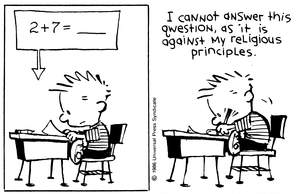
5 . “That’s against my religion” My catch-all excuse for anything I didn’t want to deal with was that it was against my (fake) “religion”. Class parties were against my “religion”. Free time was against my “religion”. Candy was against my “religion”. Chewing gum was really against my “religion”. Texting in class was against my “religion”. It took a while before some kid asked what my religion WAS.

I now tell them that I am a Newmanite (since I’m Newman). My maiden name was Berlage so I was Berlagian before that. The kids realized it was a silly way of saying things weren’t “My Way” of doing things. They would tell new kids about things that were against the teacher’s religion. I still tell this lie to students.

4. “I will lose my job if you do ___” I told kids that the things they did would cause me to lose my job. I often made things more dramatic than they actually were. But it scared the heck out of my kids when I used this line about opening the windows of my classroom (a no-no, true, but not lose-my-job worthy), kids breaking stuff (like my projector or a desk), or about them cheating on tests

I was probably not going to lose my job over those things. But certainly fewer kids did them. And that’s saying something. I don’t really have to tell this lie much anymore. But it works when I do.

3. You really need to know this. They don’t, really.Not all of it. Especially not the details. At no point in my life -- even as a Social Studies Teacher(!) has anyone ever asked me in what year the Maryland Colony was founded or what happened in the Tet Offensive. Not once. Not even on Trivia Night! I got over this lie and I hardly ever tell it anymore.

2. I don’t have favorite students. I tried. I really, really did try! I tried to care about all the kids the same. But some kids are just more likeable than others. Some kids were easier to connect with than others. Some kids drove me crazy! Some kids I got through to  -- and some, I didn’t. But I could never admit that to my students. I couldn’t afford to lose the occasional attention of Jasmina by telling her she was annoying. I couldn’t afford to lose the connection with Javonte by letting him know that he got on my nerves. I couldn’t lose the rest of my class by letting them all doubt whether I cared about all of them or was just pretending. My relationship with my class was too important. I lied about that every day. Now that I don’t have my own students, I don’t get to tell this one. But I totally would.

1. You can’t do this so I will do it for you. I honestly believed for years that my kids couldn't do a lot. They couldn't read the textbook. They didn't have the background knowledge for the content I was teaching. They just couldn't do it.

So instead of teaching them how to do things, I did the things for the kids. Out of kindness and love. Seriously!

They couldn't read the textbook and glean the important info? I would put that important info in a power point! They couldn't understand important cause and effects? I would tell them the causes and effects! They couldn't write well? I would let them write short answers or bullet points! Their lack of background knowledge made them struggle through understanding of complicated pieces of history? I would simplify the moments into a cute worksheet or handout so they didn’t have to wade through the messy stuff.

When I believed that my kids couldn't do things, then I was right. My kids didn’t do those things. And I didn’t make them!

But -- the only way to get better at something is to practice. Can I keep my non-swimming kid on the beach for her whole life? Or do I teach her to swim? Buy her velcro shoes until she’s twenty? Or teach her to tie her shoes?

Do I stop expecting my students to read, write, and think -- or do I teach them and make them practice and practice and practice -- until they improve?

The biggest barrier to student success is a teacher who thinks they can’t.

I definitely don’t tell this lie anymore.

You know what made me stop telling this lie? The slight streak of competitiveness in me and a little ego. I heard someone say “Tracy, your kids can’t do x, y, and z”. And I thought “The heck they can’t!!! I will make ‘em do x, y, and z!”

And it was hard work and I had to try some different, out-of-the-box things. But, dangit, my kids DID do it! Who said they can’t?

I challenge you to look at the lies you tell -- especially this last one. Do you tell it? Or do you find a way to teach the skills your kids need? Struggles and ideas? As always, I love to hear from you! Email me! newmantr@pcsb.org

Wednesday, April 22, 2015

Beyonce and Lincoln: Public and Private


There was a small internet kerfuffle recently when photos of superstar Beyonce -- without makeup -- were leaked online.

Beyonce, of course, has tons of public pictures of herself available to the average Googler. She’s a pretty big star and has been for almost twenty years!

But there’s a difference between a picture Beyonce meant to share and one she didn’t. There’s a big difference between public and private.
The internet is full of the problems like that from politicians to starlets to regular Joes. Because, really, we write and create things for two different purposes -- for public (published) use or for private use.


When we look at history, documents tend to fall into the same two categories -- public (published) and private. Meaning, stuff that’s meant to be read and stuff that’s not. Often, there’s a difference between the two.

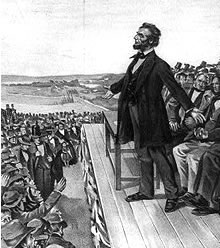
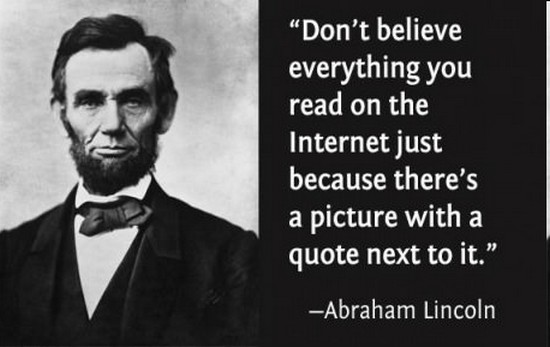
Abraham Lincoln is a person who sometimes wrote one thing in his personal writings and said something very different in his public writings and speeches.

For example, what did Abraham Lincoln REALLY think about slavery?


His private letters say:
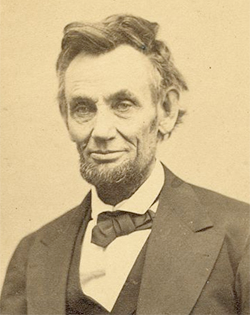
"Do the people of the South really entertain fears that a Republican administration would, directly, or indirectly, interfere with their slaves, or with them, about their slaves? If they do, I wish to assure you, as once a friend, and still, I hope, not an enemy, that there is no cause for such fears. The Collected Works of Abraham Lincoln edited by Roy P. Basler, Volume IV, "Letter to Alexander H. Stephens" (December 22, 1860), p. 160.

But another private letter says;
"I am naturally anti-slavery. If slavery is not wrong, nothing is wrong. I can not remember when I did not so think, and feel." The Collected Works of Abraham Lincoln edited by Roy P. Basler, Volume VII, "Letter to Albert G. Hodges" (April 4, 1864), p. 281.
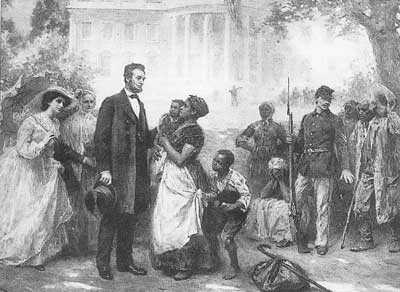
But the Emancipation Proclamation says
“all persons held as slaves within any State or designated part of a State, the people whereof shall then be in rebellion against the United States, shall be then, thenceforward, and forever free;” Lincoln’s Emancipation Proclamation January 1, 1863


What beliefs were personal and which were political? What did he really believe? Did his beliefs evolve? Or was there a big difference between public and private beliefs?

It’s complicated.

And, it’s hard to tell without a lot of context surrounding the documents.

And, it’s possible to be anti-slavery without being an abolitionist. Politics are complicated. People are complicated.   

When we read historical accounts, we find documents that were meant to be read by others -- newspapers, speeches, legislation. We also find documents that were NOT necessarily meant to be written by many others -- shopping lists, receipts, diaries, personal letters.

We do this personally, in our own modern lives, too. Sometimes we post things publicly on social media or in emails where we expect others to read them. And then sometimes, we write things just for ourselves -- like lists, receipts, notes.

So while the idea of writing for public OR private readers is not new, it’s time to transfer that idea to our classrooms.

We have two basic types of writing in class:
 
·         We can have our kids write for public -- that is, for publication, for others to read, for a 

red pen and a big grade. We can have them do final writing assignments where we expect fully-formed thoughts, correct grammar, and real punctuation, like essays, articles, posters, blog posts, final projects.


AND SOMETIMES
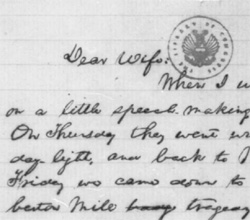
·         We can have our kids write for private -- for learning, for themselves to read and think through. “Thinking is clarified by writing” says the DBQ Project’s Core Beliefs. We give kids “writing for learning” tasks -- lists, brainstorms, quick writes, document analysis sheets, exit tickets, etc. -- writing where kids are thinking-on-paper and figuring things out. Writing where kids don’t necessarily have to have all the right  answers or use full sentences. (This is the kind of writing I LOVED as a teacher because I didn’t have to grade it too closely.)
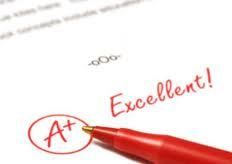

It’s okay to do both. Really, it’s important to do both.

“Writing for publication” is often used as a type of summative assessment -- to see how much the students have learned.
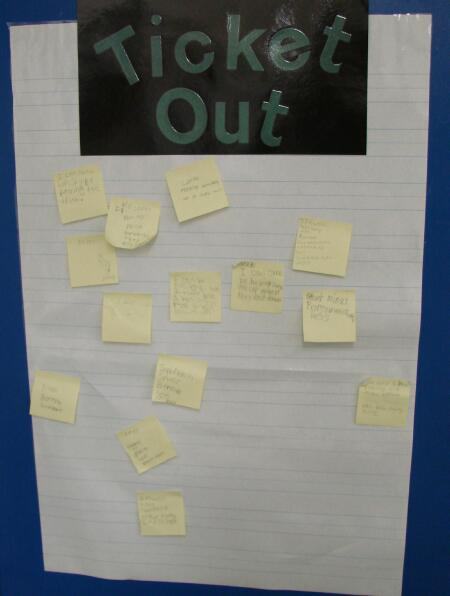

“Writing for learning” is usually used as a type of formative assessment -- like a check-in to monitor student learning and see where our students are with content and skills and how we need to adapt or adjust our teaching.

For ideas of “Writing to Learn” assignments, check out this handy list from Colorado State University http://wac.colostate.edu/intro/pop5.cfm

Take a look at your assignments. Are they “writing for publication” or “writing for learning”? Are you getting to both in your class?  What does each type of writing tell us about Abraham Lincoln’s views on slavery? What does each type of writing tell us about what our students are learning? As always, I love to hear! Email me newmantr@pcsb.org


-Tracy