Wednesday, March 25, 2015

Spring Break!! Road Trip!!


During my senior year of college, three friends and I took an epic road trip. While everyone else went “down south” to Florida for spring break, we Florida college kids decided to head north to Tennessee.

It was legen-waitforit-dary!

We saw snow. We toured Graceland. We broke down in Alabama. We visited a Civil War Museum. We partied in Nashville. We saw mountains. We sang in bars. We visited grad schools.  We drove across the Mississippi River to Arkansas-- to see 89-cent gasoline (I took a picture!)

It was so much fun!

I’m such a history dork. I loved being in Elvis Presley's house and seeing all his awesomely-sequined outfits and the famed “jungle room”. I loved peeking into the Ryman Auditorium in Nashville and seeing where so many country music artists performed. I loved stopping at random historical markers on the side of the road and learning about Civil War marches or early English settlers or inventions created.

There is a lot of history that has happened in Tennessee. Or Alabama. Or Pinellas County.

This -- the idea of where things happened -- this is where geography and history meet. The history of place. The geography of the past.
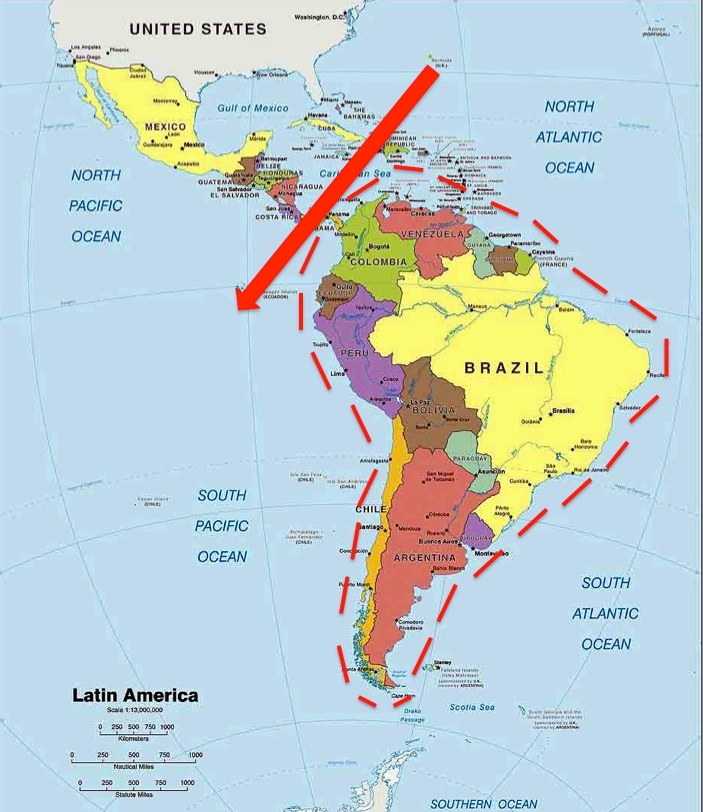
These inspire the kinds of big-idea questions we social studies teachers love to ask. So many of those big-idea history questions are really about geography.  
  • Why did Ancient Greek city-states develop so differently?
  • How are the Boxer Rebellion and US-led Panama Canal project linked?
  • Why does it matter that the Pilgrims landed in Massachusetts and not Virginia, where they had a charter?
  • How did Islam spread so quickly in the 7th century?
  • What does geography have to do with Dr. John Gorries’ inventions?

Geography and History are inextricably linked. You can’t often fully extract the one from the other.

So, this year, my spring break will not be quite as epic. We’re headed to Orlando with the kiddos to do the theme parks for a couple of days and then home to chill out.

I don’t know what your spring break looks like. You may be headed on an epic adventure. You may be staying home and relaxing.

But either way, I challenge you to think about how history and geography meet. And I have a couple of cool tech tools to help you do that.

  1. Story of Where  -- http://storyofwhere.com/ The Story of Where is an app for your iPhone or Android device. Take it with you and you can find natural, cultural, and historical sites -- with map markers for the National Register of Historic Places, National Historic Landmarks, National Natural Landmarks, World Heritage Sites, Florida sites (and a handful of other specific states), NFL sites, MLB sites and more as they are added. Have your kids take it with them as they travel -- or as they are out-and-about town and see what they can learn Stories Of Where they are. The Safety Harbor Shell Mounds are on there. So is Tropicana Field.
  2. What Was There -- http://www.whatwasthere.com/default.aspx What Was There is a website  -- not an app -- where folks upload pictures and dates to show what a place was like at a certain time in the past. It’s amazing to see what your street looked like 30 or 60 or 130 years ago. This allows anyone to upload a picture (with appropriate limits) with a date to upload and add information about the place and photo. I checked out the old entrance to the Treasure Island Municipal Beach http://tinyurl.com/nwqrdsy and Downtown Dunedin http://tinyurl.com/pt6lq83 You can look up info about the photo and even fit the photo into a current Google Streetview (mappy geek fun!!)
  3. The Historical Marker Database -- http://www.hmdb.org/  The HMDB is a website AND an app (but I find it much easier to use as an app). This site/app maps historical markers. It’s pretty basic in its rules: Markers must be outdoors, must be permanent, and must state historical or scientific facts beyond names, dates, and titles. Again, folks can add their own markers.  I learned about the lynching of John Evans on Central Avenue in St. Pete and the Rose Cemetery in Tarpon Springs.

True history dorks learn -- even on vacation. I challenge you to learn something about the geography of your spring break -- whether you’re travelling or staying home.

And help your kids learn about the history of where THEY are. They may or may not have smart phones, but they know people who DO have smart phones. They can go to the library and use computers. See if they can learn something over spring break -- without giving them boring homework.
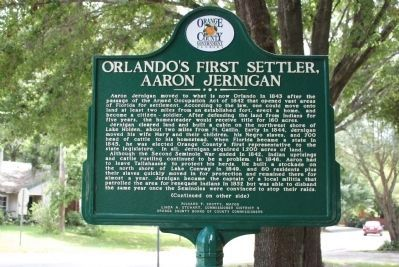
Have a great vacation! I hope it’s relaxing and rejuvenating. And (at least a little bit) educational. I plan to find the marker in Orlando where Orlando’s first settler, Aaron Jernigan built his home. Because.....well ...... history. And geography.

If you learn something awesome about where you live, work or travel -- let me know! I’m always interested!  Drop me an email newmantr@pcsb.org
-Tracy

Wednesday, March 11, 2015

Cray-Cray

I love slang. I love using outdated slang words and phrases like “mama jama”, “gettin’ jiggy with it” and “rock on”.


My favorite “jumped-the-shark” slang term is “cray-cray”. It means crazy to the next level. Like Super-Crazy. Crazy enough to say the word wrong -- TWICE! It was hilarious to say a few years ago. Now, it’s lost a little street cred and is used by lots of uncool grown-ups. Like me.


Speaking of uncool grown-ups, do you ever feel a little “cray-cray” about the cultural differences between you and your kids? During my first year of teaching, when I was 23, my students called everything “ghetto” -- to mean cool or good. As the history teacher, I couldn’t wrap my head around using the word “ghetto” which was associated with first, the Holocaust and second, with low-income housing projects. I couldn’t figure out what they were trying to say for awhile.


I tried to throw out some “cool” references to hip-hop by telling my kids to “pack it up, pack it in”  (from House of Pain’s 1992 hit “Jump Around”) but, somehow, the kids didn’t get it in the year 2000. Duh! Trace, they were, like, 5  when that song was cool!)


Sigh. I’m not super cool. Or cray-cray either.


Vocab matters. Whether the words are slang like, “groovy”, “swell”, “rad” or “cray-cray” -- OR they’re content-specific, like “allegiance”, “amendment”, “investment”, “reconstruction” -- kids need to learn a lot of words. The more words they OWN, the better readers they are. The better readers they are, the more they learn and retain about content.


Students need to learn 3000-4000 words a year to “keep up” with the rising expectations. In our classes, we’re lucky if they learn 200-300 over the course of the year.


We need to help them learn as many words we can -- but learn them well.


But there are so many words and there is so little time!  I had trouble figuring out the best ways to teach it.


  • I don’t want kids to copy definitions, because it doesn’t work for anyone but naturally verbally gifted kids. Average or struggling students don’t learn with that strategy. At all.   
  • I don’t want to do Frayer Models for every word, because, in Social Studies, that takes forever with the amount of words we want to teach.
  • I don’t want to do a Semantic Feature Analysis for every set of words because, sometimes, that strategy just isn’t right. The words may not be related enough.
  • I don’t want to do vocab sentences because half my kids write “cheater” vocab sentences -- the ones that don’t show that they know the word. Like “I saw alliances” or “He likes Marxism”. The ones that require no brainwork.
So what CAN we do?


According to Super-Researcher, Robert Marzano (ever heard of this guy?) there are three things that jump out at us in vocabulary instruction.


  1. When students copy a teacher’s or book’s definition of a term, it doesn’t do much for their learning. They have to explain it in their own words.
    1. Lesson: Have kids make their own meanings. That doesn’t mean they should look at a dictionary definition and change “a” to “the”. It means that they should put thought into the meaning and make it their own.
  2. When students draw their own explanation, they really process and absorb the word best. Well ...  when they don’t copy the vocab drawing from their neighbor, I mean.
    1. Lesson: Give the kids a definition and have them draw it. They may give you the “right to bear arms” (grrrr...) OR they may really make the meaning behind what they do.
  3. When students play games with vocabulary, they practice and retain the words better. Try some old favorites like Quizlet, or a new one of these.
    1. Lesson: Making learning fun and reinforcing vocab and content helps kids retain said content. Help them review or make connections with vocab games.


We know we have to teach vocabulary in context. We can’t take our vocabulary words out of context and make them a list that kids learn separately from their other reading or notes or content activities. So here are a couple of other ideas.


Word Questioning: Combine your word studies. Instead of asking about several vocab words separately, ask kids to examine them together.
  • How are Jacksonian Democracy and the spoils system related?
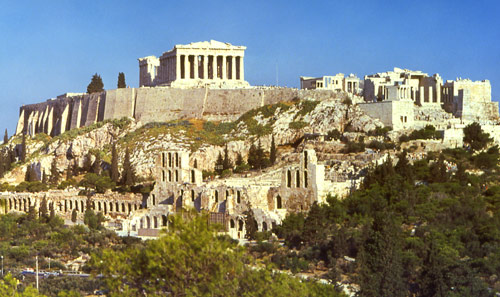
  • What connection might there be between the Parthenon and an acropolis?
  • How are stereotyping, prejudice, and racism alike? How are they different?


Ladder Strategy: Kids need to be able to decipher words on their own. Teach them HOW to break down words with the LADDER strategy. This is a strategy where the kids figure out how decipher the unknown words they come across on their own. The bonus of this strategy is that, when the kid is reading the newspaper or twitter and they don’t know a word, they might have some go-tools of their own to try to figure it out. They don’t need a teacher, a partner, or a worksheet.


L: Look Carefully at the word. Are there any parts of the word that you know?
A: Add what you learned from the word parts to your prior knowledge?
D: Define the word used in the context
D: Discuss multiple meanings the word would have in other contexts
E: Extend your knowledge of the word by checking out its origins or how its meaning has changed over time
R: Review the word by thinking about how and when you might use it in your speaking or writing


What’s your favorite vocabulary strategy in Social Studies? Do you use the Frayer Models for important concepts? What about the “B-list” terms? How do you teach B-list terms?  As usual, I love to hear and learn from you! Let me know your favorite vocab strategy -- or how it goes if you try one of these.
-Tracy

Wednesday, March 4, 2015

The Person Doing the Talking

Today, after school, stick your head outside your classroom and watch the kids. 


Man, they have a lot of energy, huh? As soon as that last bell rings, they seem to perk up, and get energized. Suddenly, drama becomes louder, skateboards come out, and “tag”-style flirting becomes a legitimate sport.  


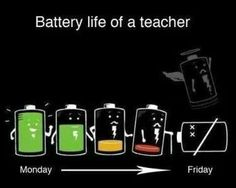
Meanwhile, most of us teachers are beat. There are days when all we can do is get in the car and drive home and collapse.

Seriously. We, as a group, are pretty exhausted in the afternoons.

So, I want to throw this adage at you and then I want to shut up this week.

Are you ready? -- The person doing the talking is doing the thinking.

Take a look at those words again: The person doing the talking (about content) is doing the thinking (about content).

Now, look at your class today.


Who is doing the talking? Therefore, who is doing the thinking?

Find that smart-but-bored kid in your class and ask him or her to time when you talk and when the students talk.

Look at those totals. Whoooo is doing the (academic) talking? Whooooo is doing the (academic) thinking?

But Tracy (you may say), my kids don’t KNOW anything! They can’t TALK about content. I don’t know how to manage them so they do it well. When I let them talk about content, they go crazy! They talk about the movies or twitter or gossip or that dress!

It’s ok. Relax. You can help them do more academic talking. Maybe if they talk more (academically) THEY’LL be more tired and YOU’LL be less tired at the end of the day

Here are a few suggestions for helping the TEACHER talk LESS and the KIDS talk MORE (about content)
1.    Allow students to struggle -- even though we, as teachers, want to tell them the right answers, it’s helpful to have kids struggle a little. It’s ok to give them corrective feedback (“I don’t think that’s really what you’re looking for. Try looking over here...”) but it doesn’t do them any good to give them the answer.
2.    Move away from the front of the room -- Sit in the back and ask a kid to show the class the procedure. Stand to the side of the room and ask kids to read the directions or concept aloud. Circulate and listen.
3.    Have the kids turn and talk -- It’s the quickest and easiest way to get them to to process and “own” the content. Give them an open-ended question and teach the procedure.
4.    Have the kids reciprocally read -- One of the biggest “bangs for your buck”. This is my favorite reading strategy.  When kids reciprocally read well, they better understand and negotiate the text.  The more they do it, the better they comprehend the content.
5.    Instead of asking “does that make sense?”, ask “can you put what I said into your own words?” Particularly when you give directions or explain a concept, have your kids tell you kids tell you what makes sense and what you mean.
6.    Stop summarizing and reviewing -- and have the kids do it. Again, get out of your own way and ask the class what the directions or the concept is. If you hear yourself saying once again, remember, as I said, as always, so to sum this up, or don’t forget” for the millionth time, stop saying it. Your kids have then learned that they don’t really have to listen. They can tune you out. Instead, have them turn to a neighbor and restate the directions/concept or have volunteers or use a call-on system (like Classroom Dojo) and have your students restate the big idea or the summary or the procedure.


In an effort for ME to do LESS TALKING and allow YOU to do more, I’m going to shut up for today. I ask that, instead of me still typing, you think about if you can add or increase the use of any of those ideas above. Try to talk less and let the kids talk more (about content). I’m hoping – that once you and the kids get used to it – that you are LESS tired and the kids are MORE tired. Let me know how it goes!  

Wednesday, February 25, 2015

Wayback Wednesday

So, picture fourteen-year old Tracy. Literally. See below. (eeep! Hahahahah!!!) When I was a teenager, grunge was awesome. I wore flannel daily (Yes, even in Florida. What?! The A/C is always on!). I didn’t wear glasses yet. I was a little artsy/drama-y and no teacher really understood what I was all about. I may have crushed on a boy or two. I may have had a home perm. I thought I was Daria. I was really this.

Yikes!
IMG_20150224_142111054.jpgBe nice! I bet your pictures from age 14 are just as dorky!

So I definitely wear less flannel in 2015. I am a little artsy but more craftsy. I am pretty sure that some of my teachers definitely DID understand (at least) part of where I was coming from. I 

don’t crush on anyone but my awesome husband.

But as I sat in a not-so-hot training recently, I was suddenly zoomed back to being fourteen again. Here are the thoughts in my head: “Ugh! Why do we have to do this? Is this teacher aware of how much I don’t want to be here? How can I make the clock move faster? All this stuff is stupid anyway... I have so many better things to do!”

Have you ever had a WONDERFUL professional development/training? (please don’t tell me whether or not I was your presenter)

Have you ever had a so-so one? How about a lousy one? (No, REALLY don’t tell me if I was involved!

Recently, I sat in that that training and tried to be a good adult learner, and not a little punk of a teenager. But, it turns out, that I’m not always a good adult learner. Sometimes, the snotty brat of a teenager still comes through.

Since I didn't really love the training, I slacked off. I tried to multi-task. I checked my email. I checked my phone. I whispered to the person next to me. I looked up the book the presenter was talking about on Amazon to see if I could order it. I tried to put the strategy into practice immediately and started to write a lesson or an activity to use it. I giggled and got off task. I used to grade papers; now I just make To Do lists and plan future stuff.

It occurred to me that sometimes, I have a motivation problem. Sometimes, I just don’t know how I will use a Thing that I am learning -- and so I don’t know WHY I have to learn it!  So instead, I don’t give it my all.

So what makes me BEHAVE better and LEARN in a training?

1.    I like/respect/have a relationship with the instructor
2.    I can figure out how to use the info. It’s relevant.
3.    The training is engaging. It’s interesting. It’s fun.

Then, it occurred to me that many of our students have motivation problems, too.

I wise colleague once said, “a well-crafted lesson can prevent a good chunk of behavior problems”

It’s true.

Teenage Tracy acted better for some teachers than others. So does Adult Tracy. It’s all about relationships.

Teenage Tracy acted better when the lesson or skill was useful and relevant. So does Adult Tracy. It’s all about relevance and usefulness.

Teenage Tracy acted better when the lesson was engaging and interesting -- for the learner, not just for the teacher. So does Adult Tracy. It’s all about engagement.

We know about building strong relationships with students. It’s the other two pieces our kids are begging from us -- with every under-the-desk-text and every daydream and every conversation-with-a-neighbor.

So why do kids misbehave? They’re not that different than I was.
·         Sometimes kids misbehave because they don’t have a strong relationship with the teacher. It’s hard to work for someone you don’t care about or respect
·         Sometimes they misbehave because they have “stuff” going on -- home issues, boyfriend/girlfriend issues, friend drama, hunger, bullying, illness, frustrations in other classes with other teachers. Maybe they didn’t make the soccer team or their dad is in the hospital or they didn’t get the job they wanted or they fought with their mom or their baby niece kept them up all night. Outside stuff.
·         Sometimes, they misbehave because they’re lost or frustrated. They can’t keep up with the reading or the assignment or the content. They aren’t good listeners or readers and they don’t know what’s going on. So 

they act up.
·         Sometimes, they misbehave because they’re bored. They’re not interested in your content. Or they’re tired of the usual class routine. Or they don’t like to sit quietly for that long (neither do I -- that’s why I’m a teacher!). Or it’s too easy.

So how do we make an environment where kids are more likely  to behave? I say more likely because I cannot control everything and I can’t do much about the boyfriend/hunger/flu/home-drama issues. I also know that despite my winning personality and huge relationship effort, I will not connect in a powerful way with EVERY kid who crosses my path every day.

1.    Keep trying to build that relationship. Even if it’s almost March. Even if the kid drives you nuts. Keep trying. You might be the only teacher who hasn’t given up on that kid in March. Or improve the relationship you have already begun.
2.    Make it relevant. I know, I know. Ancient History is tough to make relevant and useful for 6th graders. 7th graders are not going to vote for another few years. To 10th graders, the Cold War IS ancient history. Seniors can’t yet figure out how to use a lot of economics other than personal finance. But all of these things tell us why WE are the way WE are and how humans are alike (and different) over space and time. So help them see the connections -- how WE (today) are like THEM (back then) and how WE (today) have hopefully learned and changed and grown from THEM (back then). Help kids see the beauty and contributions of different groups. Help them understand how the world works today.
3.    Give kids choice.  Even choices that don’t seem that important to you can be empowering and engaging to a kid. Work with Devonte or Ashley? Make a poster or a power point? Use a Venn Diagram or a T-chart? Giving kids a little choice can go a long way toward their engagement. It’s amazing how far this can go toward engagement.
4.    Let kids talk to each other -- about content. Even the most boring topic is more interesting if you can debate or negotiate your way through it. Let them turn and talk, argue, construct, and discuss the content.
5.    Hook them. If you can find a hook -- a good question, a 3 minute video clip, a song, a funny story, an embarrassing picture of yourself (a-hem!!) -- then you can “reel them in”. A good hook can make the whole “so-so” lesson worth participating in simply because it’s more fun and interesting.
6.    Challenge them. Your “low performing” kids are not usually as low performing OUTSIDE the classroom as they may be INSIDE your classroom. A level one reader can be VERY clever and creative if the question is “Can you find a spot in the school with no cameras to get up to trouble?” instead of “What is the main idea?”. Challenge these kids with a task or problem that includes competition and higher level thinking.


How can you help engage kids in your class? Is it bad Wayback Wednesday (or Throwback Thursday) pictures? Are you digging my home perm Way Back When? As always, I love to hear how you engage kids! Email me at newmantr@pcsb.org