Wednesday, September 2, 2015

Failure, Smarties, and Scales

Once upon a time, there was a teacher, let’s call her Stacy Shewman... She learned a lot of Western Civ in her high school and undergraduate careers. All of her history classes ended with WWII.  She knew nothing of the world after 1950 (except the Berlin Wall and Martin Luther King) and even less about places not covered in Western Civ...

In her first year of teaching, while her students were calling everything “ghetto” (“You’re ghetto”, “he’s so ghetto”, “that shirt is ghetto”, and so on), a Jewish student whose grandfather had survived the Holocaust asked Ms. Shewman to help the class redirect the use of that word. Tracy ... I mean Stacy ... called a class meeting and asked her students to find a new slang word.

No big deal right?
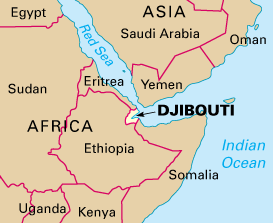


Well, her students next decided to call everything “jabooty”. (He’s jabooty, she’s jabooty, those shoes are jabooty) etc...

And a week later, Tracy .. I mean Stacy ...  turned to the next chapter in the Geography textbook  to plan her instruction of Chapter 19. East Africa. Country: Djibouti. Pronounced “Ja-booty”


Facepalm.

I , I mean she, had to call another class meeting and ask the students to come up with another word. AND THEN, she had to explain why she had let them use that word for a week before she stopped them.

So there’s her -- um, MY --  embarrassing epic teaching fail. Epic ignorance fail.

I have failed at many things in my life so far. I’m pretty sure I will fail at more.


The problem with us-the-teachers is that we don’t usually come from the bottom of the academic pack.  Teachers tend to come from A and B students, people for whom school comes easy.

Because most of us were “good students”, we have two problems.

First, it makes it difficult, sometimes, for us to empathize with struggling students. It’s hard to know what to do with the student who won’t (or probably can’t) read when we, personally, were early readers who still  LOVE to read! It’s hard to know how to explain map skills to a student when we don’t remember a time when we COULDN’T understand a map.
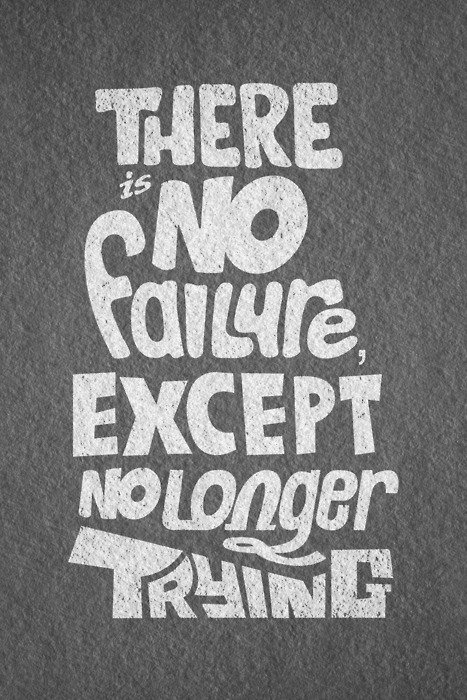

Secondly, one of the problems with smart kids (as many teachers were) is that they don’t deal well with failure. Smart kids like to do things well the first time -- or not at all. It’s why we have so many smart kids that refuse to try at certain academic tasks -- they’re so afraid to fail that they don’t what to try or they are afraid of the struggle.

Which brings me to our Marzano Scales. I’m talking to you, my Pinellas colleagues!

Please hear me out. I know that YOU-the-teacher were a smart kid and that you are now a smart adult. I know that you don’t like to struggle and that you get frustrated when you don’t understand things the first time or when you don’t do things perfectly the first time.

We have got to get over the “I don’t like to fail” hang ups and try this scale thing.

And know that you don’t have to be perfect at it the first time.

Or even the second time. Or third time.

But I hope you’re making progress. I hope your scales get better -- and easier for you as you get better at them.

I hear a lot of frustration these days from colleagues who are stressed and anxious about creating beautiful scales.

It’s the SECOND WEEK OF SCHOOL, my friends! You will get better at your scales. They will get easier to make and easier to use in your instruction.
I know it’s easier said than done. I get that.

But be patient. You will rock these -- soon!

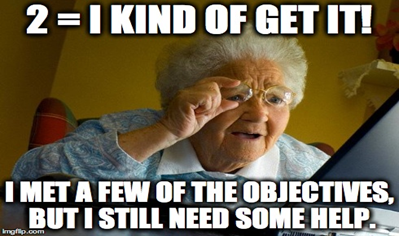
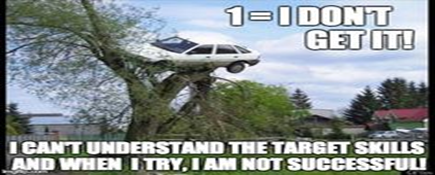
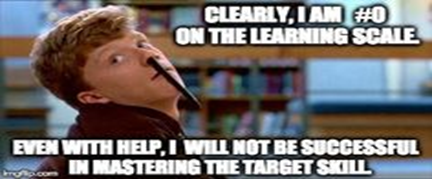
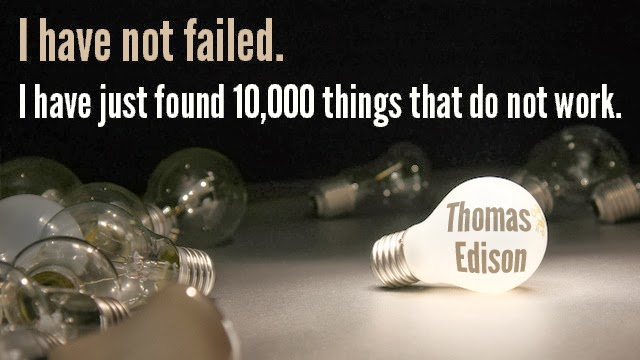
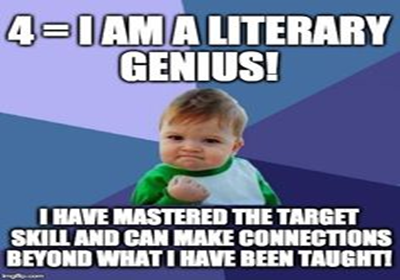
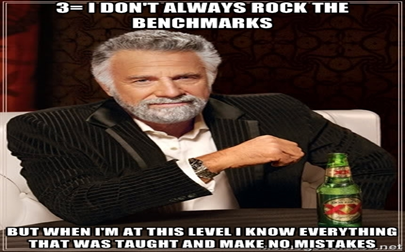
In the name of humor, please see our Meme scale below, shared with me by a brilliant colleague. And know that you do not have to be perfect the first time. You will get better.
Thoughts? Ideas? As always, email me at newmantr@pcsb.org


Tuesday, August 25, 2015

The Meanest Teacher

So my daughter started kindergarten this week. When I asked her about her first day, she announced that it was good, they didn’t get to go outside (because of rain), and that her teacher was “really nice -- and likes me!”

The power of a teacher is never more apparent than it is the first week of school. Elementary students cross their fingers that their teacher is “nice” since they spend so much time with the same teacher. Middle and high school students compare schedules and trade stories, rumors, suspicions, and giggles about the teacher names on their new schedules.

It made me think about this wonderful article I read recently about a former Hillsborough teacher who recently passed away -- and who wrote his own obituary. http://www.tampabay.com/news/obituaries/teacher-curmudgeon-wrote-it-his-way/2242079

I never knew or met Mr. Joab. I never even heard of him until I read the article in the Tampa Bay Times.

But I was struck by him, particularly by the things he (and his former students) said about his class.

Mr. Joseph M. Joab wrote that his “high standards for the junior high and high school students he taught got him labeled as the ‘meanest, evil-est, bad-est, nastiest’ teacher on campus.” His self-written obituary notes that “Since the number of former students wishing to ‘dance on his grave’ could create a traffic jam, there will be no graveside service”.  

But seriously. I’m a little jealous of  Mr. Joeb’s reputation! I tried, but I was never called the “meanest teacher” for more than a class period or two. Sigh...

But as I think of Mr. Joab and what he meant to his former students, I kind of wish my students called me some of those names because I had made them work so hard.

A former student said, of Mr. Joab, “When I was his student, he was difficult, frustrating, and demanding. It wasn’t until I was an adult that I realized he was difficult because he needed to challenge me, frustrating because he wouldn’t let me be lazy”

“He continued to keep pushing”, another former student said, “his message being, ‘do it all the way, or don’t do it at all.’”

It’s the first week of school. As you get into the routines, learn the students, and make your reputation known, you don’t have to be the “meanest, evil-est, bad-est, nastiest” teacher on your campus (unless that’s already your thing. Hey, I don’t judge).


But be the teacher who drives his or her students crazy -- because you CHALLENGE those students

Be the teacher who makes your kids think and work HARD. I hope you challenge kids. I hope when they see your name on their schedules that they think, “Oh boy. I have Mr. or Ms. So-and-So. I am going to have to WORK!”

And then, keep that in mind as the year progresses. You wear a million hats as a teacher -- you wear an instructional hat, a relationship hat, a mentor hat, a team-member hat, etc. Don’t forget to wear your CHALLENGER hat.

Make ‘em think. Make ‘em work. Start now.

PS -- I hope you’re really not the meanest teacher. I hope your students will someday write about you the way Mr. Joab’s former kids wrote about him: “He liked to get the kids to think”.

I can’t think of a much better legacy for a teacher.

As always, I love to hear from you! Email me at newmantr@pcsb.org
Wednesday, August 19, 2015

Hard Data and Soft Data

 I hope you had an awesome summer and that you’re refreshed and renewed and ready to rock and roll for a new school year! As usual, I learned a lot this summer. I have hard data and soft data on my summer ...

Hard data is quantifiable -- you can count it and add it up. Here’s some examples of  “hard data” from my summer...


·         Miles traveled by car --- 2,714
·         Miles traveled by plane -- 2,098
·         Number of times I read the same picture book to my toddler on the plane -- 41
·         Number of my relatives seen -- 16
·         Number of my husband’s relatives seen --  over 50
·         Number of ferry boat rides -- 4
·         Number of subway rides -- 2
·         Number of museums visited -- 6
·         Number of caves visited -- 1
·         Number of states visited -- 6
·         Number of mermaids seen – 7 (and one mer-man)
·         Number of finger-paints spilled -- 5
·         Number of swimming lessons taken by my kids -- 54
·         Number of artworks created by my five year-old -- 230

I also collected some “soft data”. Soft data is harder to measure, harder to quantify.

·         My one year old would rather spill finger-paints then paint with them.
·         My five-year-old is so much more pleasant when she has protein for breakfast
·         Those Weeki Wachee mermaids are really amazing athletes.
·         Twelve hours in a car with a toddler feels like it
lasts for days.
·         Light-up shoes are really helpful (and funny) in a cave.
·         Climbing up the pedestal in the Statue of Liberty is more work than it sounds.
·         My backyard DOES flood when it rains for 21 days in a row.  
·         The zoo is half-empty when it’s hot outside. That’s probably for a good reason.
·         A dinosaur-themed wedding is more fun than you think it will be..

As we start a new school year, with new students, new courses, sometimes new classrooms, I know that you will collect and pour over tons of hard data -- last year’s grades, FSA scores, EOC scores, PM tests, AP scores, free-and-reduced status, languages spoken at home, reading levels, attendance records, discipline history, arrest records, test specs and blueprints..... It’s enough data to get lost in!

I would like to HIGHLY encourage you to collect some “soft” data during the first few weeks as well. Learn some less-quantifiable data about your students and classes -- and RECORD that “soft data”.

Ideas to find out about your kids -- “soft data”
·         where they do their homework (and if anyone helps them)
·         what their learning styles are (give an inventory like this)
·         what their interests are (try an interest survey like one of these)
·         what their first impressions are about your class.
·         whether they enjoyed and/or were successful in their previous social studies classes)
·         what sports/clubs/extracurricular activities they enjoy and are involved in.

Then, put that info in your gradebook, in MS Excel, in a notebook -- something! Do something with that info and make it easy to use. I used to collect some of that info in my class, but I always put it away, meaning to “do something” with it later. But I never did.

Put it on your wall (the no-name stuff, of course), put it in your folder, or somewhere. But make it accessible so you can get to it and use that data.

“Soft data” is just as valuable as “hard data”. Find a good system to collect, organize, and reference it regularly. I promise, it will be totally worth it!

Do you collect any “soft data”? Do you have any tips on organizing and using it? As always, I love to hear from you! Email me at newmantr@pcsb.org


Tracy Newman
Reading-in-Social Studies Coach


Wednesday, May 27, 2015

Tracy's Annual Summer Reading List

So, sometimes the kids get Summer Reading Lists. I certainly never had one growing up, but maybe my county didn’t do that. Or my teachers didn’t like it. I don’t know.

Every summer I bring home a pile of books on my own Summer Reading List. Every summer, I make it only halfway through. But I still try!

I like to have high expectations for myself, even if I don’t always complete my task lists...

Anyway, here’s this year’s Summer Self-Selected, Self-Paced PD for me.

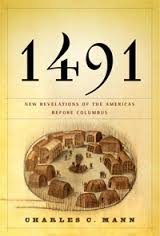
  • 1491 By Charles C. Mann. I have somehow never gotten around to reading this book. As I look more at the Pre-Columbian Americas, I am amazed by both this book -- and by the fact that I have somehow missed it before now!
  • Building Students’ Historical Literacies: Learning to Read and Reason with Historical Texts and Evidence by Jeffery D. Nokes is a history professor at BYU. And his foreword is written by Sam Windburg, the #1 Top Dog in the field of History Education. I think I will really learn a lot with this one.
  • The Wrong Side of Right by Jean Marie Thorne. I am halfway through this teen fiction novel about a girl who discovers that the father she never knew -- is a US Senator running for President! It’s a teen-oriented look at fitting in  -- with a nice “side” of elections.
  • The Highly Engaged Classroom by THE Robert Marzano, the same Marzano who has designed the evaluation systems. I want to know what highly engaged students look like and how to make that happen.
  • The Immortal Life of Henrietta Lacks by Rebecca Skloot. I know that this came out a few years ago and that it is supposed to be a huge hit. 4,000 people on Amazon gave it 4.5 stars out of 5. It’s the story of a poor, black, tobacco farmer whose cells were taken -- without her knowledge -- and use to make amazing advances in medicine and science.

I know, I know. I’m behind. Some of those books came out quite a while ago. But, hey! Life gets busy and then summer comes and I get a chance to catch up.

What’s on your summer reading pile? Will you get to anything other than beach reads? As always, I love to hear from you! Email me at newmantr@pcsb.org

Wednesday, May 20, 2015

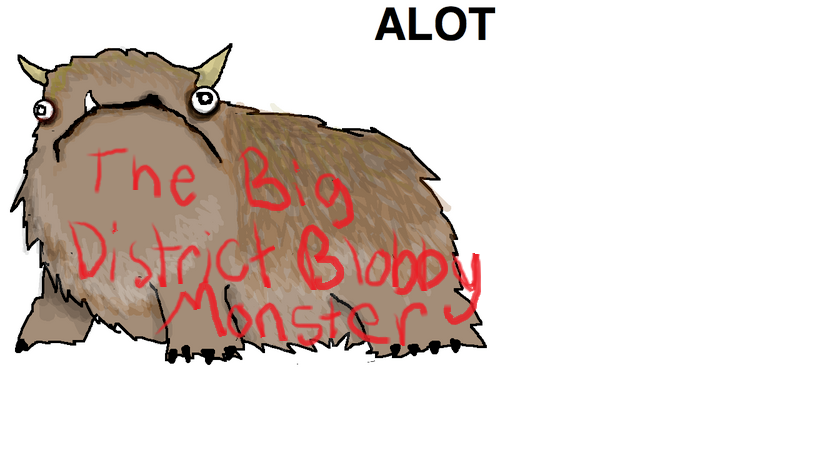
The Big District Blobby Monster

So there is a hilarious blogger, Allie Brosh,who had a blog called “Hyperbole and a Half”. It sometimes uses the kinds of inappropriate words that middle and high school teachers are TOTALLY unfamiliar with (HA!), so I won’t link it here.

But in her blog, Allie once channeled her inner English teacher and freaked out once about the way some people write a lot as one word: alot, instead of the correct separation into two words: a lot.

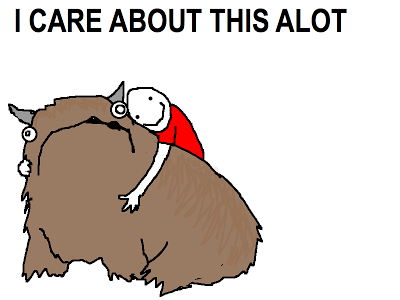
Allie decided that the one-word version was a monster. An Alot Monster. Allie is a pretty funny woman who draws like a six year old. Here’s how she describes the Alot Monster:

The Alot is an imaginary creature that I made up to help me deal with my compulsive need to correct other people's grammar.  It kind of looks like a cross between a bear, a yak and a pug, and it has provided hours of entertainment for me in a situation where I'd normally be left feeling angry and disillusioned with the world.  

For example, when I read the sentence "I care about this alot," this is what I imagine:
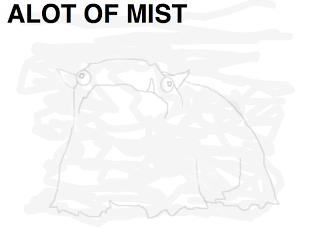
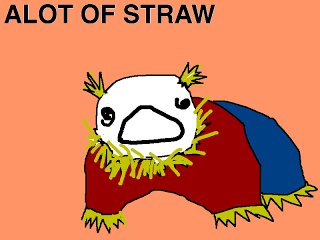
Similarly, when someone says "alot of _______", I picture an Alot made out of whatever they are talking about.  


You can read her blog yourself -- and see the various versions of Alot monsters that the creative folks on the internet have created.

But I have to say, that I have an imaginary visual in my head, too. Only instead of seeing the mis-typed Alot Monster, my monster visual is when someone talks about The District.

For example, whenever someone says “The District” (pronounced with capital letters, of course) I imagine the Big District Blobby Monster.

He looks a lot like the Alot monster in my head

I mean, when they refer to the district in certain ways -- like “The District is making us do  _____” or “The District is looking at _____________” or “ The District has this new initiative of _________”-- it kinda sounds like the district isn’t made of real people. It’s like the district is a Big District Blobby Monster.

It’s particularly funny when they refer to Social Studies, because there are only 6 of us. If you need an introduction, here you go!
  • Linda Whitley is the K-8 Social Studies Specialist.
  • Matt Blum is the 9-12 Social Studies Specialist.
  • Cassie Slone is the Elementary SS staff developer.
  • Kim Jackson is the Social Studies secretary.
  • Cindy Flora is the Multicultural/PMAC/Character Ed Staff Developer.
  • I am the Middle School SS Staff Developer

That’s it. That’s all of us for aaalllll of K-12 Social Studies. We are so busy trying to do the work of a billion people, we don’t often even get us all in the same room together!

So, the next time you think of The District as a Big Blobby District Monster (that is the cousin of the Alot monster), think about the individuals behind that Big District Blobby Monster. Sometimes, it really does seem like a Big District Blobby Monster. But sometimes, it’s just one member of our little department :)

Has the Big District Blobby Monster been an image in your mind, too? As always, I leve to hear from you! Email me at newmantr@pcsb.org

Thursday, May 14, 2015

Level Up!

When I was a kid, I had a neighbor who had a cool, new Nintendo game system. We had an old, knock-off Atari-wannabe at my house. 

But my neighbor, Laura, had a Nintendo – and had a Super Mario Brothers game! Every afternoon, I went to her house and waited patiently for my turn to save the princess.

This was the biggest deal in the neighborhood. At any given moment, all of my neighborhood buddies and I knew who had gotten to what level and who had discovered what secret passage and what secret point booster and every other “Easter egg” in the game.

There was nothing more satisfying than that musical beeps (de-de-de-da-da-DEE)  and the announcement “level up!” from the game.

I was thinking about the idea of students ending another year of school and thinking about as an academic (and social) “level up” in their lives. And I was wondering what skills a kid would need from this year for their next year. 
For example, I was wondering what two or three major things an 8th grade US History teacher would want his kid to remember from 7th grade or what skills an 11th grade US History teacher would want a kid to remember from 10th grade World History.

So, here’s my challenge to you, in these last few crazy weeks of school.

Have a conversation with a colleague who teaches kids the year after you and make sure you’ve covered or emphasized the skills and content they need for their “level up”. Then, try to have a conversation with a colleague that teaches kids the year before you and tell them the two or three major things you want their kids to retain for your upcoming class.

Then, make sure you review those skills, concepts, or content (one last time) before the year is out.

It’s a quick and easy way for us to do vertical teaming.  It’s a quick and easy way for us to prepare our kids for the next “level up” that comes with a new grade level.  It’s a quick and easy way to put a little “big picture” into your review season.


Do you do this? If so, I love to hear how you do it! Let me know! 

Wednesday, May 6, 2015

Appreciate!

There are a lot of times when we, as teachers, don’t feel very inspiring. There are days when we feel like we don’t make much of a difference and we don’t do much to change the world.

I’m here to remind you that you’re wrong. On just this. :)

It’s Teacher Appreciation Week. I want to let you know how appreciated you are.


You are appreciated by your students, like I appreciate my former teachers

  • Ms. Vitti, my kindergarten teacher who taught me to read, and paint, and sing, and all those other life-changing kindergarten things.
  • Ms. McConnaughey, my fifth grade teacher who taught me to have better handwriting (I promise, the current handwriting IS an improvement) and organs of the body.
  • Ms. Stockman, my 6th and 8th grade Language Arts teacher who taught me to enjoy literature. And to understand grammar. And to write well.
  • Mr. Stocker and Coach Farrell, my high school AP Euro and AP US history teachers who taught me about the world and about how to learn & study and how to make content “stick”.


But you are also appreciated by your peers, like I appreciate my colleagues ...
  • Ms. Cooper, (now at BCHS) who taught me how to have quiet, one-on-one chats with students to improve my relationship with them and to improve their behavior.
  • Mr. Malinka, (still at MMS) who taught me how to read student work for National Boards -- and to figure out how much my students were learning.
  • Mrs. Kreger, (now at NEHS) who taught me how to plan for and set up PD, and how to think about art as a learning tools.
  • Mr. Bernard, (still at GHS) who taught me how to start a school year right and how to keep those kids in the palm of your hand for the rest of the year..
  • Ms. Salvesen, (still at AMS) who taught me how to manage a classroom of struggling students and make it look easy (I know it’s not)

There are a hundred other teachers in this district who have taught me wonderful things -- but I’m 
going to start sounding like a long-winded Oscar speech.

I don’t know all of your students, so I can’t remind them to show their appreciation this week, but I hope your students and administrators make a big fuss.

But I do know YOU.

I want to remind you that the power you have to change lives isn’t just isolated within your classroom.

You have the power to assist, empower, and enhance the teaching of your colleagues.

I see it all the time -- in a casual hallway conversation, when you do real common planning, when you problem-solve as a team, when you share ideas and advice, when you meet after school for “social time” and adult beverages and work out problems, when you fix each other’s projectors or share cool resources.

Teachers, I hope we all appreciate our colleagues. Please tell your colleagues this week how much you learn from them, how much help they are, and how much you appreciate them. When we appreciate each other, we strengthen each other.

What teachers do you appreciate? As always, I love to hear! Email me any time