 We call my husband “The Human Compass”. Honestly, if we go to a place one time, he will know his way around there forever, even years later. Even if he DOESN’T go to a place, he has a way of internalizing Google Maps in a way that makes it seem like he knows his way around -- even if he has never been there.
Needless to say, he drives everywhere. (thanks, honey!)
Not that I’m bad at directions -- it’s just not my superpower. I’m just kind of average at directions. I can find my way to most places, sometimes with a wrong turn or two thrown in to get me there eventually. But you can’t just give me an address and assume I’ll get there on my own without a GPS app. And even then sometimes....
I could really use some support to get me from Point A to Point Z. Unfortunately, when my husband drives, I don’t pay as much attention to how we got there as I do when I drive. I tend to mess around with my phone, or talk to the kids, or play with the radio.
 I feel like I could sometimes use some better instruction and practice on HOW to get where I’m going. He can’t drive me everywhere. But I need to learn how to get there in a reasonable amount of time.
Enter Marzano Scales.
Seriously. Don’t laugh.
I used to try to carry my students to their destinations, too. To level 3. I tried to talk and tell and summarize and carry them to the destination. If I gave them all the answers, they would have it down, right?
Turns out that if I gave them all the answers, they didn’t learn to get there on their own. They needed to experience how to get there on their own.
So, if you’re lost on Marzano Scales, here’s a review.
Level 4 is high-level thinking, even higher than the standard/benchmark. In Social Studies, it’s usually the connection piece, often to real world or to another topic studied.
Level 3 is the benchmark. Period.
Level 2 is where we struggle.
Level 1 is partial understanding.
Now, let’s dig into Level 2 -- that’s the hardest part. Because that’s the “how do I get there” piece and many of us just don’t know how to get our kids from Point A to Point Z without US-the-teachers doing all the driving ourselves.
I used to get so mad at my students! I would test them at Level 3 and invariably, many, many kids would fall short. And I would yell (in the privacy of my home or empty classroom) -- “I taught it! Why didn’t they learn it???”
They didn’t learn it because I didn’t understand how to TEACH them to get there. I thought I could drive there and that they would just arrive. They needed to internalize the map. They needed to become a little of the Human Compass themselves.
Think of the Scales as steps.
It’s hard to jump from Level 1 to Level 3. Most kids need a step (or a few smaller steps) in between.
 That’s what we call Level 2
And it was a mystery in my class.
How am I going to get my kids from Level 1 (WITH my teacher’s help, I can get some of this stuff) to Level 3 (I have mastered the whole actual benchmark)???
I used to “throw” assignments at my students --by topic -- and hope that one (or more?) landed in the general vicinity of where I wanted my kids
Instead, I’m learning to be more deliberate, more intentional, more ...targeted...
I’m learning to build better, more carefully-crafted, more precisely-measured steps.
If I start at the bottom (level one) and work upwards to the benchmark (level three), I want the first part of level two to be vocabulary.
But how do I move from level two to the language of the benchmark?
First, I break down my benchmark. If it asks my kids to compare and/or contrast, I need to a) make sure my kids understand/remember how to compare or contrast about ANYTHING and b) know about the two concepts being compared.
Then, I need to make steps based on how to get my kids there.
By looking at my Webb’s Depth of Knowledge or my Bloom’s Taxonomy or my Costa’s Levels of Thinking (take your pick!), I can choose some verbs lower down on the hierarchy and work my students up from there.
 For example: if your benchmark says “Analyze media and political communications (bias, symbolism, propaganda), you can start with vocabulary: media, communications, bias, symbolism, propaganda.
But then, you have to get them from vocabulary (which is define or identify) to analysis, the verb in the benchmark.
Maybe my steps include:
define media, communications, bias, symbolism, propaganda -- THEN...
explain how and why bias, symbolism, propaganda are used in media.
analyze how bias, symbolism, propaganda are used in media and political communications (using both individual examples and big picture concepts)
If I am teaching “Compare the characteristics of the New England, Middle, and Southern colonies” my steps might look like this...
Define characteristic, region
Locate the New England, Middle, and Southern colonies
Explain the geography, government, and settlement of each region
THEN we can compare the characteristics of New England, Middle, and Southern colonies
Do you see how I got there? That step in between was a middle-level step to get you from defining vocabulary to analysis.
 I have to get behind the wheel sometimes and do the driving myself. I can’t let the Human Compass take me everywhere. But I need a good map and some good, intentional, deliberate directions. I can’t get there with a general “It’s over there somewhere”.
Neither can our kids. They need a road map and really good directions. That’s step two.
How are you feeling about scales? Are you writing better maps and better sets of directions (i.e. Level 2s?) As always, email me and let me know!
And if you want help with scales in social studies, we have training coming up. Oct 8 for middle school and Oct 12 for high school. Email your department head or our office for more info.
-Tracy
 Three is the magic number. Good things come with
 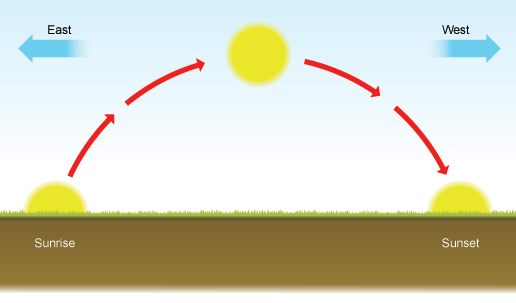 Guess what? A good lesson has a beginning, a middle, and an end, as well.
  70%: This refers to the 70% of your class period that IS your lesson and main learning activities. This is the bulk of your class period.
 Most of us are familiar with the beginning of a lesson
