Tuesday, September 18, 2018

If The Kids Can't Read

BTW -- today’s email is NOT for reading teachers. Reading people, you already do al lthis stuff. So feel free to avoid me today.

The Social Studies teachers, though? Today is for US!!

There’s an old joke that a man sees a musician get out of a taxi in New York and asks “How do you get to Carnegie Hall?” The musician answers “Practice, practice, practice”

It’s old and it’s dumb, but it has truth. If you want to get better at anything, you have to practice.

So, what do we do when so many teachers tell me that their kids “can’t read”?

We have those kids practice, practice, practice.


Seriously, if a kid wants to be an NBA star or a concert violinist or the next Jay-Z or a comic book illustrator or a videogame designer or the inventor of the next Tesla, there’s only one real strategy.

Practice, practice, practice

So, if our kids want to become better readers (or, maybe more accurately, if WE want OUR KIDS to become better readers), they need to practice. Every day that they are in our class, they need to practice.

“But Tracy”, you protest, “They can’t read!”

I’d like to call “BS” on the majority of those that you think “can’t read”.

Maybe they aren’t strong readers. Maybe they aren’t fluent readers. Maybe they aren’t confident readers. Maybe they aren’t on-grade-level readers. Maybe they aren’t voluntary readers. Maybe they aren’t engaged readers.

But very, very  few of them can’t sound out words and get some meaning from many of those words. That’s literally all they do all day for 2/3 of the elementary school and a good chunk of the middle and high school day. ESPECIALLY if they’re in an additional reading class during their day.

They CAN read, some.
So, let’s stop saying they “can’t read”. There’s a pretty huge continuum between can’t-sound-out-letters and voluntarily-reading-college-level-material. There’s a million shades of grey between the two polar opposites. Let’s look at which shade of grey we’re talking about.

Now, let’s go back to Carnegie Hall. If kids aren’t strong readers, how to they become strong readers? There are a million scaffolds and strategies, but it all comes down to this:

Practice, practice, practice.

If you have low readers in your classroom, they need to practice reading Every. Dang. Day. IN YOUR CONTENT AREA (not just in reading class)

Here is what they don’t need:
  • They don’t need the reading broken down for them in bullet points on the screen.
  • They don’t need to be “spared” from reading (even of they don’t love it)
  • They don’t need you to lecture instead of making them read.
  • They don’t need to read ONLY in reading class.

Here is what they DO need:
  • Reading. Every. Single. Day.
  • in Every. Single. Class.
  • Time in front of text.
  • Gradual release
  • Your patience.
  • Think alouds

If your kids “can’t” comprehend your social studies text (or science text or health text or art text), then they need practice in that type of text.


Here’s the easiest way to help with literacy IN YOUR CONTENT AREA.

Gradual release it.
And chunk it.

If kids are struggling readers, start with something small. Start with a paragraph. Heck, if it’s a tough primary source, start with a sentence or two.

Then, model how you read and think aloud and gain meaning from the text.

Then, give them the next sentence or paragraph. Have them work on gaining meaning from the text.

It’s okay if they aren’t AS good at it as you are. Remember, you have a college degree and they don’t, so they won’t do as well as you do. That’s ok.

Chunk the text.

Start small and gradually give them more text until you build their skill and confidence and stamina.

After a week or two, move up to a larger paragraph. Then two paragraphs next month.

Especially with strugglers,  it’s appropriate to start in manageable bites and then gradually challenge them more and more.

Don’t expect them to become better readers by NOT reading. Help them become better readers by having them read something (even small) every day.

What do you have them read daily? How do you move your struggling readers up a level or two? As always, I love to hear from you! Email me at newmantr@pcsb.org

Wednesday, September 12, 2018

How Do I Increase My Rigor?

So, your administrator is asking about the rigor in your class? And Marzano asks that students “engage in cognitively complex tasks”. And those ISM walk-throughs are checking for the “level of rigor” on their walk through forms.


And, honestly, you know as well as I do that nobody cares if kids know a whole lot of lower-level facts when they grow up. We all know that kids using those facts, information, and skills is a more frequently used part of academics.

Rigor is king of a big deal

I recently had a colleague tell me about lesson plan and ask me how I would increase the rigor of it.

OMG!!! WHAT A FABULOUS QUESTION!!!!

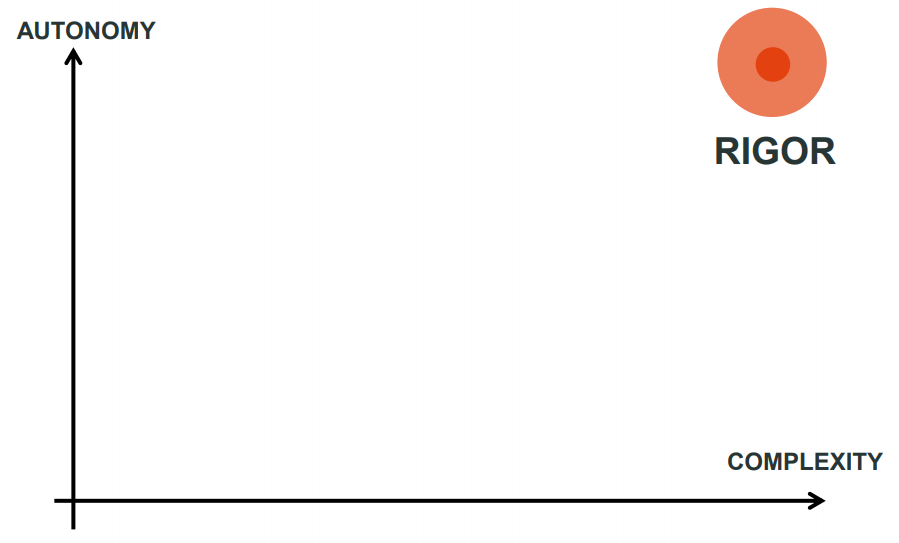
For a long time, I hadn’t found a solid, consistent definition of rigor. And then I found this: Rigor is the higher level thinking a student can do on his or her own.

Now, rigor can ABSOLUTELY include scaffolding. (pleasepleaseplease use scaffolding! Don’t skip the scaffolding!!!!)

But then, the kids need  to be doing higher level thinking without the teacher doing it for them.

Check out this visual to help it make sense -->

Meaning, lead them up to the higher order thinking but then take off their training wheels and let them try it on their own.

(Actually, HOT thinking is likely to fall apart into disaster if you DON’T lead them up and give them scaffolding. But that’s another conversation for another day.

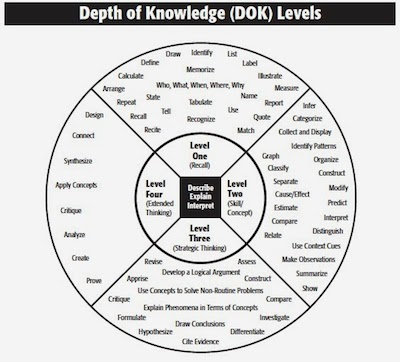
Do you know  my friend, the DOK Wheel? The DOK Wheel isn’t actually my favorite, but it’s the one the FLDOE uses to describe benchmarks and EOC questions, so we can go with it.

So let’s back that up. How can we increase higher level thinking without making kids’ (and teachers’) brains explode?

  1. Don’t let kids off the hook. They will pretend to be stupid. They will pretend to “only” be able to give you the “right there” answer. Use wait time and probing questions to get them to think at higher levels. Don’t accept “I can’t” (or “I don’t know”) for an answer.
  2. We slowly increase the rigor through the lesson. We sometimes call this “Spiraling questions”. OF COURSE we start with “right there” tasks! “Where was?” “What was?” “When was?” Then we move to putting pieces together, summarizing multiple parts, apply knowledge  to another topic/time/term.
  3. Then, we raise the questioning up to level three and sometimes 4 of DOK. Here are some quick and easy HOT (Higher Order Thinking) question stems. Choose ones that match what you’re teaching.  https://www.saydel.k12.ia.us/cms_files/resources/general%20hots%20question%20stems%20and%20processing%20activities.pdf

Ok, Tracy, I think I’ve got WHAT Higher Order Thinking actually IS. But what does that actually look like? What does rigorous learning look like?

Here are a few quick ideas to start to introduce more rigor in small, manageable ways in your classroom.
  • HOT Question Turn and Talks: The quickest and easiest (and most natural-feeling) way to incorporate rigor is to incorporate it into quick turn and talks. Talk/read/watch about some lower-level stuff and the ask the kids to turn and talk about it with higher-level stuff. That’s a quick and easy way to include rigor.
  • HOT quickwrites: Not feeling the turn and talk ideas? Use the same questions as above but pose one or two as a quick write. Bam. Kids are thinking and you have both blissful peace and quiet AND evidence of their rigorous thinking (or what you need to work on tomorrow...)
  • HOT Plickers: Don’t have a lot of time? Throw a HOT multiple choice question up on the board and use Plickers (Paper+Clickers) to have kids answer a quick higher-level multiple choice question in less than a minute. Bonus -- now you have DATA on that rigor stuff...
  • HOT Focused Notes: Taking Focused Notes? When students make connections (not YOU making the connections for them, but them making their OWN connections), that’s more rigorous. When students take notes and reflect on them and add some Higher Order THinking
  • HOT Benchmark Reflection: Don’t have anything prepared -- but you DO have your  Learning Goal (aka Benchmark) posted on the board? Turn it into a question and ask the kids to reflect on it. Here are a few examples ...
    • SS.6.W.2.5 “Summarize important achievements of Egyptian civilization.”
      • Describe two important achievements of Egyptian civilization AND connect how they impacted Egyptian Civilization.

    • SS.7.C.2.11 “Examine the impact of media, individuals, and interest groups on
    • monitoring and influencing the government”
      • How do the media, individuals and interest groups (pick one or two) monitor the government?How does that work? Give an example.
    • SS.912.A.3.4 “Compare the first and second Industrial Revolutions in the United States.”
      • What’s the same between the first and second Industrial Revolution? What’s different? Why are they more same or more different?

There are hundreds of ways to increase your rigor in the classroom. But there’s no reason you can’t start small.

Let’s start small and grow from there! Questions? Email me at newmantr@pcsb.org
Wednesday, September 5, 2018

I need to process this

How do people learn? That’s a pretty central question in our line of work.

Sometimes we-as-teachers swear that we taught “The Things” but somehow the kids seem to have No Memory of “The Things” half the time!

Sometimes it looks like the kids are learning -- all quiet, hunched over their papers, writing stuff down -- but really that information went in one ear and out the other.

Sometimes you KNOW that they learned “The Other Thing” -- last year, last week, last period -- but your kids look at you like your’re speaking Hobbitish or Parseltongue when you mention it.

I recently read a quote by a superstar reading coach, Enrique Puig, which said, “New learning is a by-product of social interaction and personal reflection”.

Let’s break that down for a sec.
New Learning -- meaning learning new things, not reviewing old stuff
By-product -- happens as a secondary result. Not the MAIN purpose.
Social Interaction -- the way people talk and act with each other
Personal Reflection -- a written response to a particular stimulus involving self-examination.

So, if we put that back together, it says “new learning happens when we talk together or engage in self examination

It does NOT say that new learning occurs when we:
  • Write the right answers on paper
  • Copy the definitions
  • Listen to the teacher talk
  • Daydream
  • Stare at the book

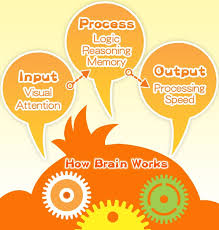
Yes, processing is a real, and often neglected part of learning. It works like this.
  1. We input info into people’s brains through reading, listening, watching, looking, experiencing.
  2. Kids (and adults) have to process this info in order to make meaning of it, in order for it to “stick”, to make it into longer-term memory.
  3. People have to USE that info in some sort of output, like writing or speaking, multiple times.
And that’s an overly-simplified way of examining the learning process.  

So, today, I ask that you examine those three parts.
  1. How do students input information into their brains?
  2. How do students process information?
  3. How do people output the information multiple times?

And can we pay particular attention to #2? Let’s go back to the quote from earlier: “New learning is a by-product of social interaction and personal reflection”  

He’s really discussing the role of processing in learning. Namely, that in order to process information (to move it from short term memory to long term memory) that we have to either 1) Talk it out or 2) reflect using self-examination.

I’m not going to assume that I can visually observe that second one, 2) reflect using self-examination. That happens internally, so it’s hard to see. Maybe students can reflect in writing.

What I can SEE and HEAR is student conversation. Collaboration. Interaction.

Guess what? It’s really hard to know if students are processing content WITHOUT having lots of student conversation.

So try this: try building in time for student interaction -- ABOUT CONTENT. If they’re actually talking about content, then they SHOULD learn more and retain it better. You can just do turn and talks, socratic seminars, debates, small-group discussions, silent conversations, or any number or conversational strategies.


But. Get. Kids. Talking. To. Each. Other. About. Content.

Every day. And they will learn and retain the content better.

Try it. I triple-dog-dare you!

As always, if you need help, ideas, or more info, please email me! newmantr@pcsb.org