Wednesday, January 29, 2020

Previews for Curiosity

I love movie previews. I have seen the previews for EVERYTHING and then they make me WANT to watch the movie!
A good preview can catch you in and make you want to see a movie you thought you had no interest in. It can make you say “Wait a minute! I DO know something about that movie! It’s the one that has so-and-so in it. It’s the one about such-and-such! That’ actually looks cool!”

While a lesson is not ALWAYS as fun as a movie (Although,  I have seen some of your lessons. They are pretty dang fun), but sometimes, we have to get the kids interested with a preview. Sometimes, they’re not automatically interested on their own. Sometimes, we have to drum up a little interest.  

I have seen three quick and easy ways to preview a lesson that take little to no preparation. You can do them at the beginning of a lesson or you can do them at the end of the day before to get the kids curious about the next day. 

Curiosity is a powerful tool. It gets kids engaged. And we all know that kids who are engaged are learning while kids who aren’t really engaged are just going through the motions, which means they aren’t really learning. They’re just doing busy work

  1. Have them skim a text or reading to find the one or two most used words that are going to come up. But give them a super-short time limit so they’re not actually reading. Give them 30 seconds and make it a game. They’re just skimming. Then, based on their skim, ask them what they’re about to read about. Now they’re curious. Why are we going to read so much about the word “states”? Or about the word “nobles”? Or what’s a “silk road” going to be all about?

  1. Give the kids 3-5 words from the upcoming lesson and have them work with a partner to put the words in a sentence. They should not be entirely unfamiliar terms, because the kids can’t do much with a pile of unfamiliar words, but mostly familiar words. For Post-classical china, I’d use “silk, trade, great wall, paper, ideas”. For the lead-up to the Civil War, I’d use “North, South, Slave, free, election”. See how well their sentences explain what they’re going to learn. Then, if you want to get FANCY, have them return to that sentence after the lesson or unit and fix up that sentence. They can even do a “I used to think ___ but now I think__” to reflect on how much they’ve learned”

  1. A third way is to just ask a big question and have kids turn and talk. “How can you get silk from here to there? What if it’s something heavier and breakable like porcelain?” What should we do if Texas wants to leave the USA? Should we let them -- or make them stay? How does the government try to guarantee our rights? How can it do a better job?
Let’s continue to be intentional to build curiosity and engagement in our students so they WANT to learn!

How can you use previews to build curiosity and engagement in your lessons? How do you already do this? I’m SO curious!!

Email me! Newmantr@pcsb.org 


Tuesday, January 21, 2020

Think Alouds and Big Brains

Dang it’s cold for us Floridians today!  Stay warm today, colleagues! 


I know you know this but sometimes it helps to be reminded. 

You have a college degree. Some of you have more than one college degree. In order to have a college degree you have to either be a good reader or you have to have a LOT of strategies to get you around your reading deficits. 

Your STUDENTS do NOT have college degrees. They are middle or high school students. Many are not strong readers ... YET. 

Even your strong teen readers aren’t as strong as your experienced, college-educated teacher-reader selves. 

That’s why I need you to do something to help them out.

Think. Aloud.

Just like a kid who lives in a family of junk-food-eaters needs someone to model good eating habits, a kid who doesn’t know what good reading looks and sounds like INSIDE HIS HEAD needs someone to show him.

And guess what, Teacher? You are the perfect person! 

A good reader does several things all at once that they are probably unaware of. Doing some thinking aloud will help your readers -- from 6th grade strugglers to 12th graders ready for college -- be more aware of what’s going on in their OWN heads and be more intentional, stronger readers. 

So, how do I think aloud, Tracy? I can’t really just let my thoughts escape my lips. That won’t bode well for the students. 


Well, a think-aloud is series of specific ways you actually do react to text. You do these things, but often, as a college-educated reader, you do them so quickly, you don’t even notice that you’re doing them! 

So, the next time you’re reading some text with your students, try to slow down, notice what you’re doing, and point it out to the kids. Tell them what you’re doing and WHY you’re doing it. Just modelling can go a looong way

Here are a few ideas. 
Predict
  • “I bet this is going to be about …”
  • “I bet that the Spartans are going to lose at some point …”
Ask questions
  • “Why did Empress Wu do that?”
  • “What is the author talking about?”
  • “What does that word mean?”
React
  • “Wow! That’s amazing!”
  • “Well that guy just did a stupid thing”
  • “No, Harry Potter! Don’t do that!”
Make connections
  • “That’s like what we read about with Buddhism”
  • “That’s like the movie I saw last summer”
  • “That reminds me of a poem we read in Language Arts class”
Make mental pictures
  • “So the Olmecs are in Mexico, in the map I’m picturing”
  • “I bet people in the Alps mountains freaked out when they saw Hannibal’s elephants!  
  • “I’m picturing that guy as tall and mean”

Read out loud to your kids once in a while and model these Think-Aloud strategies. It helps them be better readers. Be explicit in your explaining what you’re doing and why. And don’t worry about being the best audiobook worthy reader. You-the-college-educated-adult are still better than they are! And if you can do it semi-regularly with you stopping to explain your thinking aloud, can seriously impact their reading. 
It’s something you do without even noticing. So slow your big brain down and show these kids how it’s done. 

Have a great week -- and stay warm, Floridians! 

Tuesday, May 21, 2019

Summertime and the Reading's Easy

It's about that time, y’all!

The school year is almost over!  We are so close, I can almost SMELL the beach from here!

So, it’s time for my annual summer reading list. You definitely don’t have to read the same book I AM, but I do recommend that you find SOME books to read, preferably the kind you don’t have time to read during the school year.


I fully admit to being academically “tired” during the year and reading mostly flaky stuff. But in the SUMMER, my brain is less worn out and more fresh. It’s a great time to read some “real” books while I have a little distance from the school day and school year. It’s easier to get through “real” books in the summer.

It’s important to do your OWN summer PD your OWN way, and reading books to refresh your thinking and practice is a great way to do that.


Read on the plane.
Read at the beach.
Read on your couch.
Listen in your car.
It doesn’t matter WHERE or WHEN, just read!

So, here is my book list for Summer 2019!
  1. These Kids Are Out Of Control: Why We Must Re-imagine Classroom Management for Equity by H. Richard Milner IV et al.  admit to having this one already downloaded and ready to go! So many of us struggle with classroom management. And we also struggle with equity and how to use/apply/cultivate it effectively. And maybe some of us have noticed that the teachers with the best relationships with kids, with the strongest equity practices -- have fewer classroom management issues. Let’s work on figuring this out together! (PS -- If I love this book as much as I think I will, I’d like to do it as a book study in the fall. Who’s with me?)
  2. Why Learn History (When It’s Already on Your Phone)? By Sam Wineburg. I admit, I’m already a couple chapters into this one. It’s pretty brutal, leaving no sacred cows alone. Roasting Howard Zinn, TAH grants, Bloom’s Taxonomy, George Washington, Google, pretty much all assessments of the past 100 years, and lots of other things I generally like and think highly of, Wineburg shoots right through all that stuff to the heart of teaching history and to historical thinking. And, despite me really being a fan of things like George Washington, the TAH, and Bloom, this book is amazing so far. It really gets past all the pieces to the Big Question: Why do we teach history to kids, and how can we do that better?
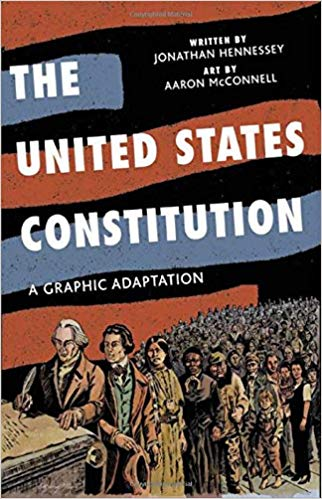
  3. The United States Constitution: A Graphic Adaptation by Jonathan Hennessy. This year, I have two graphic novels on my list, in an attempt to see if and how I can use them with students next year. The first is a graphic novel of the US Constitution -- which should be wonderful for students struggling to read and get engaged in Civics & Gov. Imagine giving it to a struggling reader to give him or her a little background before jumping to the actual text of the actual constitution! That could be a great scaffold!
  4. The Odyssey, A Graphic Novel by Gareth Hinds looks promising, too! I admit that my third grader read it and found nothing objectionable (and she still gets outraged by the “h” word -- hell). But I don’t know how I would use it -- yet. I have to actually read it to think through that.
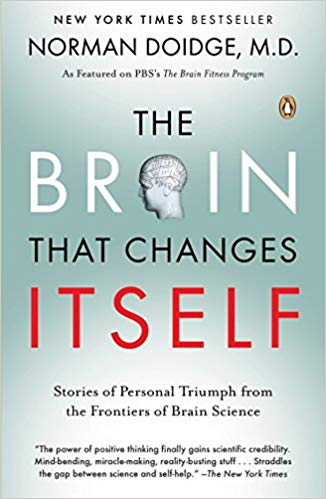
  5. The Brain That Changes Itself by Norman Doidge. This book blew my mind. I’m not much of a scientist -- and definitely not knowledgeable enough to be a NEUROSCIENTIST, but this book was practical and easy to understand and explained SO MUCH about our world, about education, about our kids and ourselves. It really amazed me with it’s readability and about how much useful stuff I got out of it!
    1. *Caveat: there is a chapter about human sexuality in there. It has nothing to do with teaching social studies, but don’t be shocked when it is in the book. That’s not why I am recommending the book. It's the rest of the book that I recommend!
  6. Beneath A Ruthless Sun: A True Story of Violence, Race, and Justice Lost and Found by Gilbert King (author of The Devil in the Grove. This is another important, powerful book about racial terror in Florida. You will see the familiar Willis McCall reappear in this book. It looks like an emotionally difficult read, but I can handle that in the summer.
  7. Prisoners of Geography: Ten Maps That Explain Everything About The World by Tim Marshall. I am so intrigued, I can’t help myself. Which maps, in particular, explain everything about the world? I have no idea. But I plan to read and find out!  

How about you? What’s on your teacher summer reading list? Want to read one on my list and talk about it via email?Or over fruity beachy beverages? Want to share what YOU plan on reading? Or tell me what you thought of a book?

Email me! I love to know! newmantr@pcsb.org
-Tracy

Tuesday, May 14, 2019

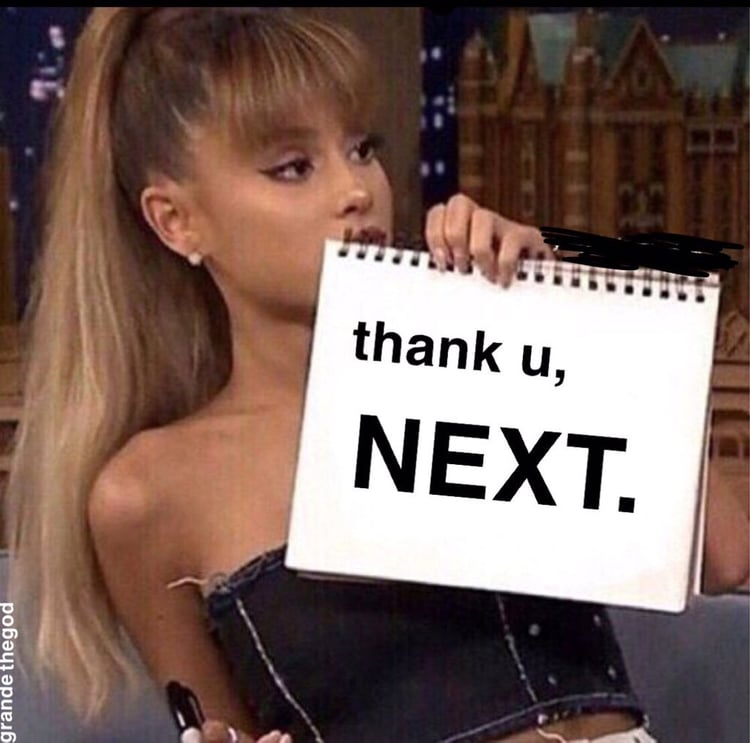
Thank U, Next

I realize that I am too old to listen to Ariana Grande but I do anyway. I refuse to be the kind of person who stopped listening to new music when grunge died.

If you are too old to listen to Ariana Grande, too, you might have missed the song, “Thank U, Next” where she sings to all of her exes and tells them what she learned from them and how ready she was/is to move on from them.

At this point in the school year, you may be ready to say “Thank U, Next” to this year’s group of kids. Some years, I remember feeling that way in February.

“Thanks, kids. Is it time for next year yet? Or at least, is it time for summer yet? When will these children be GONE?!?!?!”

What I really want to focus on, is the ability to learn from anyone who crosses your path -- including the students.

I know THEY are supposed to learn from YOU. But I think you can learn a lot from them, too.

The best way to do that is through an end-of-the-year survey.

Sure, your students have been annoying and ... REALLY annoying ... and some of them have been dishonest or unpleasant or bewildering or even outright nasty.

But you will be surprised at how many of them will be honest and helpful on a survey like this. Sometimes even the toughest kids might open up on this sort of thing.

You can survey them on paper. You can survey them digitally. You can survey them pre-printed (does anyone have any copies left?!) You can survey them on index cards, or with QR codes or on their phones or on plain old notebook paper or in OneDrive or Google Docs or on scantron.

It’s a great thing to do on one of those weird days when you see one group for three hours and the other for 15 minutes.

But just do it.

What  should I ask on a survey?

It depends on what you want to know and where you want to grow....

Here is a huge pile of questions. DON’T ask them ALL! Choose the 5-10 you most want to know about and ask those. You can gear them more toward your management, your lesson planning, your learning activities or your emotional support.

  • Which unit was the most interesting to you this year?  
  • Why was this unit the most interesting to you?
  • Which way did you learn the most? (then, give options like “reading”, “group work”, “projects”, “graphic organizers”, etc.)
  • Why do you think these ways were the best?
  • If you could go back and start the year/semester over again, would you do anything differently? Why or why not?
  • What was the best part of this class?
  • What was the worst part of this class?
  • What could I have done to teach you better?
  • What did I do that was the most helpful to you?
  • What was the most important thing you learned this year?
  • What could I have done to improve this class?
  • What will you remember most about this class?
  • What else do you want to tell me about this class?
  • Name something that made it hard for you to learn this year.
  • What should your teacher do differently next year?
  • Did you feel challenged this year? Why or why not?
  • How has your confidence in _________ (subject) improved this year?
  • What is one piece of advice that you would share with a student who is entering this class next year?
  • Did you feel as though I had high expectations of you?
  • Explain a time in class in which you were able to overcome a struggle.
  • Finish this sentence: “If Mr./Ms. ______ only knew __________________”

I’ve said it before and I’ll say it again.

Kids are surprisingly insightful and honest on these things.

I know you are end-of-the-year exhausted, but this is totally worth the 5 minutes it will take to pick your favorite questions from above and put them in the format of your choice.  

Your kids will surprise you.

In a good way.

Have any great survey questions I missed? Email me at newmantr@pcsb.org